Showing posts with label Discussion. Show all posts

Monday, January 24, 2011

Religion and Teapots

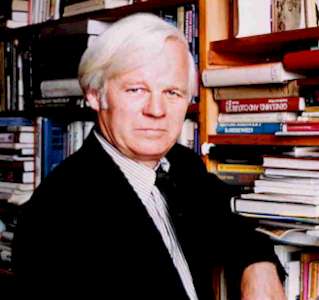
Bertrand Russell
It's certainly no secret that people do horrific and absolutely insane things as an expression of devotion to their particular religion.  Christians conjured up regrettable notions of witchcraft and slaughtered thousands, sometimes purely on suspicion and without a shred of evidence.  Muslims have had their historical share of swinging the sword and tossing rocks.  And there seems to be no end to the number of fringe-group religions and eccentric cults enacting wanton violence on others simply because they think they're under some mysterious, divine fiat that only they know about, and that only they can confirm comes from their god/gods.

Whatever the peculiars of the case, one underlying question, in particular, undergirds any helpful criticism of such fanatical religious stupidities: how can the God/gods purported be proven to be in any way real?

One philosopher, Bertrand Russell (1872-1970), proposed that, in matters of the supernatural, the person who states there is a divine super-reality (including divine beings) has the responsibility to prove their statement(s) are evidentially true.

Russell used the analogy of a teapot in orbit around the moon:  anyone can say there is a teapot encircling the moon, but the person who states such a thing has the burden of proving that their statement is true by showing the evidence for their claim.  This responsibility for furnishing a positive position or proposition with accomodating evidence has become known as the "burden of proof."

In matters of religion, it is the person who states that God exists who has the burden of proof and give evidence for their claim.  The non-believer is under no such responsibility to give evidence for their non-position.  Or, to put it another way: person X claims God exists and offers evidence to prove their case; person Y makes no claim on the existence of God and therefore has no burden to prove a non-claim.

So where does this leave us?  Well, here is a clever little presentation (2 minutes) that illustrates not only the absurdity of some religious mindsets, but also incites the necessity for proving that the celestial teapot exists but only having the fanaticism of religious teapotists to point to.  Enjoy!


Thank you to Atheist Media Blog for this clever little video.

Saturday, January 1, 2011

2011: A Year of New Directions

It's 2011: How will you change your life this year?
Welcome to 2011!

Saint Cynic will be broadening its scope in 2011.  As many of you already know, Saint Cynic tackles religio-philosophical issues oftentimes by reducing them to the absurdities they are, and then lampooning those issues with some critical, or snarky remarks.  That won't stop.  It's good fun, and I enjoy it.

However, I will be concentrating on writing some more serious essays and presenting them as a series.  My topics will include the philosophical and religious issues I've always examined, but I will also be jumping face-forward into natural, fully concious living; something some people call "wholistic living", or even the "primal lifestyle."  The point of these articles will be to contrast the way modern Western society lives now with the way our ancestors lived eons ago, and to highlight the evolutionary biology that supports a return to some of the dietary and fitness dispositions of the non-agricultural ancients.  It's a topic I'm quite excited about and eager to share with you. (New links to do with this subject will also be appearing in the sidebars, too.)

More, I'm planning on taking Saint Cynic to the streets.  That is, I'm going to be looking into making this site an actual physical entity by scouting out possible regular meeting places for fellow culture-observers, and even sussing-out means to publish a magazine that will include articles from guest-writers.  My goal is to see if I can make my venture here profitable in the offline world.  To that end, I will also be searching for domain providers so I can make Saint Cynic an exclusive name, independent of the usual blogging format.
Lift heavy things

As a personal goal, I will be continuing with semi-regular P90X routines, but combining them with two other elements: The Primal Blueprint, and FitDeck.  These dietary and fitness switches will drive me further into better health, maximize my body's potential, and improve my overall enjoyment of living.  Join me if you'd like to take on a healthy, wholesome challenge.

And on a more personal note, I will be pushing myself to leave my present employment and begin the journey of unjobbing.  This is a scary decision for me since it means divesting myself of the usual, predictable method of giving some faceless entity my time so it can give me money, and I can fuel a minimum number of my interests and passions.  I want to work to live not live to work, as the saying goes.  But I have to go about it wisely: I have wee'uns depending on me, and I'm not willing to let them be diminished in any way by my quest for self-realised income and autonomy.

Thankfully, I have a partner who is topped full of incredible talent in visual arts, communication, music, and intellectual capacity.  I think that together, we can take our lives by storm and start living in such a way that we are both happy, productive, and satistfied.

Those are some of my ambitions this year.  What are yours?  Please comment.  I would love to interact with you more!

Wednesday, December 15, 2010

Richard Lynn: Disbelief and IQ

The Telegraph, a newspaper out of the UK, has put out an article detailing the findings of emeritus psychology professor Richard Lynn.  Lynn teaches out of Ulster University and has recently suggested that people with better than average IQs are less likely to believe in God.

Lynn's critics have labelled the findings "simplistic", and based on what I've read so far, I'd have to agree.

According to Lynn, the decline in religious affliation and belief in God dropped dramatically in the 20th century because people have become more intelligent.  A quick glance at the basic evolution of the human being, however, suggests that we may not have been as smart as our neanderthalic ancestors.  If that is true, then Lynn's findings are not only "simplistic", as his critics have charged, but inevitably wrong.

Neaderthals were highly religious (though not in an organised sense), even superstitious people, yet their overall cranial capacity suggests a larger brain, and therefore a possible better overall cerebral capability.  Mind you, as the documentary Battle of the Brains indicates, the jury's still out on whether a bigger brain means more potential capacity.  For some, smaller regions of the brain are more efficient than others who have larger regions, and visa versa.

So, while it is that neanderthals may have been smarter and people with better-than-average IQs may be less inclined to believe in God, there is no clear-cut link between belief in a set of propositions and the overall intellectual horsepower of a person's brain. 

And let's not fool ourselves into thinking that the world's major educational institutions are anything shy of nonreligious to begin with.  Hence people who flourish in academic settings are going to be much more highly influenced by the philosophical climate of the institutes they attend.  In our youth, we usually call that kind of exemplification "peer pressure", but somehow, when we peer into the upper-eschelons of academia the notion of that same "peer pressure" is overlooked, and people start exculpating themselves with unfounded excuses such as 'people are just smarter now.'  Nonsense!  People are able to access much more information now and, consequently, they are better equipped to meet the demands of reality face-on.

In any case, being better informed and having more ready access to information doesn't make a person smarter, and really doesn't show a link into disbelief.  The familiar logician's addage "correlation is not causation" is instructive here: while there may be an argument to suggest that readily available information can persuade people not to believe in God, that accessibility is not definitively the cause of a person's unbelief.  And let's not forget that there are many sincere, highly intelligent religious folk who have access to the same information that most other people do -- and they keep believing.

Monday, April 12, 2010

Argument from Historical Proximity: Invalid

I've been writing about my migivings with Catholicism lately. I've also been semi-debating an aspiring Catholic philosopher. Why the sudden focus on Catholic thought? I'm not sure. However, something occured to me today, and I'd like to share it.

Getting into academic jousting matches with Catholic apologists (and a good many Protestant Evangelicals, too, just to be clear) over differences in doctrine, or even just the sensibility of this-or-that doctrine has highlighted a tactic often used against me. I'd like to call the tactic in question, "The Argument from Historical Proximity."

The argument is as follows: historical figures closer to the time of Jesus have a greater, more precise understanding of the details attending Jesus's life, and the lives of people close to Jesus (e.g., the Apostles, Mary, the first Christians, etc.). So, if I were to argue that recent historical research casts reasonable doubt on the perpetual virginity of Mary, the argument from historical proximity would counter that Mary was most definitely ever-virgin because the writings of the early church fathers state as much. And because the early church fathers lived closer to the time of Mary, they would have more reliable claims on the status of Mary's bedroom activities than today's historians. The assumption is essentially that the less the passage of time, the more accurate the claim, and the less chance of distortions to confuse the claim.

On the surface, the argument seems to carry with it some validity: it seems reasonable to think that people in the second century would have less confusions to work through than people in the twenty-first century concerning church beliefs. But given a moment's thought, the argument breaks down on a crucial point.

If we reason from historical proximity, then we have to be willing to accept opposing claims as valid, too. The Roman historian Tacitus (AD 56 - 117) wrote extremely close to the time of Jesus and the first Christians, and was a contemporary of the early church fathers. Tacitus considered Christianity a "deadly superstition"; i.e., it was a grave error, and a falsehood. Emperor Domitian (AD 51 - 96) claimed that Christians were 'atheists' and slaughtered them. Pliny the Younger (AD 61 - ca. 112) commissioned the murder of Christians because he considered them hedonists and cannibals.

So, if we take claims opposing Christianity on equal footing with Catholic arguments from historical proximity, then we can reasonably say that Christians believed falsehoods, and were orgiastic cannibals who believed in an untrue God.

Clearly, the argument from historical proximity is groundless; just as groundless as it would be to argue for the falsehood of Christianity by claiming Tacitus, Domitian, or Pliny the Younger as truth-measures. Christians, and Catholics especially, need to move on to better methods of truth-seeking than quixotic claims to historical proximity.

Thursday, April 8, 2010

Sexrosanct

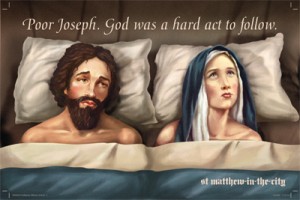
Mary's perpetual virginity. Ever a popular sentiment amongst Catholics, but one which seems at odds with reality.

Before I respond to the Catholic blither and blather of Mary's reproductive prudery, let's survey what it is Catholics believe on this count.

First, Mary was a virgin before, during, and after Jesus' birth. Second, after Jesus was born, Mary never engaged in sexual congress with her husband, Joseph. Third, Mary's perpetual virginity is distinct from the Immaculate Conception of Mary; the former refers to Mary's inconsummate marriage to Joseph, the latter to Mary's being born into the world without the stain of original sin. And finally, fourth, Mary's virginal status means that Jesus had no siblings. While being an obvious point, it is important to note number four because it provides a ready-steady defense for the use of the words "the brothers of Jesus" (Matt. 13:55; Mk. 6:3) to allegedly mean "cousins of Jesus".

If the gospel accounts of Jesus' arrival in this world are true, then there is no difficulty believing that Jesus' mother was a virgin before his birth, and during his birth. It was customary of Mary's time -- and is even sensibly encouraged today -- to abstain from sexual intercourse before marriage. Mary was betrothed (i.e., engaged, to use modern terminology) to Joseph when she became pregnant with Jesus, which, to Joseph, appeared as infidelity until he was reassured by an angel that all was well, and that Mary was pregnant by God's doing.

This in itself seems like a peculiar infidelity that God would impregnate another man's wife (I think Zeus was prone to the same misgivings, so no surprise a similar motif would show up in a Hellenistic culture). Leaving that aside, however, if it was that Mary was born without sin, why couldn't God simply have used Mary and Joseph's eventual union to create another sinless person, but this time one that also happened to be God? Afterall, he created people from dirt; I'm fairly certain he could funnel himself through an egg.

All of the above notwithstanding, unless Mary remained betrothed to Joseph forever after, that is, unless Mary and Joseph together decided they would never get married but just live together raising Jesus, it seems unlikely, even supremely implausible that Mary remained a virgin after Jesus' birth. Two things come to mind at this point:
  1. Mary and Joseph were religious Jews, and so, would not have lived together as a couple without being married; not unless they wanted to be stoned to death (recall the historical time and prevailing religion) for being considered fornicators;
  2. It has always been the sexual act that seals a marriage, that makes the covenantal bond between two people and the God/gods they are loyal to.
Given number two above, we would do well to keep in mind a tiny, niggling, insignificant triffle of a point: Catholics, by and large, believe that Scripture is God's inspired and inerrant word (set of writings) that is necessary and sufficient for understanding all matters of faith and morals. So let's just assume for a moment that Mary actually was married to Joseph, but the two remained celibate and thus preserved Mary's virginity. I think it would be fair to say that Joseph, unless he was one of the eunuchs Jesus later referred to (Matt. 19:11-12), might have "burned with passion" for Mary. And if Joseph had committed himself to live inconsummately with Mary, all-the-while lusting after her, it would seem that we have a couple of plausible contradictions:
  1. Mary and Joseph were witholding from each other, even knowing that at least one of them was desirous. This is a sin (see 1 Cor. 7:5) because it invites temptation into the marriage, and should only be done for a limited time; time enough for prayer and fasting, and then they were to enjoy marital bliss again.
  2. If it was sinful to withold from each other, then Mary's immaculate status is negated because she would've been sinning to enter a permanent, sexless marriage where one or both of the people involved would be sexually ungratified and desirous.
"Ah!" says the Catholic apologist, "you cannot hold Mary to a standard that God instituted through St. Paul approximately 35 years after Christ's death." Well, sure I can. And here's how: we're talking about what Catholics have always believed, not what they've ever known. There is not a single source in either scripture or tradition that can point to de facto proof that Mary never consummated her (eventual) marriage to Joseph. Thus what Catholics believe about Mary's permanent virginal status has no relationship with anything actually known. It is a supposition that lends Catholics a strange comfort, but seems at odds with reality when parsed by a slight flexing of practical logic.

There is a direct relationship between Mary's assumed lack of original sin, and the Catholic claim that she was/is ever a virgin. The doctrine of original sin found its first expressions in the writings of Irenaeus, bishop of Lyon, when he was arguing with Gnostics. But the champion of the doctrine of original sin, however, was Augustine, bishop of Hippo. Augustine reasoned that
original sin was both an act of foolishness (insipientia) and of pride and disobedience to God of Adam and Eve. He thought it was a most subtle job to discern what came first: self-centeredness or failure in seeing truth. The sin would not have taken place, if satan hadn't sown into their senses "the root of evil” (radix Mali).
But apparently Satan did plant a 'root of evil' into our nature such that our whole humanity -- that is, those things that constitute our unique human characteristics -- was forever wounded, depleted, broken. Characteristics such as our intelligence, affectations, sexual desires, and will were permanently enfeebled, according to Thomas Aquinas' rendering of Augustine. This enfeeblement is passed down, or transmitted, from Adam and Eve to all of humanity by way of concupiscence; that is, desire. The next logical step from desire being the transmitter of human enfeeblement is to suggest that the sexual reproductive act (the only way new people are made) is the purveyor of original sin.

This in itself does not make the sexual act wrong in Catholic theology. However, because Mary was to be the bearer of God himself, there could be no taint of sin in her. Hence Mary's parents' copulation, somehow, didn't transmit a wounded nature to Mary (how convenient, yet, sadly, entirely presumptuous). Mary was, it is supposed in Catholicism, therefore perfect in her human nature. Thus for Mary to engage in coitus with Joseph would imply the possible transmission of human sinfulness to any offspring copulating may produce. Since God had housed himself in Mary's womb, any post-Jesus children would be (conspicuously) bad, because apparently God and people shouldn't intermingle -- which brings up a whole other set of issues. For example, a smattering of gnosticism. But I digress...

Mary was above all base nonsense such as human sexuality; that seems to be the implication. In her perfection (lack of sin), she would not debase herself with the thrusts and stilted grunts of her imperfect husband. Never! The connection is clear: human woundedness is continued through sexual reproduction, which is beneath perfect people like Mary, so she abstained from conjugal relations with Joseph, who in turn probably experienced unbridled sexual frustration and was, due to an attrition of sorts, consigned to masturbation (which is also a sin in Catholicism). That is, unless by way of physical proximity to Mary, Joseph was able to master his sexual urges and content himself with a faux marriage; an unlikely possibility given the matrimonial customs of the time.

Before moving on to my last point, I will review, in short, the gist of my first three points:

  1. Mary would not have lived in a false marriage arrangement because this would implicate Mary and Joseph on the grounds of sexual sin: the surrounding community would've viewed a couple living together, and having a child together out of wedlock, as fornication.
  2. Mary's blameless and perfect nature would be blatantly stained by purposefully, and knowingly entering into a sexless marriage where her weaker, imperfect husband, Joseph, would burn after her with lust; i.e., Mary would've purposefully been tempting Joseph to sin.
  3. Mary's ever-virgin status, when distilled to its constituent elements, constitutes a form of gnosticism: she could not have copulated with one who bears the stain of original sin because her womb held the son of God; the perfection of God and Mary could not intermingle with the imperfection of a man.
These three criticisms give credit to the more sensible notion that Mary probably enjoyed her marriage as fully as any healthy married pair should. They also lend strength to the argument that Jesus most likely had brothers that were not simply 'cousins', but flesh-and-blood brothers. It is argued that when the Greek word adelphoi (brothers) was written into Scripture, it wasn't with the intention to convey a direct statement about the status of James, Joseph, Simon, and Judas being related to Jesus (Matt. 13:55; Mk. 6:3). Heavens, no! Why keep things simple? Instead, concoct a story that they're all just 'cousins', or half-brothers from a previous relationship Joseph enjoyed. This is a blatant violation of Occam's principle of parsimony, and highlights the useless convolutions Catholics are willing to accept in order to hold in high regard a dogma that has no foothold in reality.

And this, in itself, begs an obvious question. If it is true that Joseph had enjoyed a previous marriage, and then entered into a marriage with Mary, why would he want to give up one of the specific pleasures marriage allows: sex? Unless it can be argued from silence -- as assuredly Joseph's possible previous marriage is an argumentum ex silentio -- that Joseph was done with coitus funness when he set his eyes on Mary, there's nothing to support the notion that Joseph would willingly enter into a sexless marriage. At the same time, to give credit where it's due, there's nothing to support the notion that Joseph would not enter into a sexless marriage. In either case, we have absolutely no evidence at all to conclude on the virginal status of Mary, and Joseph's willingness or not to entertain an inconsummate marriage.

In conclusion, I think that the notion of Mary's perpetual virginity is purely a fabrication. Yes, many people have believed it for a good long time. However, the duration of a belief is no argument for its validity. Many people believed that the earth was flat for quite some time, but that is clearly not the case. From the reasons given by the Catholic church for Mary's eternal virginity, I have reflected some practical conclusions that show the weaknesses in the expectation that Mary was inconsummate in her marriage to Joseph. I could go on drawing further conclusions from the beliefs set out by Catholics, but it seems sufficient to say that Mary's constant virginity is a proposition based in silence, that when examined in a little detail becomes self-contradictory, disregards Occam's razor, highlights Catholic antisexualism, and therefore has no basis in reality.

Wednesday, March 10, 2010

IQ, Education, Scepticism and Religion

Skewing statistics is easy: choose a sample group, survey them, determine percentages, and then use those percentages to state a universal about the population at large. In logic it's known as a hasty generalization. In statistics, it's common practice. Its purpose? To connote the goings-on of our surrounding culture(s).

Unfortunately, those kinds of inductions are, generally speaking, far from accurate. For example, it is not uncommon for some sceptics to argue they have superior IQs to the religious-minded. Ad hominem aside, belief in the relevance of IQ is certainly a topic of increasing interest.

Which brings us to the next plausible progression in the intellectual culture wars between atheism and religiosity: what is the correlation between faith/disbelief and education? This article suggests there is no direct link between atheism and education. I'm inclined to agree; you?
I wonder if Richard Dawkins has any 'cranes' to help elevate our understanding of this issue? Was that harsh? Good. It was meant to be.

Tuesday, March 9, 2010

Anti-Facebook P. II

Thank you to Nnamdi Godson Osuagwu, I feel a lot more secure in, and sure of my decision to quit Facebook. While some people can brave the wave of e-social networking and come out just fine, it seems that many cannot. People are killing each other over 'wall' posts, perversion rings are utilizing Facebook, 20% of 5000 recent divorces are allegedly due to Facebook, and the list, sadly, goes on.

Facebook is simply not worth the cost that some people are paying by using it.

Sunday, March 7, 2010

Anti-Facebook

I deactivated my Facebook account a couple of weeks ago. The reason: I find it to be an inexcusable waste of time. When I mentioned deactivating my account with Facebook to a friend of mine, he said, "Good! I was going to tell you to get off that thing. It's addictive. It's like crack cocaine. Besides that, you were being too conformist being on there."

Aside from the wry chuckle I enjoyed at his comments, I found his perspective on Facebook insightful: it's addictive, and it promotes conformity.

First, let's look at some behavioural characteristics of addiction.
  1. Obsession - person cannot stop thinking about an activity.
  2. Relentless Pursuit - person will engage in activity even to the detriment of his/her physical and psycho-social well being.
  3. Compulsiveness - person will engage in an activity despite not wanting to, and finds it difficult to stop.
  4. Withdrawal - once the addictive activity is stopped, person becomes irrational, irritable, depressed, restless.
  5. Lack of Perception of Time - person cannot control how long, when, or how much s/he will engage in an activity.
  6. Denial - person cannot, and will not accept that s/he has an irrational attachment to an activity, even despite the negative effects.
  7. Covert-Ops - person hides his/her activity from friends, family, and concerned individuals.
  8. Blackouts - person simply blanks-out during activity, which results in a lack of recall about what went on during addictive activity.
  9. Depression - person experiences depressed states surrounding, and even during activity.
  10. Poor Self-Esteem - person deals with personal anxieties and low self-esteem issues by "filling in their lack", as it were, with an addictive activity.

As a loose gauge for my own participation with Facebook, this list shows me that I fit at least 7, possibly 8 of the characteristics usually associated with addictive behaviours. As a family man, and a man with a conscience, I find that unacceptable. So, for this reason alone, I shut down Facebook.

Now, just so we're clear, I am not blaming Facebook for my problems. I am solely responsible for how I attend to an activity, how much time I spend doing it, and in what manner. Facebook itself is simply a computer application and has nothing to do with my addiction to it. But, as a vehicle for part of my social life, I cannot trust myself to use Facebook anymore because I was not able to control myself around it. Also, because I was allowing my time on Facebook to interfere with my family, my real-life relationships were starting to break down. So, for me, having parrotted the common sentiment that I would "take a bullet" for my family if I had to, why would I allow myself to shoot my loved one's down with an inordinate compulsion toward Facebook?

The answer to the rhetorical question above is an easy, "I wouldn't." But I did. And I did so unintentionally, and to my shame. But even unintentionally having hurt my family because of my own addictive behaviours surrounding Facebook, the result is the same: my family was hurt. Intentionality does not exhonerate me from the pain my family has felt this past while. My work is ahead of me; I have a lot of wounds to heal.

Coming at this from a different, more 'academic' angle, however, there is a certain conformity proffered in applications like Facebook, MySpace, Twitter, et al. That is, applications such as the ones listed dole-up a common denominator people can easily access and use. The fact that applications like these offer the same basic templates for social interaction, aesthetics, and mindless pursuits (e.g., Farmville) now strikes me as a little creepy. I don't ascribe anything apocalyptic to it, but the fact that there is a definite sense of sameness across the board comes across a little Hux-Wellian.


Facebook is a little like a prototype for the 'Feelies' so excellently imagined in Huxley's Brave New World: slip into a virtual reality where everything surrounding you is a template for homogeneity, and predictability. The best part about it is that you don't actually have to carry on a real relationship with a real person. You can simply 'Add' and 'Delete' on a whim, and at will.

At the same time, Facebook is also a little like Big Brother. Mind you, the government is not prescribing Facebook as a means of mass-control, so the comparison is very loose. Still, people are screened for jobs by employers looking up Facebook accounts. Corporations actively monitor people's use of Facebook to keep an eye on the corporate reputation. Facebook does not protect your privacy, but instead, allows your information to be readily accessible to marketters (data-mining), industries, government, etc. It is a wonderful vehicle for corporate voyeurism (ever wonder why your stuff is hyperlinked without you having hyperlinked your information?). It is not quite Big Brother, but it is like having Big Brothers.

Facebook promotes uniformity not in people's ontology, but in people's expressions. That is, you don't stop being who you are by using Facebook, but you begin to alter how you express yourself to fit the mold offered. Eventually, this will impact who a person is. The same principle is illustrated in a positive light in the movie Patch Adams: if you change the conditions, or parameters of a persons environment, you affect their response. This in turn affects who the person is on a fundamental level. Seeing as Facebook is generally a breeding ground for poor grammar, thoughtless banter, useless games and quizzes, ambivalent attachments, and techonological distancing (i.e., moral ambivalence via technology), it shouldn't come as a surprise when people start communicating in real life as they do on Facebook. I imagine conversations would sound like Valspeak, but less eloquent.

I refuse that measure of conformity. I refuse that common denominator, which, as I see it, will continue to get lower and lower as the phenomenon of social-networking applications trim out the fat of human-to-human contact, and unwittingly inject us with the narcotics of virtual reality, and pseudo-relationships. I will not follow suit any longer. I am officially anti-Facebook.

Sunday, February 28, 2010

Religion and Philosophy

Does it ever occur to you to be entirely random? Does such a notion defeat the point: plan to be random? Part of me wonders if that's what happened when people started dreaming along lines of what we now understand as 'religion'. I think there was a measure of spontaneity involved in the philosophic meanderings on reality that easily makes a lateral step into religion.

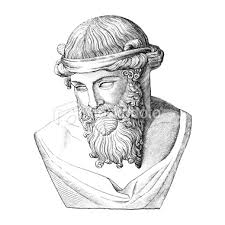
Mind you, this begs the question of which came first: religion or philosophy. But I don't see the two as separate. I think they are conjoined twins. A person can't hold religious views without adopting the particular philosophical biases that undergird them. For example, Christianity sprang out of Hellenistic and Stoic philosophies. That is, the undercurrent of thought in Christianity is primarily Platonic. Christianity, as it were, is founded on Platonic thought.

Many is the objector to that notion, believe me. But there's no denying the parallel between Plato's perfect and derivative forms theory within Christianity. The core doctrine of Christianity, the incarnation of God in the man of Jesus, is exactly that: God, the perfect being, takes on the skin of a man, an imperfect and derivative (image and likeness) being. Yes, the notion of imago dei pre-existed the neo-Platonic Christian teaching of the incarnation. Yes, the Hebrew peoples saw humanity as directly linked to God. But this overlap doesn't invalidate my point, it affirms it: religious and philosophical querries are inseparable; they reinforce and build on each other.

So, Plato, being the philosophically savvy individual that he was, looks at the world around him and comes up with a speculation for what, why, and how things are. Hundreds of years later, the Jewish peoples host that same idea, but couch it in the notion of God dwelling with his people. The same ideas were birthed in the stories of Horus, Mithra, and Vishnu, to name a few. There is a common element amongst these religious views: the idea that the perfection that is God willingly reduces to the imperfection of man to show man how to behave and play well with others.

Great! But some burning little questions now heat my mind: what's to say that God simply isn't just a product of philosophy? That is, when human reason meets its limitations but intuits there may be more, is the notion of 'God' just a dumping ground, so to speak, for future speculations? Speculations that might carry with them more of the collective human experience; more of the newer, more refined attempts to understand what we haven't understood before? Might 'God' just be a linguistic application we employ to say "I don't know" but at the same time keep an empathic connection with our fellow creatures?

It's an interesting idea to think about. For me, at least. You can take it or leave it as you see fit. For now, however, I'm not so sure that 'religion' and 'philosophy' are creatures of a different kind. I think they're versions of the same thing: a cultural narrative.

Saturday, February 13, 2010

God and Morality

A while back, over at Pilgrim Not Wanderer, Edward posted an interesting article entitled Humanism, Morality and Belief in God. Here was my response to that article:

"I think the idea of the poster (which is a poor representation of the humanist position) is simply that morality, as such, proceeds from people.

The popular notion among fundamentalists is that morality proceeds from God to the imago dei. This view can only be upheld propositionally because it cannot be verified evidentially.

However, human solidarity and propagation could not have been maintained if people were not moral creatures regardless of religion. We simply are moral, no matter what religious matrix we impose on ourselves.

Plato sums up the question of morals and God quite well when he has Socrates ask: 'Are morally good acts willed by God because they are morally good, or are they morally good because they are willed by God?' I'm sure you know this as the Euthyphro Dilemma, and it is a key question in humanist ethics."

Obviously it is a little silly to suggest that if there is a God, then that God has nothing to do with morality. For who could reasonably support the notion that the ground for being itself (i.e., God) would have no impact or influence on the way people have been, continue to be, and will be? Even if we rationalise by way of a deistic God, that God is still impeachable because that God set the motion of our moral mechanisms going. If those moral mechanisms are somehow deficient in their motions, isn't the God who made them still to blame for his/her/it's design flaws?

Nevertheless, if a person holds the point of view that God doesn't exist, then morality proceeds from a seemingly instinctive desire to self-organise, self-perpetuate, and maintain solidarity and altruism. Morality simply obtains to the human condition. Morality without God is morality in, with, and for the human community.

Thoughts?

Wednesday, February 10, 2010

What Is Religion?

An erudite reader commented in a recent article that he was calling me (and another commenter) out on the term 'religion'. It was not an aggressive manoeuver, but a considerate action meant to help clarify conversation. Rather than leave it within the context of that exchange, however, I thought it appropriate to bring this subject up-front and centre, since it is a defining issue in so many people's lives.

So, what exactly is religion?

Anyone can look around and note the various rituals, genuflections, processes, and events that religious people regularly attend to. But to note religion simply as a set of rituals and practices not only undercuts the driving importance of religious devotion, but it also relies on superficial observations of those things that are external to the religious anyway.


For example, everyone knows that Christians have a cultus for the sacraments, but that is where a good deal of understanding stops. It would require a little more effort to investigate the history, meaning, and respective differences in the sacraments, and further, the differences between varying communities of Christians. More effort would be required again to appreciate the aesthetic application of the sacraments to the religious life, and the nostalgic desire for transcendence that believers seek when they partake of the sacraments.


All this is to say that by observing that the religious have definite practices, we cannot then conclude that 'religion' is what we've observed: rituals, genuflections, proceses, and special events. Such a definition loops back on itself, and gets us nowhere. How much sense does it make to suggest that because we've observed people going to church and praying that religion is therefore going to church and praying? It doesn't make sense at all. All we have concluded with that kind of definition is that religion is what religious people do. The same logic is made memorable in the movie Forrest Gump: "Stupid is as stupid does." It may be the case that religion is what religious people do, but no-one is the wiser for such a definition.


Our work is still ahead of us. Thankfully, many people have proposed definitions of 'religion' that cut a little deeper than a wistful glance at Merriam-Webster. Here (thank you to Dr. Irving Hexham) are some of those definitions:
  • William James: "the belief that there is an unseen order, and that our supreme good lies in harmoniously adjusting ourselves thereto."
  • Alfred North Whitehead: "what the individual does with his own solitariness."
  • George Hegel: "the knowledge possessed by the finite mind of its nature as absolute mind."

James' definition approaches an appreciable definition of 'religion' but comes short; it only observes that people believe stuff and order their lives accordingly. I can observe the invisible quality of friendship just as much as I can observe the religious believing in an "unseen order". But observing friends being friends, or the religious being religious does not answer what 'religion' is anymore than noting that "stupid is as stupid does", as was mentioned earlier.

Whitehead's definition seems to dismiss the point altogether. People masturbate in solitude, but that hardly makes masturbation a religion. What one does when no-one is looking (i.e., in solitude) exorcises the very obvious fact that religion is a public phenomenon, a social event, a world-wide extroversion of beliefs. In this sense, solitude can be argued to work against religion; a social assent to a set of beliefs is quite the opposite to what one does in solitude, for what one does in solitude quite obviously lacks participation in public affiliations.

Hegel seems to want to relegate religion to a purely abstract realisation of the mind. That is, a singular, limited and mortal mind apprehending the fact that its essence, its very being, is unrestrained or unlimited; i.e., absolute. I think Hegel's definition anticipates his dialectic system more than a working definition of 'religion' proper. One thing Hegel's definition does intimate, however, is transcendence. This is helpful insomuch as it will aide in attempting a definition of religion later in this essay. For now, however, it is appropriate to note that one of Hegel's driving points was that the recognition of a boundary implies the possibility of going beyond it (which is the literal meaning of 'transcend', to go beyond). As such, for Hegel, religion is the implicit recognition that because a perceiving mind is finite, there must therefore be infinite, or absolute mind.

Where Hegel breaks down is in the practicability of his definition. Religion focuses on what is beyond the human condition, what is supernatural, and how those things can be invoked in human affairs. To state that a finite mind apprehending an absolute mind is 'religion' only tells us that religion is a recognition of a quality of being beyond our natural senses. That much is already assumed by the religious, though in far less philosophical terms. So Hegel's definition doesn't get us much further than to remind us that religion deals with the transcendent.

It seems we need to examine the original question again: what is religion? We have noted a few examples of what religion is not. Religion is not merely a list of things religious people do. Religion is not simply a lifestyle adjustment to an unseen order. Religion is not what you do when you're alone. And religion is not just an intellectual recognition of contrasts in reality.

Religion, it would seem, is quite hard to define. I think this is true in part because of its inherently vague grammatical application. Austin Cline notes that,

"Definitions of religion tend to suffer from one of two problems: they are either too narrow and exclude many belief systems which most agree are religious, or they are too vague and ambiguous, suggesting that just about any and everything is a religion."

Saying 'cancer' is an umbrella term that connotes some form of auto-immune disorder. Similarly, 'religion' is a catch-all phrase that connotes the dispositions of certain groups of people toward a set of propositions concerning the supernatural. Then again, certain religious people (those who claim a 'religion') are not supernaturalists so much as they are idealists (e.g., some forms of Buddhism are described as atheistic; Mahayanic Buddhism comes to mind). Thus the word 'religion' can run us adrift of helpful understanding.

Some people consider the word 'religion' to be notional. It does not denote anything actual, or real. Jonathan Z. Smith writes in Imagining Religion:

“...while there is a staggering amount of data, phenomena, of human experiences and expressions that might be characterized in one culture or another, by one criterion or another, as religion — there is no data for religion. Religion is solely the creation of the scholar’s study. It is created for the scholar’s analytic purposes by his imaginative acts of comparison and generalization. Religion has no existence apart from the academy.”*

Smith's observation on the classification and definition of religion is keen and helpful. 'Religion' is a blanket term used to quickly, and easily categorize an area of experience and activity obvious in all human cultures. Given Smith's observation, using the term 'religion' at once expresses a common understanding without drawing attention to any one particular faith-claim (e.g., Christianity, Judaism, Islam, Zoroastrianism, Bahá'í, et al.). But for the purposes of conversation, small qualifications are certainly needed. I would do poorly to speak with a Muslim about religion while not clarifying whether I am speaking in the context of his/her religion.

If the term 'religion' is a bit of a chimera made understandable by its attachment to academic generalizations, then whatever definition I give will necessarily enjoy the same attachment. Be that as it may, here is what I understand 'religion' is: the practice of specific, systematized cultural beliefs usually, but not necessarily, attended by the enjoyment of liturgical rites that anticipate communication with the supernatural, and invite an aesthetic experience of transcendence in the believing subject (person).

My definition is practical only in one sense: it finds a place in the academy Smith refered to earlier. Unfortunately, I don't think anyone can adequately define such a term as 'religion' without getting hung up on definitions that are too wide, and therefore fail to regard differences in varying religious claims; or definitions that are too narrow, and therefore inadequately refer to specific faith-claims.

Religion is a cultural motif. It is an on-going narrative that necessarily changes as the cultural climate changes. Some critics would argue that religion should determine culture (e.g., certain Christian academics feel this is an important action for Christians to undertake, and it is certainly a sentiment that runs quite deep within evangelicalism and American right-wing politics). Others argue that religion should be utterly removed from culture altogether by way of science, another blanket term (e.g., Sam Harris). Both positions on the nature of 'religion' in our on-going cultural narratives miss the point altogether: they are interdependent; we cannot force a religionless culture without removing culture and religion altogether. Both our culture and our religions provide an overarching story of our human experiences, aspirations, failures, growths and setbacks, and future history.

'Religion', as difficult a term it is to parse, is, despite its connotative nature, a very useful word that both binds and separates people, intimates a shared understanding, and provides many fascinating hours of stimulating contemplation.

*Smith's quote can be found in this article.

Tuesday, February 2, 2010

The Never Erring Story P. III

Apparently Gregory finds my posts on Catholic doctrine to be misguided, and not worth his time until I correctly define the doctrines I'm contending with. At the same time, in poor debate form, Gregory offers no definitions of his own, so, in some crude, horizontal twist of ultramontanism, I'm supposed to just believe him because he said so. How very Catholic.

More, it seems that Gregory thinks my wife, Imogen, is a voice-piece for my concerns: "Since she decided to weigh in on our discussion, I assumed you two must be working as a unit, and the adjective ['vitriol'] applied on both sides." Still, Gregory did "apologise" if this is not the case. But I can't help thinking that the maxim 'too little too late' applies nicely here. For why would Gregory even assume that my wife and I are incapable of thinking apart from each other? What measure of presumption leads a person to such a conclusion? And after admitting that he "...didn't have time to read all the way through. Read enough to get annoyed again, though", too! Fine measuring stick, Gregory: get annoyed at an article you haven't fully read, assume later that my wife and I are occupying the same voice, and then mete out a response? Poor form, my friend. Poor form.

Let me be clear about Imogen's position, since you seem not to have understood from her writings themselves: she quite literally does not care what definitions Catholicism wants to place on notions of impeccability, inerrancy, infallibility. That's her last concern, if it even is at all. She is not, never has been, and does not foresee ever being a Catholic, so she is not bound to whatever spin Catholicism wants to place on the words they choose.

What Imogen is concerned with is the lived-out reality of the Catholic Church, the people it effects, and the fact that billions of people are held in sway under a superstructure that enforces manditory beliefs. She's concerned about the intellectual tyranny of Catholicism, to put it in brief. She's concerned that the Catholic Magisterium finds it a viable line of thinking to set out statements that are not only binding on 1.1 billion believers, but that there seems to be no recognition that in the face of 5.6 billion other people there may be a chance that Catholicism could have missed some understanding while it prattles endlessly about its absolutist doctrines.

What I am concerned about is the fact that no matter how much the Catholic church is brought to task by concerned parties, if they are non-Catholics, they apparently don't understand. I'm sure that's probably true in a number of cases. However, I am equally sure it is not the case for everyone who has what they perceive as legitimate concerns.

This is where I charge Catholics, loosely, with gnosticism. To be clear, however, Catholics are not one of the historical groups of Gnostics. Catholics practice gnosticism by being a self-selected group that deny understanding to non-Catholics to the point that they are willing to assert that they have "the fulness of the faith", the "one true faith." The formal implications, of course, being that all other non-Catholics are somehow deficient, under the captivity of lies, or unable to enjoy the same richness of faith and understanding unless somehow initiated (e.g., R.C.I.A.) into the rank-and-file of Catholics.

Nevermind that other churches are considered 'valid' (as if that hat-tipping concession really means anything useful at all); they are not as elevated, as close to God, as 'full' or 'near to the truth' as Catholics are. What kind of neurotic hubris goes before such snobbish bullshit, anyway? "Yes, you're Christians. But you're not as high a quality Christian as you would be if you bore the indelible stamp of our papally approved doctrines."

Nevertheless, from the time I started debating with Catholics, I've never witnessed a case where the non-Catholic is validated as understanding this-or-that Catholic proposition. As soon as a Catholic is pushed into a corner by force of another's concerns, the old Catholic stand-by is "you don't understand; your definitions are wrong; you can't understand because you're not Catholic." In other words, I'm concerned that the rampant in-group/out-group mentality of the Catholic Church is belief by social pressure, not necessarily by a clear conscience and a willing conviciton.

More, the fact that Catholic beliefs are conscripted renders the beliefs of Catholics largely "belief in belief", to borrow Daniel C. Dennett's term. I'm sure many Catholics sincerely believe Jesus was real, that he rose from the dead, and all that basic dogma. However, enforcing much more than that (e.g., the assumption of Mary, Extra Ecclesium nulla salus, The Communion of the Saints, et al.) is a coercion of belief. That is, a Catholic cannot truly be Catholic unless s/he willingly takes on the convictions of a brace of dead people that declared this-that-or-another proposition true because they believed it (i.e., Tradition). This degenerative reasoning process is, as I've pointed out before, performative logic (what is said constitutes the thing referred to; or, what is said becomes its own proof, or point of reference).

So, the first and most important error in Catholicism is not that it declares certain of its doctrines free of error, but that it conscripts belief from a largely naive population of well-meaning Christians. The second error is that one of those conscripted beliefs is that Catholics are to believe in the belief that the Catholic Church never errs in matters of faith and morals. That, properly speaking, is not belief, but propaganda and pretence.

Of course, people are free to not become Catholics (now) but they are still considered second-class Christians, which is the third error in the teachings of Catholicism, and it effectively equals bigotry. The same charge of bigotry can be levelled against almost all Christian denominations, so Catholicism is, in this instance, not uniquely isolated. However, Catholicism makes it a point to absolve itself of this error by immodestly claiming its inerrancy in matters of faith and morals, so it opens itself up to freethinking criticism, and cannot escape the attention given to this issue no matter how proficient it is at back-pedaling, splitting hairs, and jumping between literal and figurative meanings when it suits its interests, or serves its purposes.

Yes, we can modify the statement "without errors in matters of faith and morals" to read, as Ed suggested, "The Catholic Church has never, can never, and will never err in HER OFFICIAL TEACHING ON matters pertaining to faith and morals," but that does next to nothing to alleviate the spuriousness of such a claim. As Ed continued to note, the Catholic Church considers certain teachings to have a special status. But so what? So they are claimed to have a special status. This simply implies the notion of a hierarchy of truths in Catholicism, which is purely notional and not demonstrable as actual.

And the fact that truths are ranked by some pre-determined levels of certainty (hierarchy of truths) requires that the stated case that there is a hierarchy of truth would form the ultimate truth about truth, the ultimate certainty about certainty. That is another reason for that particular teaching to be held in suspicion: truths of that magnitude, that is, truths that are so truly true that they are undeniable would be self-evident, one might reasonably assume. Kind of like noting that everyone dies: it's simply obvious and undeniable. The immaculate conception of Mary? Not so much. It's simply propositional, and then somewhere along the line of Catholic hermeneutic convolutions it becomes performative. I don't buy that kind of rigorous nonsense, no matter how neatly packaged in fancy rhetoric it is.

Which brings us back to Gregory's desire for me to define the terms I take difference with: impeccability and infallibility. And unless I use the Catholic doctrinal definitions, what I have to say is not worth his time. Why? Because unless I do that, I am apparently setting up a straw man argument. Very well then, here are your church's definitions:
  1. Infallibility: "In general, exemption or immunity from liability to error or failure; in particular in theological usage, the supernatural prerogative by which the Church of Christ is, by a special Divine assistance, preserved from liability to error in her definitive dogmatic teaching regarding matters of faith and morals."
  2. Impeccability: On this point, I admit that I confused infallibility with impeccability (sinlessness) when I was criticizing the errors of the Catholic church, even after I made note that they are often confused. I suppose that is a truth now proved. What is more, I cannot find any reliable sources (at this point) that lay out a concise Catholic definition of impeccability. So, I offer Wikipedia's definition.

Nevertheless, my contentions about the claim that the "Catholic Church, in her official teachings, has never, can never, and will never err" remain. Especially concerning "can never" and "will never", for unless such sophistry is divine prophesy, the Catholic church simply has no place to spout such trumpery.

What is more, I reject and utterly refuse the notion of impeccability being a quality of Mary, as do some Catholic theologians. It is a quirky irony that Catholicism condemned Pelagianism (people in co-operation with divinely revealed truths can live without sin), but allowed that Mary was able, through her co-operative will, to avoid sinning. Why condemn the one, but allow the other? And even if we consider the official teaching of the Magisterium that Mary was 'preserved' from sin by a special dolloping of grace, even at the time of her conception, we are left with the question, 'Why would he kill his son to save the rest of us, when it is at least anecdotally clear that he could've just tweaked the grace-factor in everyone's favour to begin with?' It seems from that that either God is a sadist, or the Catholic Church is wrong. In this case, I'm willing to wager on the latter.

In the end, however Gregory decides to respond, he still has his work ahead of him. My criticisms are still the same despite the confusion in terms I admitted. In fact, they are more pressing for the occasion. Catholicism, as I have observed, has erred, continues to, and will probably carry-on erring as long as it holds to the mixed up teachings it currently enjoys.

Sunday, January 3, 2010

Believing and Knowing P. II

In the first part of Believing and Knowing, I stated the following:

"For how can conversation happen when belief is taken to be knowledge? In other words, how can anything intelligible be conveyed about any one of the tenets of Christianity if a Christian is convinced that what s/he believes is what s/he knows? The dissonance this creates in the mind of the observant listener shuts down any chances of mutually beneficial dialogue since this blurring of distinctions results in wrong-headed dogmatism, fanatacism, and extremism."

Wrong-headed dogmatism. First, what is 'dogmatism'? The common understanding is that it is "unfounded positive assertion in matters of opinion; arrogant assertions of opinions as truth." However, in the history of the Christian religion, 'dogmatism' has been defined quite differently. Christian dogmatism is understood, basically, as "core principles that must be upheld by all followers" of Christ. For example, one cannot be a Christian unless one believes in the bodily resurrection of Jesus Christ; one cannot be a Christian if one does not believe in the Holy Trinity; one cannot be a Christian if one believes that all religions are basically the same, and lead to the same place. And just to advance this a little further, the Catholic church denotes 'dogma' as the following:

"But according to a long-standing usage a dogma is now understood to be a truth appertaining to faith or morals, revealed by God, transmitted from the Apostles in the Scriptures or by tradition, and proposed by the Church for the acceptance of the faithful. It might be described briefly as a revealed truth defined by the Church — but private revelations do not constitute dogmas, and some theologians confine the word defined to doctrines solemnly defined by the pope or by a general council, while a revealed truth becomes a dogma even when proposed by the Church through her ordinary magisterium or teaching office. A dogma therefore implies a twofold relation: to Divine revelation and to the authoritative teaching of the Church."

Even in the Catholic definition of 'dogma', the emphasis is placed on the disposition to believe as if what is believed is what is known.
This is a dangerous mistake to make, in my estimation, since the disposition to believe a certain set of propositions does not entail knowing those propositions to be true. It may very well be the case that my baptist friend believes dancing is evil because it inevitably leads to sex. But he may just be relieved to know that most of the dancing population of the world finds itself coitally-challenged at the end of the tango just as much as at the end of a harlequin. There is simply no correspondence between what my baptist friend believes and what is known. To therefore make a dogmatic assertion that 'dancing is evil because it inevitably leads to sex' is an empty, and useless proposition unless it can be backed with actual knowledge. And what is more, the assertion above begs the question of whether 'sex' itself is considered evil because of its association with dancing (which is believed but not known to be 'evil'). Nothing is actually known in this case except that a certain young man believes a useless and empty-headed proposition that masquerades as a known truth, but has no knowledge to substantiate its claim.

That being said, believing such a proposition is a dangerously wrong-headed thing to do. It is a wrong-headed dogma unfit for the thinking Christian. But how many other dogmatic assertions can come under the same scrutiny? For example, what is actually known about Mary's purported assumption? Quite literally, nothing. It is simply an assertion from tradition that is believed en masse because it has always been believed. But the glaringly obvious fact of the matter is that nothing is known about Mary's assumption, not even whether it happened or not. It is a dogmatic expression ardently believed by billions of Catholics that has no factual basis in reality. It is a wrong-headed dogma disguising itself as a known truth.
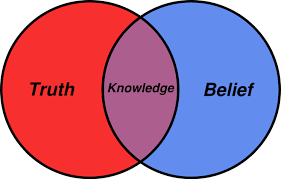
A little more, and we'll move on. If it is the case that Christian dogma is essentially propositional assertions that Christians believe but do not necessarily know, how much of what we take to be 'truth' is actually true? I don't mean to continuously pit belief and knowledge against each other; they are certainly not opposed in all ways. However, to figure out where belief and knowledge coalesce we must be willing to visit the possibility that they don't simply agree with each other because it would make things less difficult otherwise. There is no reason to dogmatically hold to mere propositions as if those same propositions were not only their own context but their own content, too. What is believed has a direct impact on what, and how you come to know things. And conversely, what you know will impact what you believe.

So which, if any, of the Christian dogmas are knowably true? And which, if any, of the Christian dogmas are simply believed to be true? It's a frightening question to ask, really, for it opens up the possibility that what you may believe may, in fact, be wrong. And, in fact, those beliefs may be wrong because there's no way to know if they're true. And to suggest that that's why we have to take the Christian testimony on 'faith' is to suggest the same thing as simply believing without knowing.

Thursday, December 3, 2009

Questioning Authority

Okay. I have internet at home again, so I will be able to start regular blogging once more. Hopefully there are still some interested readers. Four months of involuntary hiatus can, I understand, diminish enthusiasm for regular readership and participation.

In any case, let's get things going with a bit of a bang. Authority takes on many forms: absolute, provisional, juridical, religious, etc. On St. Cynic, I deal almost exclusively with religious issues. Given that, let's take a look at the definition of religious authority, how it is expressed, enforced, and whether it is legitimate.

For example, Reformation theologians didn't subvert the notion of religious authority, they simply removed it from the hands of a highly corrupt papacy. Their emphasis -- at least in the Lutheran circles -- was on the freedom of the individual conscience to apply the moral standards, salvific message, and confessional doctrines of Scripture and the Book of Concord. Catholics charge that this is an abrogation from the papacy and the absolutist claim the Roman church had on Scripture, tradition, faith and morals. In both cases, each ecclesial communion based their claims on an absolutist sense of truth, and an assumed unerring interpretation of holy writ and tradition. In both cases, both factions viewed each other's 'authority' as illegitimate.

So, my question is, first, what is authority? And second, how can authority be properly expressed, enforced, and legitimized? Finally, do we even need religious authority; that is, is it essential?

What are your thoughts?

Sunday, August 23, 2009

What If I'm Wrong?

Today, I dumped some reflections on a Facebook site that note some of my recent personal faith challenges. Most notably, I'm concerned about the character of God (Yahweh) in the Old Testament. Here is what I wrote:

"God afflicted Moses' sister with leprosy because she was jealous of said Cushite. God also turned Lot's wife into a pillar of salt because she got a little too curious about the fireworks happening behind her. Sure, she was 'disobedient' but the comparative morality of the situation in a larger context seems entirely disproportionate.

God also seemed to entertain Jephtha's foolish declaration to sacrifice as a burnt offering the first living thing to walk through his front door after his defeat of the Ammonites. How heartbroken was Jephtha when, upon his victorious return, his daughter greeted him at the front door (Judges 11)! Nevertheless, the great general cooked her, and apparently that's okay by God.

It would seem to me that God's moral character needs some vindication if the Old Testament stories are literally true: how wide is God's mercy if He's fine with accepting indecent sacrifices by blowhard, battle-ready, genocidal generals? And if it's all just allegorical, what moral decency can we gain from such a story?

Today I am heartbroken at the seeming depotism of the Old Testament stories. I'm also crushed to learn that archeological proofs show Yahweh as a local god of a small tribe of Israel, and that El was considered the god above Yahweh (who was simply a mountain god) [see Karen Armstrong, "The Great Transformation"]. If this is true, how much of what we believe is simply a tapestry of tangled tales, and primitive sophistications obfuscated by time, translative change-overs and blatant forgeries?"

I'll be honest and say that daring to ask the question, "what if I'm wrong?" leads to a frightening conclusion: you might just be. In my case, I'm beginning to wonder if I am. The New Atheists are a good deal of stentorian emotionalism, and strident protestation written with the rhetorical flavour of witty academia. In the end, they are just as fundamentalist in their objections as the religious are in their assertions. They can balk all they like at that observation, but their books bear out the viability of my conclusion.

When we draw on historical research, however, we find a different landscape. Certainly religious historians like Armstrong are not without their biases, but a tad more creedence can be placed on their findings. And its these findings I find most disturbing. For example, the Old Testament god, Yahweh, seems to be an amalgamation of a localized mountain god, Yahweh, and the competing Jewish conception of god as El (crudely put, the Sky-god), who was, logically above the mountains, and therefore above Yahweh. Apparently Yahweh was portable, too. So, when they couldn't agree, Yahweh was moved around Israel in company of the Axial peoples before eventually being combined with El. Thus a polytheistic notion of god became monotheistic, and Yahweh's name won the day.

And given that Yahweh was portable -- no longer just a mountain god, that is -- it seems a little more understandable that Jesus would quip that "if you have faith the size of a mustard seed, you can say to this mountain 'get up and move', and it will" (para. of Matt. 17:20). It also makes more sense now to echo with the Psalmist "I lift my eyes up to the mountains, where does my help come from?" (Psalm 121).

Given all of this, however, I am faced with the question, "are my beliefs in the literal, historical Judeo-Christian faith wrong?"

My answer: I don't know. I'm declaring a temporary epistemological agnosticism on this issue. I need to research, learn, and reassess. For now, I'm wondering if Tom Harpur is right when he declares that Christ is a spiritual consciousness all humans have by virtue of the indwelling of God in all of us (see The Pagan Christ). This conclusion, while poking at the fringes of so-called gnosticism, rings consonant with the notion of imago dei. But is a purely spiritualized version of religion right? Admittedly, if I took on that perspective, I'd still have to visit the question, "what if I'm wrong?"

I don't know if I'm ready for what that might imply.

Sunday, July 12, 2009

Stenger's Failed Hypothesis P. I

Victor J. Stenger is professor emeritus of physics and astronomy at the University of Hawaii. He has also written several respected books. One of which is his treatise on the non-existence of God, God: The Failed Hypothesis (How Science Shows That God Does Not Exist).

I am not able to write on the details of scientific research, so on that account, I can confess that Stenger definitely has an edge on me. However, his intended purpose -- to show from science that God does not exist -- runs headlong into an area I can makes heads-or-tails of: theology and philosophy.

Now, to be sure, Stenger has done an excellent job laying out his case. In short, Stenger reasons from physical data that the universe looks just as one would expect if God were non-existent. By way of Karl Popper's doctrine of falsifiability (essentially, an assertion can be shown to be false via physical tests/experimentation), Stenger moves to show God as an unverifiable assertion; that is, God cannot be shown to exist through the use of modern scientific methodologies and applications. To quote Stenger:

"The thesis of this book is that the supernatural hypothesis of God is testable, verifiable, and falsifiable by the established methods of science." [1]

Falsifiability seems to be a reasonable guideline at first glance. But when one really takes a good look at falsifiability, it is a principle, or assertion, which itself cannot be falsified. For example, (from the Wikipedia link above) "all men are mortal" is an assertion which cannot be falsified because no amount of physical data can deny that statement. By contrast, however, an experiment can be rigged to show that "all men are immortal" is definitely falsifiable; visit a morgue and the falsifiability of "all men are immortal" is self-evident.

The doctrine of falsifiability on the other hand, is a notion that cannot be tested and shown false because it is a strict, or pure existential statement. That is, untestable due to being non-empirical. This agrees with Popper's original intent for falsifiability: only empirical statements are subject to falsifiablity because philosophical and metaphysical assertions are irrefutable by definition.

To boil this down a bit:

1. Statements that imply, or assert anything to do with actual existence are empirical statements, and therefore testable.

2. The statement that "God exists" asserts the actual existence of a divine superpower, therefore God must be detectable by scientific method.

3. If God cannot be detected, he does not exist. If he can be detected, then we can enjoy the knowledge of his reality.

Stenger's use of falsifiability is commonplace amongst scientists. But my problem with it is simple: why are scientists drawing from the purely existential assertion of falsifiability to justify empiricism? And what happens if we consider assertion itself a form of data? How can you test the falsifiability of the data of the nature of assertion? To put it another way, what data shows assertion to be falsifiable?

Perhaps I'm playing a linguistic game. If I am, I'm not intending to. But I think I'm concerned about Stenger's premise of falsifiability. It is a self-referrential, self-confirming methodology. On that basis, it becomes a severely biased premise that ultimately affirms itself, and automatically excludes anything that does not fit within its pre-established parameters. In effect, it does the very thing that people say they don't like about the followers of the three monotheisms: reason itself to be right above all other ways of knowing.

Given the problematic use of falsifiability, Stenger launches into atheological arguments against the existence of God. He often accuses theists of having definitional problems within their premises and, while doing so, regularly misdefines the position of theists and the premises they use to comprise their arguments.

More, Stenger seems to think that science alone is rigorous in its demands for properly supported ideas, and not just blindly accepted assertions.

"What history shows is that science is very demanding and does not blindly accept any new idea that someone can come up with. New claims must be thoroughly supported by the data, especially when they may conflict with well-established knowledge." [2]

As with science, so with theology and philosophy. Any cursory reading in church history, or the history of philosophy will reveal the same ardent striving for reliable support that science demands in modern times. Methodologies may have changed in some ways, but the demand for supported ideas and reasoned conclusions has not changed at all. So Stenger's implied accusation that other disciplines do blindly accept new ideas is defied by the historical divides between orthodoxy and heterodoxy, Platonic and Aristotelian schools, Augustinianism and Thomism, Cartesian dualism and monism, pyrrhic skepticism and fideism, etc. Stenger has concluded too hastily that science stands out in history in any way when it comes to examining data to arrive at a conclusion.

_____________________

[1] Stenger, Victor J. God: The Failed Hypothesis (How Science Shows That God Does Not Exist) Prometheus Books, NY, 2008, p. 29
[2] Ibid., p. 28

Friday, July 3, 2009

Reconciling Religion and Science

You can be an atheist and be a scientist. You can be religious and be a scientist. In the first case, you are a rational atheist. Oddly, in the second case -- at least according to some secularists -- you are either inconsistent about your world view (thus irrational), or disingenuous about your religious views. For how can one hold to metaphysical notions while concentrating almost wholly on the physical as a means of understanding?

What interests me about this is that it comes with the assumption that only testable, physical data is valid for justifying knowledge. Hence revelation, a great deal of philosophy, illumination, mystical experiences, personal experiences, psychic experiences, mythopathic intuitions, intuition itself, and any other form of knowledge I've missed suddenly becomes irrelevant and untrustworthy. Keep your anecdotes to yourself please; the Ministry of Evidence is open only to those with bunsen burners (mortars and pestels may be considered).

Lest I be accused of soft-selling the importance of science, I see it as an essential study. I think, however, that scientists who attempt to dissuade people from their religious views on the basis that a particular set of experiments have not been able to confirm such-and-such a dogma, doctrine, claim, etc. may just be missing the point of religious assertions. Namely, religion is not (properly speaking) an attempt at a scientific view of the world, or even a particularly detailed description of what's in the world and how it works. Instead, religion is a description -- and sometimes a prescription, too -- of peoples's responsibilities to each other in the world.

That being said, are there times when religions teach things morally retrograde and dysfunctional? In fact, yes. Claiming a holy war on a neighbouring country because they haven't stamped their politics with a certain god's name hardly seems justifiable to the people who will suffer in the wake of such a declaration. More, such an action is scientifically unjustifiable because it elevates an ideology above the natural impulse to survive the vicissitudes of our material environment.

But by saying such a thing, I automatically move from the camp of fundamentalism to being a moderate, which in today's popular parlance means that I'm not truly devout because I appreciate the existential and humanitarian rights of all peoples everywhere. So given that I believe religion and science can co-exist peacefully, and work together to effect the betterment of our environment and our human experiences, it would seem from my perspective that being 'devout' consists not in a disavowal of fundamentalism (whatever that has come to mean), nor in adopting the moniker of moderate (an equally ambiguous label), but in accepting the inherent dignity of all people everywhere, while recognizing the concomitant claim that each person's dignity is a direct reflection of divinity; the imago dei (image of God).

If by appreciating the work of science I cannot be truly religious, then I have to question a) the evidence that supports the validity of being immature enough not to understand that real people hold inconsistencies and contradictions to be true all the time, and in daily life; and b) why religion is not examining its own progress in the real world that science is attempting to understand? In both cases, I am content to know that because there are internal inconsistencies in my religious views, and because science is always learning and discovering, there is room for inconsistencies in my brain. I welcome them. I grow from them. And I do so without any 'real' conflict affecting the outcome.