Showing posts with label Reflection. Show all posts

Sunday, April 3, 2011

Masters and Slaves

Warning: This post is going to be harsh and offensive.  If you're disinterested in raw emotions coupled with stinging invectives, stop reading now.  If you can keep a dispassionate view and recognise this entry as what it is--an explosion of stressful feelings not directed at anyone in particular--then keep reading.

Who are the masters among us?

They seem to be those who manipulate and weasel their way into positions of power, thinking themselves suited for directing the lives of others.  They seem to be curdled souls tortured by unresolved psychological issues, who, in a sadistic twist, see fit to inflict their misery on others.  They seem to be the kinds of people who trip a macabre dance through the web of society, warts covering their eyes, and pestilential ideals burning the light of their days.  They seem to be the man or woman who thinks nothing of passing a regulation, bill, or expectation that indentures others to false pretenses, moral dissonance, and self-abasement.

Who are the slaves among us?

These passive souls lack the courage to block the passage of those who would purposefully dominate them.  They can't--sometimes won't-- see their own personal sovereignty as a human being, a member of the natural world.  They kowtow to the masters for fear of  being ruled too harshly; as if by cowering blindly under a self-proclaimed dominator their life will go easier for them; as if by denying the freedom inherent to their existence they will be able to gain the approval of those who seat themselves in places of authority.  They are willlingly blind, purposefully silent, self-abnegating, falsely humble, arrogantly immoral about their own self-worth, given to humourless self-deprecation, and easy to turn against their own kind.  They are sickly, weak, tepid personalities forced ever deeper into their own concentric shells by the force of their own untamed illusions and the violent machinations of those who presume the place of a master.

But the master doesn't need to be a maniacal fuckwit stamping about the earth in some sophisticated temper-tantrum; he doesn't have to be the person who gains his titular superiority by seeing how many people he can manipulate into bending over.  He can give those things up for a more reasonable, more mindful way of being.  He can change his negative self-limitations into positive self-sovereignty.

Similarly, the slave doesn't have to be a slave.  The alternative is blindingly simple: he can choose to be free.  He can shed his snake-oiled false humility, straighten his shoulders and recognise that he belongs: he belongs inherently to a class of creatures that have a unique freedom.  Why should anyone, let alone a slave, limit himself by his own preconceptions of useless servility?  Why serve something "greater" while touting the contradictory message that you are "unique"?  Doesn't that uniqueness assume the greater?  Doesn't being unique mean, definitionally, that you are greater?  What can be greater than the singular essence of your unique self?  There has never been a you before you, and there never will be another you after you: that makes you the "greatest," doesn't it?


If you fit the abject cowardliness of the modern slave, if you understand that your limitations are self-imposed (e.g., you can't do such-and-such because you haven't gone to university to get your letters), if you're the person who sneers at mainstream social impositions (e.g., getting an English degree to prove you can refer to others who write well), then bloody-well get off your ass and start doing it!  You don't need to modify your desires, your ambitions, your passions, to fit anyone else's expectations of how you should be.  Stop listening to the message of the masters, the slave-drivers.  See your uniqueness as your evidence of your sovereignty.

If the fact that no-one else is you doesn't convince you that you are, definitively, "the greatest," then you will always be the slave, the milquetoast personality that aspires to mediocrity, that lives under the bar as if it was a roof instead of raising it or removing it; if you cannot break free of the master-slave mentality that so predominates our cultural mechanisms, if you cannot declare your own personal freedom and sovereignty, then you are a slave and you will be ruled.  You will be ruled by the same self-limiting assholes that have made it profitable to thrive off of your weakness, your lack of creativity, your refusal to be a self-actuating personality.

Your uniqueness is proof of your greatness; it is the evidence of your personal sovereignty.  Stop feasting on the blandishments of mediocrity, of commonplace social expectations.  Start self-directing, self-dictating.  In essense, start being rationally selfish.  Or to put it less controversially, don't be afraid of self-referencing decisions: you are not required to sacrifice your personhood for the predeterminations of others who are no more fit to rule you than a camel is to play a guitar.  Be free.  Rule yourself.

Thursday, March 31, 2011

The Art of Choice P. I

What choice will you make?
It occurs to me that everybody is an anarchist. There isn't a person alive who doesn't freely exercise choice between alternatives. Even those within the most oppressive political climates make choices every day, choices that compel them toward whatever is in their best interest in the moment. And those of us who live in freer political situations have no more freedom than the oppressed: we simply have less to fear from the consequences of our choices.

Anarchy, when distilled to its most sedimentary concept, simply means "rulerless," or "leaderless." This is a way of being that all of us accept in our day-to-day, mundane lives. You don't have to go to work: you choose to go to work. You don't have to research your paper for university; you choose to. You don't have to scoop your dog's droppings from the lawn; you choose to. You rule your own life on your own terms. You, as an agent of action, choose between the alternatives available to you. Even when things are chosen for you, you compel yourself to accept or reject the choice made for you.

So why do people feel so beholden to have their choices made for them? I'm thinking specifically of churches now. The religious person, it seems, accepts the choices of her predecessors--no! she chooses the choices of her predecessors when she chooses the particular brand of Christianity she will participate in. The Catholic convert can only be accepted by her socio-ecclesial circle if, like the rest of them, she chooses to accept the doctrinal choices chosen (often) 1600+ before her existence.

She may choose trinitarianism, but quietly nod at Arianism. Yet to air her innermost, her truest choice, she would be summarily forced to decide between alternative punishments for her free-thinking assent: recant or be excommunicated. So while she thinks she may be making a choice for Catholicism, by choosing a certain expression of Christianity, her mind has been decided for her long before she arrived at confirmation class. She is anarchist essentially, and Catholic positionally.

This is the juggernaut we are all (in a bitter irony) forced to face when we consider our participation in society and social infrastructure: to get along, we must go along. In order to be, we must be ordered. But we are not to order ourselves; we are not to freely compel ourselves. In religion, as in politics, we are late on the scene; we are to content ourselves in the same pasture, not choose the pasture we know we will feel most content in. Doing so, naturally, makes one anarchistic (leaderless) and heretical (literally, "able to choose").

And since we freely choose between alternatives in mundane ways all day (every day), we must certainly be incapable of choosing in extraordinary ways on any day, yes? The logic doesn't follow, I know. But before I explore this topic any further, ask yourself this question: are you choosing the life you want, or wanting to choose a life that is you?

I'm interested in thinking through this with you, if you're willing.

Thursday, March 24, 2011

Jiddu Krishnamurti

Jiddu Krishnamurti
This morning, a friend of mine inadvertently tipped-me-off to an Eastern philosopher, Jiddu Krishnamurti.  I had encountered his theosophical writings when I was in bible college in 1996.  In particular, I was launched into many years of socio-cultural reflection by this one quote: "It is no measure of health to be well-adjusted to a profoundly sick society."

Having been reminded of this sage this morning, I sifted through some other material I could find on the net, and came across this quote.  I hope you enjoy it, and feel free to comment on it.
"Truth is a pathless land." Man cannot come to it through any organization, through any creed, through any dogma, priest or ritual, nor through any philosophical knowledge or psychological technique. He has to find it through the mirror of relationship, through the understanding of the contents of his own mind, through observation, and not through intellectual analysis or introspective dissection. Man has built in himself images as a sense of security – religious, political, personal. These manifest as symbols, ideas, beliefs. The burden of these dominates man's thinking, relationships and his daily life. These are the causes of our problems for they divide man from man in every relationship.

Saturday, March 12, 2011

Rot and Stink

"In a criminal society, goodness is a crime. We have no moral obligation to tell the truth to the devil. To do so is likely to be actually immoral." --Dee

I was in a conversation with a well-spoken activist--at least, that's what I'll label him for the purpose of ease--and we were enjoying an exchange about the principles of anarchy (see quote above).  For example, anarchic philosophy calls for non-violence; anarchic philosophy emphasizes the sovereignty of the individual over above the collective; the responsibility of the individual is to provide for his own needs by the work of his own mind and hands, not by leeching off of the handouts of infrastructure when he is capable of doing otherwise.

However, our current socio-political climate does not allow for non-violence.  Consider our nation's involvement in wars that have nothing to do with us (e.g., Iraq).  Consider, also, that in Canada each person is in a holding pattern so far down in the lattice-work of control that considering yourself a 'sovereign' (solely over your own life, mind, and no-one else's) comes across as "eccentric" or "idiotic" or "crazy."  Or, consider that taxes are enforced: you earn your living, your country takes money from you it didn't earned, puts it towards ends you may not support, and then threatens you with fines and possibly jail-time if you don't give over a portion of your money.  This last example has the same rot and stink about it that the medieval church's enforced tithing did.

Whether or not I agree with these principles, I was given pause to think about who I am in contrast to the larger collective (society), and what the nature of our present collective is: are we living in an actual democracy?  Is democracy defined simply by being able to vote at elections?  Or is there something more to it that isn't being effected in Canadian culture?  If I were to consider myself a sovereign, how would that effect my participation in the common-place infrastructure of society?  Is it "criminal" to not give your money to a bigger group of people (the government) when they haven't earned it, and simply because they declare it criminal to not give money to them?  Should the government be re-labeled Big Vinny, and considered a sophisticated leg-breaker?

I don't know.  At the very least, I was forced to think of some very interesting alternate points of view.  And, being the curious person that I am, I appreciated the mental exercise said activist gave me.

Tuesday, February 22, 2011

Questioning God

At some point in almost everyone's life, the question of the existence of God moves from a rosy sentiment to an intellectual briar patch. The shiny world of youth makes it easy to rely on the claims of one's parents that God is real, personable, and knowable. Or the equal, yet opposite simplicity that God is a quaint mythology fit for a pre-scientific world, but no more real than Santa Claus, the Tooth Fairy, or the Easter Bunny.

Soon, however, maturity intrudes on our winsome innocence. We start asking harder questions. For example, just what kind of God is it that looks on as countless millions are slaughtered in religio-political pograms? Wouldn't God be just the right arbiter in human affairs to help us avoid senseless killings? Or, if God isn't real, how do we account for morality, conscience, or the seeming uniformity of nature? Given our moral inclinations, why haven't we come up with a solution to the horrors we perpetrate on ourselves? And what are the empirical sciences doing to advance our moral status in the alleged absence of deity?

On the other hand, it would be easy, even practical to dismiss the question of God altogether. Afterall, neither religious nor secular metanarratives can ultimately prove their claims regarding the divine. So why be bothered with something that cannot be proven conclusively, or conclusively disproven? Why pursue a subject that, given its ultimate non-conclusion, will require faith in either the propositions of the world's religions, or faith in the evolving world of the sciences?

But how practical is it to dismiss questions that help us – individually, and collectively – form a sense of our place in the universe? Is it practical to eschew religious claims when many of those claims have helped shape the cultures, and perceptions we participate in today? Is it practical to disregard the findings of the sciences? Would gravity be less binding if we were unconcerned to pay attention to its effect in our lives? Would God be less of a question if we found it practical to disregard the effects of religion around the world? Would this kind of practicality even be honest?

Sunday, February 6, 2011

A History of God: Reflections & Review P. II

In Part 1 of this series, I provided a brief overview of the purpose behind Armstrong's book: to examine the evolution of the idea of God within the three major monotheistic religions of the world: Judaism, Christianity, and Islam.  I also noted that Armstrong's historical scrutiny of the monotheistic conceptions of God comes by way of the documentary hypothesis, a source theory of biblical interpretation that seeks to arrange chronologically the inconsistent and independently authored texts of the earliest books of the bible.  Given the seemingly independent perspectives within the books of the Torah--and subsequent Old Testament books--the documentary hypothesis suggests that a series of redactors (editors) prepared the disparate documents into the forms we've come to know as the Pentateuch.

Citing Armstrong's interpretive tools goes a long way in helping to understand why she comes to some of the conclusions she does.  If it is true that the Pentateuch is a patchwork of originally independent narratives that have endured (who knows how many) redactions, then the traditional Christian perspective that the bible is wholly reliable can reasonably be questioned: reliable in its original, unedited form?  Reliable because of its redactions?  And how do we know that those who undertook to edit the original manuscripts were reliable people?  What constitutes 'reliability' in a religious context when dealing with scripture? At what point does having 'faith' that the scriptures are reliable cease to be an acceptable premise?  And further to those questions, if the writings of the major world religions can be questioned as to their reliability, can those religions themselves be questioned as to their reliability on the whole?  That is, if the religions of the book are questionable on a literary level, what aspects of that religion are reliable at all?

I won't be pursuing answers to those questions in this series, but suffice it to say that they are reasonably important questions, and the content of Armstrong's book certainly gives me pause to consider searching out reasonable answers.

But enough of my preamble!  On to the reflections and review.

Introduction (pp. xvii - xxiii)
I have read Armstrong's introduction to A History of God a few times before reading the actual book.  There are several instances within those (roughly) 7 pages that resonated very deeply with me.  For example, Armstrong, right out of the gates, admits to her childhood belief in God as an implicit or "unquestioned" assumption, but because of the arid pomposity of the religious definitions that surround the notion of 'God' she cannot meaningfully state she had faith in God:
"There is a distinction between belief in a set of propositions and a faith which enables us to put our trust in them.  I believed implicitly in the existence of God; I also believed in the Real Presence of Christ in the Eucharist, the efficacy of the sacraments, the prospect of eternal damnation and the objective reality of Purgatory... God, on the other hand, was a somewhat shadowy figure, defined in intellectual abstractions rather than images."
 Like Armstrong, I had my own implicit belief in God when I was a child.  I recall demanding I be brought to church when I was eight.  At the same age, I was baptised, though I know I had no real understanding of the religious significance of that event.  A few years later, I sat in the back of my dad's car reading my bible while he and his girlfriend ran errands at a local plaza.  When they returned to the car, I plucked up my courage and asked my dad what he would think if I became a priest and taught people about God.  His response was disheartening to a child of 12: "Do what you want.  Just don't talk to me about it."  This was the same response I received from him when I was 16 and told him that I had become a "born again" Christian.

All this is to say that, like Armstrong,
"As I grew up... I began to be moved by the beauty of the liturgy and, though God remained distant, I felt that it was possible to break through to him and that the vision would transfigure the whole of created reality."
Disappointment is germane to most people's lives, however, and Armstrong did not experience that transfigured reality.  "Eventually, with regret," Armstrong writes, "I left the religious life..."  As did I, and with many, bitter, emotional struggles.  But having pursued her religious studies as much as she did, Armstrong was unwilling to put away her passion to understand religious reality:
"My interest in religion continued... and I made a number of television programs about the early history of Christianity and the nature of the religious experience."
And having scoured the depths of religious history, Armstrong came to an unoriginal, yet beautifully expressed conclusion about the nature of religious experience and activity:
"Like art, religion has been an attempt to find meaning and value in life, despite the suffering that flesh is heir to.  Like any other human activity, religion can be abused, but it seems to have been something that we have always done.  It was not tacked on to a primordially secular nature by manipulative kings and priests but was natural to humanity... Throughout history, men and women have experienced a dimension of the spirit that seems to transcend the mundane world.  Indeed it is an arresting characteristic of the human mind to be able to conceive concepts that go beyond it in this way."
It must be said, however, that although religion has been, and probably will continue to be an activity integral to human participation in the world, the rise of scientific savvy is a formidable challenge to the religious-minded.  For if "meaning and value in life" can come from ancestral liturgies and ancient doctrines, then the continual increase in understanding and factual comprehension science continuously provides may overtake religious devotion.  Certainly knowing the factual details of reality does not detract from life's meaning and value, but should reinforce it if those meanings and values are true.  Certainly deriving one's meaning and value from what is actual and demonstrable will grip people's minds with at least as much fervour as the meaning and value in life that non-demonstrable, non-natural claims have traditionally held.

Whatever the case may end up being, there is no historical precedent that even remotely recommends a religionless future.
"...religion is highly pragmatic... it is far more important for a particular idea of God to work than for it to be logically or scientifically sound. As soon as it ceases to be effective it will be changed--sometimes for something radically different."
Thus notions of God are entirely provisional: they evolve just as much as people and their cultures do.  The success of monotheisms such as Judaism, Christianity, and Islam has not been in having precise knowledge of the divine so much as it has been that the monotheistic religions have been able to adapt culture to their creeds.  Previous to monotheism religious motifs were subject to the suasions of culture.  And indeed, so-called "pagan" religions continue to develop along the lines of the cultures and people-groups practicing them.  Monotheism, however, dictates culture by enforcement of creeds: you cannot be a 21st century Christian without holding dear certain creeds.  You can, however, be a raging pagan, polytheist, or religious pluralist in the 21st century even while brushing-off ancient dictates.

This, of course, makes me wonder why people prefer to be directed in their beliefs, rather than choosing what to believe.  The cafeteria Catholic (pejorative, but apt term that that is) is still beholden to certain essentials, or he isn't a Catholic.  Period.  The smorgasbord pagan is really only expected to choose what he will.  And both the Catholic monotheist and the pagan pluralist enjoy an absolutist sense of reality: they both believe that they are wonderfully right, and that others are woefully wrong.

Be that as it may, such concerns are somewhat allayed by Armstrong's right observation that

"Whatever conclusions we reach about the reality of God, the history of this idea must tell us something important about the human mind and the nature of our aspiration."
The import derived from conversations about God seems to be purely personal.  Given that, it really doesn't surprise me that somewhere along the historical line, the concomitant notion of a "personal God" was recognised in the fact that people conclude their notions of God wholly subjectively: no two people have the same experience of the same idea.  'God', the abstract, is concretized differently in each person.  Thus God-talk is strained at best, and tests credulity not only at worst, but inevitably.

As is proper, Armstrong should have the last word here:

"All talk about God staggers under impossible difficulties.  Yet monotheists have all been very positive about language at the same time as they have denied its capacity to express the transcendent reality.  The God of Jews, Christians and Muslims is a God who--in some sense--speaks.  His Word is crucial in all three faiths.  The Word of God has shaped the history of our culture.  We have to decide whether the word "God" has any meaning for us today."

Friday, January 28, 2011

Big Words

I have been accused of using too many "big" words more than the total word-count of Marcel Proust's collected works.  That is, of course, an exaggeration.  Still, the number of times I have endured the crassness of being told "you use too many big words," or "why don't you just speak in English," or "would it hurt you to speak a little more simply" has become a source of silent irritation for me.

So now I'm going to write about it.  And I may just use sesquipedalian verbiage to spurn any familiar detractors.

To start, Ayn Rand wrote "words are a lens to focus one's mind."  If that is true, then the larger the lens the greater the focus.  Which really stands to reason since the proper use of a bigger word is not an easily accomplishable feat for the neophytic philologist.  Can I say that my use of larger words has always been clear, and well executed?  Heavens no!  I amassed an admirable storehouse of "big" words at a very young age simply by listening to the adults around me.  I didn't really know how to use those words properly, however, until I was more mature.

That's when I entered highschool.  In highschool, I was practically battered with small-worded accusations by friends and classmates alike for using words outside of their ken.  The same unthinking trend followed me through college and seminary, too. It was really quite demoralizing.

Who of us would arrange the courage in ourselves to accuse an excellent musician of being too quick at trills?  What right-minded individuals would upset themsevles for a gymnast's greater agility and balance?  It would seem to me that having a decent capacity for expression is no greater a crime than being able to run faster than others, or tickle out a frenzy of notes on the ivories with more finesse than the typical church pianist.

Now, I could go ahead and estimate the kind of distorted psychology that prompts such ill-reasoned attempts at censoring another's self-expression, but that would be too much of a meandering speculation for me to feel comfortable with.  Instead, what I've boiled things down to, in my own mind, is a more generous perspective. 

I think it's simply a matter of "jargon."  That is, people have environmentally prescribed jargon-sets that help them navigate their way through assumed common experiences.  And depending on the variety and intensity of those experiences, the amount and use of jargon changes.  But when faced with someone who can work with jargon across varied and diverse fields, communication can become a little intimidating.

So, what about jargon?

Well, everybody speaks it. Some more than others. It's especially rampant amongst chattering intellectuals, the back offices of medical centres, and the austere corridors of academia. But it happens on the street, too, where the “huddled masses” spin their cant in an ever-evolving dance of gritty descriptions and colourful metaphors.

When people speak their jargon on the streets we call it “slang.” When people pour out the lingo in cloistered meeting halls, sipping coffee and polishing their chins, we dignify it by labelling it “terminology.” And it may very well be that. But the only difference between the terminology of the person on the street, and the slang built in to certain fields of study is the environment in which they're used.

Who hasn't had the common experience of meeting-up with a co-worker at the coffee maker and spending the next several minutes listening intently to a subject that seems distant, foreign, even arcane? Who hasn't had the experience of being that person at the coffee maker percolating stories in strange terms while your co-worker squints on, earnestly attempting to relate to what you're saying?

It's something that the philosopher Ludwig Wittgenstein described very well when he wrote, “the limits of my language mean the limits of my world” (Tractatus Logico-Philosophicus, 1922). The words people use give an indication of the personal world of their experiences. A person used to living in the harsh backwoods of the Yukon wilderness may very well seem like a different creature to the savvy urbanite used to a steady diet of posh trends, and fashionable mannerisms. The point remains though: however they choose to talk about their experiences, they bring their worlds to each other by the very words they use.

So to argue by accusation that another uses too many "big" words can (as it did in my case) have the effect not only of diminishing one's own world by sneering at expansion, but demeaning another's world by snidely implying it is 'wrong' or 'difficult' because it is too big.  Having given some thought to this subject, it seems obvious to me that the best course of action when dealing with someone who has a demonstrably wide grasp of the English language (or any language, for that matter), would be to ask for definitions and explanations when fronted with a word one doesn't know.  The residuals may just be that your own world is given greater scope and colour, and that the other's world is appreciated and made more enjoyable.

Not a bad trade-off, really.  Wouldn't you agree?

Friday, January 7, 2011

A History of God: Reflections & Review P. I


I've taken the plunge into Karen Armstrong's magnum opus A History of God (Knopf, 1993).  It is a book that any serious reader of religion and history would be well-advised to read.  The book aims to give an account of the development of the three major monotheistic traditions (Judaism, Christianity, Islam) and their respective evolving ideas about God (e.g., who and what God is, how God has acted in history, and how God has -- interestingly -- taken on competing perspectives despite the same Abrahamic roots).  Finally, Armstrong examines some modern philosophies concerning God, such as the 'death of God movement' and post-modern conceptions of God.

Armstrong is no friend to ignorance, so anyone investigating the perrenial question of 'God' had better come to this volume with an open mind to learn, or an already firm grasp of the issues attending the monotheistic religions and their notions of God.  This is not to say that Armstrong has written a compendium of arcana, or some arid piece of abstracted academia.  It does mean, however, that she has taken an angle not popular to the usual considerations of religious history.

More specifically, Armstrong's work on the Judeo-Christian heritage draws from a particular source theory called the Wellhausen Hypothesis, or the Documentary Hypothesis.  Such a theory of biblical origins is minority opinion, absolutely, when contrasted with the classic circles of literal-historical method.  Though it isn't without merit, the literal-historical method takes too much advantage of the willingness and (sometimes) unintentional ignorance of the well-meaning believer. 

For example, it is clearly the case that there are two different creation accounts in Genesis, but the literal-historical method, while it may recognise this, eventually relies on the willingness of the believer to accept on faith the discrepancies in the biblical narrative.  The documentary hypothesis, while not unsympathetic to the demands of faith to believe the claims of the biblical narrative charts, dates, rearranges and makes a fair-minded attempt at explaining oddities in scripture by examining the historical-cultural events attendant to Christian holy writ.  Once that is done, the reader has a more thorough working knowledge of what the biblical authors were writing, and how they were communicating age-old stories in new symbols.  Granted, literal-historical method includes some of the same rigorous examinations of history and culture, but the difference is usually split between which hermeneutic is going to source evidence to support an already established outcome (literal-historical) and which explanation will review the evidence with an eye to assembling a scientific and irrespective account (documentary hypothesis).

Because Armstrong's account draws on the documentary hypothesis, she is bound to be discarded as 'confused' or 'godless' or what-have-you by the vast majority of Christians.  Despite this automatic anethema in the majority Christian world, Armstrong has still managed to pen one of the most dramatically successful historical theology texts in the Western world.  And the reason for this is not hard to see.

Certainly the boldly ambitious title A History of God claims people's attention right away.  But more, the gentle eloquence in Armstrong's recounting of the details of otherwise dead, dusty, and dilapidated eras gives the reader a personal sense of the events she relays.  Such an ability to suffuse historical academics with life, light, and occasional nostalgia enlivens the mind to the subject matter, and that is what I personally think owes to the massive success of Armstrong's book.

Alongside Armstrong's easy but penetrating academics, she is not afraid to call a spade a spade.  So while she examines the topics at hand, she sees the relevance of addressing contemporary issues that arise out of the mindsets of the religious history being examined.  For example, there are very few people in the televised Western world unfamiliar with the cultural tactic of claiming God for partisan motives.  Presidents and Primeministers in times of war, call God out as if he were a super-soldier destined to ordain the victory of whoever has enough public pious pomp.  Or, as bequeathed to Jews and Christians everywhere, God has culled certain people to himself as a preferred group: the elect.  Such notions of holier-than-others, or pre-ordained preferential peoples wins no sympathy from Armstrong.  In a memorable quote, she highlights the dangers of such ugly and banal concepts as 'election theology':
The dangers of such theologies of election, which were not qualified by the transcendent perspective of an Isaiah, are clearly shown in the holy wars that have scarred the history of monotheism.  Instead of making God a symbol to challenge our prejudice and force us to contemplate our own shortcomings, it can be used to endorse our egotistic hatred and make it absolute.  It makes God behave exactly like us, as though he were simply another human being (p. 54-55).
Whose side is God on?
Believing yourself more special than everybody else certainly runs one adrift of reality and sets one up to be a potential danger.  Being unafraid to reach out for a moment of sagacity, Armstrong drives home a practical and helpful point to highlight the difference in thinking of some of the ancient peoples and a more morally advanced perspective on the inherent equality of all people.

Still, Armstrong is not preachy, even if she does drop a pearl of wisdom here-and-there throughout her book.  It befits someone of her unusual erudition to address some of the more troubling aspects of humanity's sickly dogmas.  And carefully coddled as those admontions are in a lucid recounting of historical religion, nothing is lost in Armstrong's collisions with cheap theologies.

Saturday, January 1, 2011

2011: A Year of New Directions

It's 2011: How will you change your life this year?
Welcome to 2011!

Saint Cynic will be broadening its scope in 2011.  As many of you already know, Saint Cynic tackles religio-philosophical issues oftentimes by reducing them to the absurdities they are, and then lampooning those issues with some critical, or snarky remarks.  That won't stop.  It's good fun, and I enjoy it.

However, I will be concentrating on writing some more serious essays and presenting them as a series.  My topics will include the philosophical and religious issues I've always examined, but I will also be jumping face-forward into natural, fully concious living; something some people call "wholistic living", or even the "primal lifestyle."  The point of these articles will be to contrast the way modern Western society lives now with the way our ancestors lived eons ago, and to highlight the evolutionary biology that supports a return to some of the dietary and fitness dispositions of the non-agricultural ancients.  It's a topic I'm quite excited about and eager to share with you. (New links to do with this subject will also be appearing in the sidebars, too.)

More, I'm planning on taking Saint Cynic to the streets.  That is, I'm going to be looking into making this site an actual physical entity by scouting out possible regular meeting places for fellow culture-observers, and even sussing-out means to publish a magazine that will include articles from guest-writers.  My goal is to see if I can make my venture here profitable in the offline world.  To that end, I will also be searching for domain providers so I can make Saint Cynic an exclusive name, independent of the usual blogging format.
Lift heavy things

As a personal goal, I will be continuing with semi-regular P90X routines, but combining them with two other elements: The Primal Blueprint, and FitDeck.  These dietary and fitness switches will drive me further into better health, maximize my body's potential, and improve my overall enjoyment of living.  Join me if you'd like to take on a healthy, wholesome challenge.

And on a more personal note, I will be pushing myself to leave my present employment and begin the journey of unjobbing.  This is a scary decision for me since it means divesting myself of the usual, predictable method of giving some faceless entity my time so it can give me money, and I can fuel a minimum number of my interests and passions.  I want to work to live not live to work, as the saying goes.  But I have to go about it wisely: I have wee'uns depending on me, and I'm not willing to let them be diminished in any way by my quest for self-realised income and autonomy.

Thankfully, I have a partner who is topped full of incredible talent in visual arts, communication, music, and intellectual capacity.  I think that together, we can take our lives by storm and start living in such a way that we are both happy, productive, and satistfied.

Those are some of my ambitions this year.  What are yours?  Please comment.  I would love to interact with you more!

Thursday, December 30, 2010

A Candid Reflection on Myself

Know thyself, in ancient Greek
I'm going to venture out into a little more personal territory tonight.  I'm feeling emotional, and I want to capture some thoughts.  Please bear with me.

Most people have come across the maxim "know thyself" at some point in their life.  The saying was inscribed in the pronaos (forecourt) of the Temple of Apollo at Delphi (pictured left), and it is probably one of the most important, sagely bits of information ever spelled out for humankind.  Afterall, what more helpful piece of information can there be than to understand your place in the world, how you fit, who you are, who others are in relation to you, what enlivens you to the world around you, what feeds your passions and snares your hopes; simply stated, what makes you who you are?

In the end, I cannot think of another more insightful charge than to get to know myself.  By doing so, I wonder how much of who I am would change?  I mean, part of knowing who you are is knowing who you're not, and then being brave enough to jettison those falsities.  Nevertheless -- and I'm certainly not the only one who does this -- I hold on to what I know is false about myself; I hold on to who I'm not.  And the end result of such a morbid practice is manifold: I don't get to know myself truly, others are forced to look past the veneer I unintentionally present them with, my values become blurred, and I act in ways that are disingenuous.

So why would I, and all the others who undertake to obscure themselves from themselves, do such a thing?

First, I think that it is partly unintentional.  There isn't a soul alive who isn't conditioned by their experiences along the way to adulthood.  No-one lives in a vacuum.  And because we are all influenced by the contexts under which we experience life, we are forced to endure many untruths that we unwittingly take on.  For example, a person growing up in a well-meaning family may experience a lot of sarcastic humour from their parents.  While this in itself is not intended for bad, the long-term side-effect of sarcasm may be that a person develops a pattern of self-demeaning.  That is, when he achieves something, or recognise something about himself,  he may automatically and unintentionally detract from his accomplishment by telling himself things like, "you could've done better," or "why didn't I do this sooner?" or "I've seen better."

The sarcasm of the well-meaning family helped condition a negative response in a family member who, for all intents and purposes, means to treat himself respectfully and kindly.  Nevertheless, the wholeness and intimate awareness of that person's actual selfhood is obscured by a needless and detrimental tendency to self-demean.  Such a person, while he may know himself quite well is, sadly, not in possession of his full selfhood.

Shame-based identity
Second, I think people obscure themselves from themselves because they are afraid they may end up disliking who they actually are.  That is, people are afraid of who they may actually be so they go to great lengths to hide behind preferred projections of who they'd like to be. 

I'll use myself as an example: when I was roughly 12 years old, I had enough self-awareness to understand that I constantly felt ashamed of myself.  To protect myself from the growing depression my sense of shame was engendering, I pictured myself as a strong, handsome, nigh omni-capable man bent on battling the forces of evil and preserving precious antiquities for the rest of the world.  And if you read between the lines of that last description, yes, I fancied myself a budding Indiana Jones.  I even went so far as to steal my uncle's cream-coloured leather gloves, and convince my grandmother to purchase a genuine fedora at the Stetson warehouse near where we lived.  In order to save myself from myself, I pretended to be someone else.

I didn't like me because I wasn't capable of seeing myself soberly.  What I saw when I looked into myself (usually at night when I was alone in the dark of my room) was a scared, disappointed, hurt, and lonely person.  I saw the negative remarks I heard around me, and the resulting shame I thought I should feel for being dissatisfactory to others.  I wasn't a carpenter like the rest of the men in my family, and I wasn't a regimented and orderly engineer-type like I thought my mother's family was.  I was too different to be acceptable, therefore I didn't accept myself, and that resulted in a shame-based identity.  And that shame came out in fear-based searches for an identity that modelled who I'd like to be, ideally: Indiana Jones.  I didn't like me, but I really liked Indiana Jones.

All these years later, however, I still haven't completely shed the shame-based identity of that little boy.  I still haven't been able to make a coherent picture of who I actually am.  The difference now is that I'm eager to know myself because, at bottom, I really have no other recourse than to come face-to-face with myself if I want to actually live, if I want to be a genuine person, if I want to embrace the moral complusion that "Know thyself" implies on a person to be fearlessly real.

Who I am
I am not Indiana Jones.  I am not a carpenter like the men in my family.  Being twenty-four years in advance of my 12 year-old perceptions, I have come to understand that I am not a regimented and orderly engineer-type like I thought my mother's family was, and neither are they!  Still, who I am is a little murky to me at this point.  A lot has happened in my life to muddy the waters, as it were, which makes self-reflection that much more difficult again.  But mud settles, and ripples eventually steady, and what should be left, if I am patient enough to wait and see, is a loveable, enjoyable, and whole person staring back at me; a person I can call 'me'.

Monday, December 6, 2010

I Don't Believe In Hell

I don't believe in Hell.  I think the whole idea is contemptible nonsense.  If someone does believe in Hell, they must agree to some version of the following paradigm:
  1. God created everything, including people;
  2. People did stuff they shouldn't have and that made God upset;
  3. God set-up a place for people who make him miffed, and it is called 'Hell' (there's all sorts of unimaginably horrific torture that goes on without end in Hell);
  4. God wants to forgive everyone for not only doing irksome things themselves, but also for inheriting the irksomeness of the first people to ruffle God's feathers, as it were;
Conclusion: If you exist, you've been created sick, commanded to be well by asking forgiveness for sins you didn't commit but inherited, and if you don't ask forgiveness for those sins, then you'll suffer unmitigated torture forever and ever.  Amen.

Nope.  Sorry.  I don't buy it.  If the Christian message holds true, then Christ shouldered the burden of everyone else's sins.  That leaves everyone else standing on their own two feet, not taking on myriad generations of others misgivings.  That also means that if God created everyone sick, and demands that they be well, then there's no point in condemning them for the state he created them in.  Why bother creating anyone in the first place just to condemn them if they don't recognise their malady?

That is the message of a capricious and malevolent deity.

I think God's a little better than that.  If I can think of a more moral outcome to being a little spiritually daft, then I'm sure God must be slightly ahead of regular human morality, no?

Friday, October 29, 2010

ADD & Me

I've recently learned that I have ADD (Attention Deficit Disorder).  And while it is that knowing what afflicts you is helpful -- it certainly brings to light some of the reasons that I have chronically underachieved my whole life -- it is also, to my addled way of thinking, a tad bit detrimental. 

For example, I now have the added pressure of realising that so much of what has gone wrong in my life has been directly as a result of my scrambled brain.  So, not only do I have to make up for what I messed up, but I also have to correct my neuro-inheritance; i.e., the way my brain turned out because of my undesirable upbringing. 

Then, when I have accomplished that much, I have to set to work correcting my most important relationships: my marriage, and my fatherhood.

I feel dragged out, and beaten down by all of this.  I'm sure some of you out there can relate.

Something interesting has come of this for me, however.  Specifically, my wife commented to me a couple of weeks ago that "if [I'm] not thoroughly repulsed by the reasons why [my] brain has ended up the way it is, then [I'm] not ready to change." 

I'll admit that, at first, I was a little confused by what she said.  Why would I need to tread back over old feelings: anger, confusion, depression, etc. just so I could change my brain chemistry.  It didn't make sense.  However, as she explained more of what she meant, it became abundantly clear that she was right: I have to purposefully determine to reject any and all notions or behaviours that contributed to the reason why my brain has been disordered.  Until I do so, I'm not individuating from those occurences (e.g., childhood abuse), and I'm allowing myself the discomfort of keeping company with past shames.  Essentially, I'm living a shame-based identity.

Once my wife had explained this more, I felt a strange sense of liberty: it's okay for me to be really angry, to be pissed-off, unremittingly maddened about what contributed to my neurosynaptic misfirings, and deeply disgusted by how that has contributed to some fairly self-destructive patterns and underachievement.  It's not even unChristian of me to do so.  In fact, it would be entirely unChristian of me to deny myself and wish my condition away on a fanciful prayer or two.

No, no.  I have the work ahead of me.  And dammit!  I'm going to fix the problem and not leave this as another area where I've underachieved and self-destructed.

I love my wife.

Sunday, July 18, 2010

Things That Make You Go, "Hmm."


I'm not saying I agree, but it is certainly a thoughtful presentation. It has me thinking, that's for sure.

By way of The Thinking Atheist.

Thursday, June 24, 2010

Nostalgia

The photograph below was taken 162 years ago, in 1848.


It's a picture of New York.

My, how times have changed...


I like the old New York much better.

Monday, May 31, 2010

What if...

...Christianity isn't true? What would change? I mean, what practical, visible, hands-on realities would change?

People would feel a loss. A tremendous loss, no doubt. I imagine it might be like an unbearable funeral where everyone is gathered at the six-foot plot weeping and gnashing their teeth, but with nothing to bury. The anxiety, the angst and confusion fixing everyone to their spots would seem at once tragic and amusing. Like watching a mime.

Would anyone feel relief after they buried their mistaken beliefs? I know I've never felt relieved when I've found out I've been horribly mistaken. I've felt awkward, socially spent, emotionally void, confused; I've wanted to hang on to my denial.

So, what if Christianity isn't true? Then what?

Tuesday, April 27, 2010

Responses to the New Atheism: Like It or Not

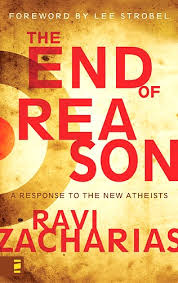
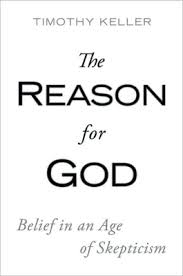
While reading literature on Atheism, I also fed myself a steady diet of books responding to the New Atheists. As in the last listing of books I posted, I will drop a picture of the dust-jacket on the left, state my 'Like' or 'Like It Not' in bold, sum the book up, and then give a small evaluation.

Like: It is reasonable to have faith. The Bible is a reasonable book that conveys reasonable truths that we can reasonably believe. Science has not disproven the Bible or discredited its moral teachings. There is no reason to accept the half-truths of the 'New Atheists', and every reason to re-visit the truths of biblical revelation.

Dinesh D'Sousa is clear, straightforward, and enjoyable to read. He meets the New Atheists on their own grounds, and uses their own sources to foil their attacks on religion, and on Christianity in particular. For the most part, his arguments are reasonable. However, just like the New Atheists, D'Souza often earmarks one side of the argument instead of presenting a wholistic look at the issue he is contending. To his credit, D'Souza is a wonderful rhetoritician and a persuasive writer. A certain lack of savvy follows from his inability to grasp the irony of arguing for a logical basis for faith, however. All-in-all though, D'Souza has produced a fine volume to add to the cultural conversation between religionists and anti-religionists.

Like It Not: A full-on counter-attack to Sam Harris' two landbreaking volumes 'The End of Faith' and 'Letter to a Christian Nation'. The worldview Harris presents in his infamous essays is utterly bankrupt, underscored by a vast ignorance, and nothing more than a charlatan's attempt at pedaling snake-oil metaphysics on a largely ignorant, unobservant culture.

Ravi Zacharias
is a prolific writer, and a compelling speaker. A former atheist himself, Zacharias has built up a large ministry to people of differing faiths, and non-faiths alike. His principle aim in this book, it seems, is to dispell the accusations Sam Harris has set out against religious people in general, and Christians specifically. Unfortunately for Zacharias, his book never gets off the ground. It stinks of reactionary emoting, not reasoned, and considerate truth-seeking. Oftentimes, Zacharias moves toward a point but suddenly drops off, leaving the reader attempting to estimate his conclusion, and never returns to finish his idea. He accuses Harris of being fundamentalist in his outlook, but does nothing to soften or diminish Harris' equal accusation that American evangelicalism, and radical Islam are dangerously fundamentalist themselves. More to the point, Zacharias' book, being from a former atheist, falls ironically short of showing why atheism is an illegitimate worldview. One wonders why a scholar of Zacharias' renown and intimate understanding of atheism could not offer a coherent rebuttal of atheism in a book that expressly sets out to do so. Sadly, Zacharias' book is a poor, poor read, and will most likely find its way to a used book store in the near future with a small inscription detailing the impoverished material inside. Caveat emptor, indeed!

Like: The so-called New Atheists have saddled themselves with the same burden as literalist Christians: they're both fundamentalists. Calling for the end of faith and religion while trumpetting utopian overtures about human moral progress is bipolar thinking at best, and does nothing to promote civil dialogue between atheists and theists. What is needed is not an end to faith, not an end to religion, not a new injection of Enlightenment utopian ideologies but the courage to engage reason where it leads, and embrace religion where it benefits humankind.

Chris Hedges is a poignant writer. In fact, I found myself elated, disturbed, frightened, and relieved by Hedges's critical appraisal of the New Atheists. And as much as the New Atheists want to balk at the notion of their position being fundamentalist, when their writings are distilled to their lowest elements, they come out just as fundamentalist as any typical literalist Christian group. Be that as it may, however, Hedges does not give quarter to religiosity, but attacks it just as fiercely as neo-atheism. So, all-in-all, Hedges's book is a hard-hitting attack on unthinking faith-heads, just as much as it is an attack on unthinking unfaith-heads. In that respect, it is a fair and balanced read.

Like It Not: Faith and belief in God have come under attack. Skepticism is undermining believer's confidence in the Word of God. People would do well to understand exactly what is being said about their faith, and exactly how to respond to it so that Christian faith can continue to flourish and nurture not just the believers, but the skeptics, too.

Timothy Keller
, while he has a wide-open and compassionate heart, comes across far too pedagogical, even cheaply condescending in this epistle. While some of the resources he has mined from are quite creative, they are dulled by the beige use of information he rambles out. More, while Keller seems to have a wide-ranging grasp of literature, philosophy, history, theology, and contemporary music, there is nothing in Keller's presentation of the Christian agenda that would give pause to even the most simple-minded literary atheist. His greatest strength in this book is that he can reduce large concepts into easily accessible and graspable ideas. Unfortunately, that same strength is also his weakness and his undoing: such simple presentations of Christian ideas leaves far too much opportunity to cut against the grain of his logic and undo his conclusions in ways that work against his evangelistic efforts.

Like: All religions have at their core one essential message: compassion. The expressions we use to convey that compassion are what are known as 'religion'. We can class religion into two distinct spheres: mythos (what is believed and practiced) and logos (what is reasoned and taught). To write-off religion on the basis that it doesn't conform to modern concepts of science and reason is to give-up a great swath of rich cultural heritage, learning, and useful metaphysics that not only inform our deepest human yearnings, but provide the substance that recent skeptics have been parasitically feeding from.

Karen Armstrong
has done the world a favour with this her latest book. Her writing is clear, sagely, incisive, profound, and beautifully informed. The occasional bursts of dry humour to break the weight of vast historical data are well-placed and drive the reader forward on to new insights and discoveries. After wading through thousands of years of philosophical and religious concepts, Armstrong finally cracks the whip on the New Atheists in her epilogue, giving them a solid scourging for their purposeful ignorance, but at the same time applying salves to their wounds by informing the reader that their perspectives help the religious ask necessary and important questions. There is no shortage of delight to be found in Armstrong's latest book, and I hope every serious student of religion and the philosophy of religion makes use of it to deepen their understandings of the strange creature homo religiosus.

Thursday, April 8, 2010

Sexrosanct

Mary's perpetual virginity. Ever a popular sentiment amongst Catholics, but one which seems at odds with reality.

Before I respond to the Catholic blither and blather of Mary's reproductive prudery, let's survey what it is Catholics believe on this count.

First, Mary was a virgin before, during, and after Jesus' birth. Second, after Jesus was born, Mary never engaged in sexual congress with her husband, Joseph. Third, Mary's perpetual virginity is distinct from the Immaculate Conception of Mary; the former refers to Mary's inconsummate marriage to Joseph, the latter to Mary's being born into the world without the stain of original sin. And finally, fourth, Mary's virginal status means that Jesus had no siblings. While being an obvious point, it is important to note number four because it provides a ready-steady defense for the use of the words "the brothers of Jesus" (Matt. 13:55; Mk. 6:3) to allegedly mean "cousins of Jesus".

If the gospel accounts of Jesus' arrival in this world are true, then there is no difficulty believing that Jesus' mother was a virgin before his birth, and during his birth. It was customary of Mary's time -- and is even sensibly encouraged today -- to abstain from sexual intercourse before marriage. Mary was betrothed (i.e., engaged, to use modern terminology) to Joseph when she became pregnant with Jesus, which, to Joseph, appeared as infidelity until he was reassured by an angel that all was well, and that Mary was pregnant by God's doing.

This in itself seems like a peculiar infidelity that God would impregnate another man's wife (I think Zeus was prone to the same misgivings, so no surprise a similar motif would show up in a Hellenistic culture). Leaving that aside, however, if it was that Mary was born without sin, why couldn't God simply have used Mary and Joseph's eventual union to create another sinless person, but this time one that also happened to be God? Afterall, he created people from dirt; I'm fairly certain he could funnel himself through an egg.

All of the above notwithstanding, unless Mary remained betrothed to Joseph forever after, that is, unless Mary and Joseph together decided they would never get married but just live together raising Jesus, it seems unlikely, even supremely implausible that Mary remained a virgin after Jesus' birth. Two things come to mind at this point:
  1. Mary and Joseph were religious Jews, and so, would not have lived together as a couple without being married; not unless they wanted to be stoned to death (recall the historical time and prevailing religion) for being considered fornicators;
  2. It has always been the sexual act that seals a marriage, that makes the covenantal bond between two people and the God/gods they are loyal to.
Given number two above, we would do well to keep in mind a tiny, niggling, insignificant triffle of a point: Catholics, by and large, believe that Scripture is God's inspired and inerrant word (set of writings) that is necessary and sufficient for understanding all matters of faith and morals. So let's just assume for a moment that Mary actually was married to Joseph, but the two remained celibate and thus preserved Mary's virginity. I think it would be fair to say that Joseph, unless he was one of the eunuchs Jesus later referred to (Matt. 19:11-12), might have "burned with passion" for Mary. And if Joseph had committed himself to live inconsummately with Mary, all-the-while lusting after her, it would seem that we have a couple of plausible contradictions:
  1. Mary and Joseph were witholding from each other, even knowing that at least one of them was desirous. This is a sin (see 1 Cor. 7:5) because it invites temptation into the marriage, and should only be done for a limited time; time enough for prayer and fasting, and then they were to enjoy marital bliss again.
  2. If it was sinful to withold from each other, then Mary's immaculate status is negated because she would've been sinning to enter a permanent, sexless marriage where one or both of the people involved would be sexually ungratified and desirous.
"Ah!" says the Catholic apologist, "you cannot hold Mary to a standard that God instituted through St. Paul approximately 35 years after Christ's death." Well, sure I can. And here's how: we're talking about what Catholics have always believed, not what they've ever known. There is not a single source in either scripture or tradition that can point to de facto proof that Mary never consummated her (eventual) marriage to Joseph. Thus what Catholics believe about Mary's permanent virginal status has no relationship with anything actually known. It is a supposition that lends Catholics a strange comfort, but seems at odds with reality when parsed by a slight flexing of practical logic.

There is a direct relationship between Mary's assumed lack of original sin, and the Catholic claim that she was/is ever a virgin. The doctrine of original sin found its first expressions in the writings of Irenaeus, bishop of Lyon, when he was arguing with Gnostics. But the champion of the doctrine of original sin, however, was Augustine, bishop of Hippo. Augustine reasoned that
original sin was both an act of foolishness (insipientia) and of pride and disobedience to God of Adam and Eve. He thought it was a most subtle job to discern what came first: self-centeredness or failure in seeing truth. The sin would not have taken place, if satan hadn't sown into their senses "the root of evil” (radix Mali).
But apparently Satan did plant a 'root of evil' into our nature such that our whole humanity -- that is, those things that constitute our unique human characteristics -- was forever wounded, depleted, broken. Characteristics such as our intelligence, affectations, sexual desires, and will were permanently enfeebled, according to Thomas Aquinas' rendering of Augustine. This enfeeblement is passed down, or transmitted, from Adam and Eve to all of humanity by way of concupiscence; that is, desire. The next logical step from desire being the transmitter of human enfeeblement is to suggest that the sexual reproductive act (the only way new people are made) is the purveyor of original sin.

This in itself does not make the sexual act wrong in Catholic theology. However, because Mary was to be the bearer of God himself, there could be no taint of sin in her. Hence Mary's parents' copulation, somehow, didn't transmit a wounded nature to Mary (how convenient, yet, sadly, entirely presumptuous). Mary was, it is supposed in Catholicism, therefore perfect in her human nature. Thus for Mary to engage in coitus with Joseph would imply the possible transmission of human sinfulness to any offspring copulating may produce. Since God had housed himself in Mary's womb, any post-Jesus children would be (conspicuously) bad, because apparently God and people shouldn't intermingle -- which brings up a whole other set of issues. For example, a smattering of gnosticism. But I digress...

Mary was above all base nonsense such as human sexuality; that seems to be the implication. In her perfection (lack of sin), she would not debase herself with the thrusts and stilted grunts of her imperfect husband. Never! The connection is clear: human woundedness is continued through sexual reproduction, which is beneath perfect people like Mary, so she abstained from conjugal relations with Joseph, who in turn probably experienced unbridled sexual frustration and was, due to an attrition of sorts, consigned to masturbation (which is also a sin in Catholicism). That is, unless by way of physical proximity to Mary, Joseph was able to master his sexual urges and content himself with a faux marriage; an unlikely possibility given the matrimonial customs of the time.

Before moving on to my last point, I will review, in short, the gist of my first three points:

  1. Mary would not have lived in a false marriage arrangement because this would implicate Mary and Joseph on the grounds of sexual sin: the surrounding community would've viewed a couple living together, and having a child together out of wedlock, as fornication.
  2. Mary's blameless and perfect nature would be blatantly stained by purposefully, and knowingly entering into a sexless marriage where her weaker, imperfect husband, Joseph, would burn after her with lust; i.e., Mary would've purposefully been tempting Joseph to sin.
  3. Mary's ever-virgin status, when distilled to its constituent elements, constitutes a form of gnosticism: she could not have copulated with one who bears the stain of original sin because her womb held the son of God; the perfection of God and Mary could not intermingle with the imperfection of a man.
These three criticisms give credit to the more sensible notion that Mary probably enjoyed her marriage as fully as any healthy married pair should. They also lend strength to the argument that Jesus most likely had brothers that were not simply 'cousins', but flesh-and-blood brothers. It is argued that when the Greek word adelphoi (brothers) was written into Scripture, it wasn't with the intention to convey a direct statement about the status of James, Joseph, Simon, and Judas being related to Jesus (Matt. 13:55; Mk. 6:3). Heavens, no! Why keep things simple? Instead, concoct a story that they're all just 'cousins', or half-brothers from a previous relationship Joseph enjoyed. This is a blatant violation of Occam's principle of parsimony, and highlights the useless convolutions Catholics are willing to accept in order to hold in high regard a dogma that has no foothold in reality.

And this, in itself, begs an obvious question. If it is true that Joseph had enjoyed a previous marriage, and then entered into a marriage with Mary, why would he want to give up one of the specific pleasures marriage allows: sex? Unless it can be argued from silence -- as assuredly Joseph's possible previous marriage is an argumentum ex silentio -- that Joseph was done with coitus funness when he set his eyes on Mary, there's nothing to support the notion that Joseph would willingly enter into a sexless marriage. At the same time, to give credit where it's due, there's nothing to support the notion that Joseph would not enter into a sexless marriage. In either case, we have absolutely no evidence at all to conclude on the virginal status of Mary, and Joseph's willingness or not to entertain an inconsummate marriage.

In conclusion, I think that the notion of Mary's perpetual virginity is purely a fabrication. Yes, many people have believed it for a good long time. However, the duration of a belief is no argument for its validity. Many people believed that the earth was flat for quite some time, but that is clearly not the case. From the reasons given by the Catholic church for Mary's eternal virginity, I have reflected some practical conclusions that show the weaknesses in the expectation that Mary was inconsummate in her marriage to Joseph. I could go on drawing further conclusions from the beliefs set out by Catholics, but it seems sufficient to say that Mary's constant virginity is a proposition based in silence, that when examined in a little detail becomes self-contradictory, disregards Occam's razor, highlights Catholic antisexualism, and therefore has no basis in reality.

Tuesday, March 30, 2010

Like It or Not: Reflections On Skeptical Literature P. 2

As in Part 1, there will be a picture of the book cover on the left, followed by Like It or Like It Not, a summary, and finally, a small evaluation.

Like: Religion is a pervasive poison that undermines and corrupts everything it takes part in. From the anti-intellectual fundamentalist to the highbrow theologian, the influence of religion is expressed in bankrupt notions of faith, false notions of our origins, unnecessary strictures on our human condition, hostility toward free inquiry, and by pre-disposing people toward violence and unthinking submisison to self-assumed authorities.

Christopher Hitchens has grown on me. I will admit that I found his eloquence and wit arrogant at first, but grew to understand that his concerns and expressions are genuine, sincere, and often quite valid. This is not to say that Hitchens' critical appraisal of religion is, shall we say, gospel, but he is more often right about his observations than not. I have been disapproving of Hitchens in the past on this blog, but as I stated above, I've grown fond of him. god is not Great is a poignant reflection on the intersection of religio-political realities that, I think, every thorough-going Christian would benefit from reading, and re-reading.

Like: Based off of Thomas Hardy's poem of the same name, God's Funeral is a striking exposé of the decline of faith in the Western world. By the time the 19th century had rolled around many, if not most of Europe's leading intellectuals had discarded traditional Christianity. Why? A.N. Wilson explores the causes of disbelief by investigating the lives of Europe's luminaries such as Hume, Carlyle, Mill, Hegel, Gibbon, et al.

Wils
on is rigorous in his scholarship, and gives a first-rank account of the dwindling life of faith in Western nations. I found myself drawn in by Wilson's avuncular tone and subtle humour. This book is not easily accessible to the non-academic -- in fact, it might prove rather dull for such a person -- but it is invaluable to the serious student of religious history.

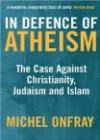
Like: Michel Onfray presents an incindiary account of religious extremism, the rise of fundamentalism around the world, and the necessity of atheism as a reasonable antidote to religiosity. Humanity's health, happiness, and welfare depends on our willingness to reject religious extremism, and accept atheism.

I was a little apprehensive at first with this slim essay given that it's original title was Atheist Manifesto, a title that sounded more political than philosophical. However, after a few pages, I was enthralled. Onfray's criticisms of religious fundamentalism are at once shocking and necessary; humorous and poignant; incisive and well-rounded. His pace is fast, unforgiving, and tough-minded. In particular, I enjoyed Onfray's post-modern style; a nice contrast to the soothing eloquence of typical brit-lit (british literature) I typically gobble up.

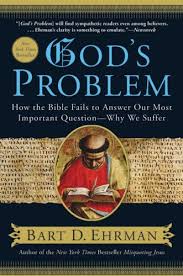
Like: Traditional answers to the problem of suffering and the existence of an omni-benevolent God fail. Judeo-Christian attempts to wrestle with theodicy are a noble, but otherwise failed enterprise. Suffering works against the notion of a good God, and the Holy Bible does nothing to ameliorate the dilemma of continued suffering and the simultaneous existence of a personal, loving God.

Bart Ehrman is not a difficult read. This is not to say that he is less penetrating in his observations; he is simply more personal, given to less arid prose in this volume. I'm sure this is due in large part to his personal encounters with his subject material: evil and suffering co-existing with a supposedly good God. At the same time, his scholarship is difficult to argue with, and his logic reasonable (though, I must admit, not air-tight). I think this volume would be perfect as an introductory level study into the seeming disparity between raw reality and Judeo-Christian claims about God's benificent nature.

Like: A compendium of some of the most controversial, most insightful essays, poems, and declarations against the existence of gods/God, and the continuance of religion.

Christopher Hitchens has accomplished an excellent work in this book of secular treatises. There isn't a page where a serious reader cannot turn and find some kind of hard-hitting logic, or poignant but witty rejoinder to the typical ideologies enshrouded in religious thought. More, writers from many different genres, scholarly fields, and artistic disciplines contribute highly intelligent accounts of their personal, and sometimes scientific reasons for disbelief. Certainly, if a person wishes to have an account of life, reality, and sundry other things, but from the perspective of the anti-religious, then this book is perfect.