What happened in Japan recently was terrible. The aftermath, and continued crisis is devastating. But is it "divine retribution," as one Japanese official put it? 38% of Americans seem to think so. So, with a well-deserved leap over the middle (the excluded one, that is), I have concluded that of those Americans polled, 38% of them are utterly insane.
What causes an earthquake is pretty basic: shifting of tectonic plates. It is a natural occurence not needing divine prompting. If God sees fit to dip his hand into the Sisyphean burden of pushing giant rocks, well then whatever. Who's going to argue? In the meanwhile, until we have some evidence of that reality, I'm content to take the operations of the planet on an evidentiary, naturalistic basis. Because I'm not insane.
*Thank you Atheist Media Blog for this gem.
Showing posts with label Truth. Show all posts
Showing posts with label Truth. Show all posts
Friday, March 25, 2011

Friday, January 22, 2010
The Never Erring Story
 "The Catholic Church has never erred." At least, that's what I've had thrown at me a number of times in informal debates with Catholic friends. Who am I to argue? I've erred quite a lot, so I'm really not qualified to say otherwise. And arguing as a peccable entity against an impeccable agent of God would bring about the irony that I might just be erring to be contrarian in the face of such a grand claim.
So what am I dealing with when I have a zinger like "the Catholic Church has never erred" tossed out at me? Apparently, I'm dealing with the doctrine of impeccability. Not to be confused with the doctrine of infallibility. You see, impeccability is understood quite easily as the 'absence of sin' -- something only God, Jesus and Mary could appreciate. The rest of us are out of the runnings: we don't qualify for the sinless status. Not unless we become Pelagians, of course, at which point we become heretics because we believe that while we are yet alive we can be rarified in the grace of God to the point of sinlessness. That is, we can become impeccable by sheer force of performative logic and a willingness to carouse with Pelagian beliefs.
But, since the self-defining, and self-declaring Catholic Church has monopolized the market on truth and declared herself the "one true church" that "never errs", and further, has declared Pelagianism a heresy, I would be in error to take on such a view.
But I am left with a question: if Mary was given special status to be sinless while she was alive, why can't any God-fearing Pelagian work that angle? It would seem like a worthwhile occupation to make yourself sinless, wouldn't it? And if so, that would mean that there's something a little dodgy going on with the Catholic doctrine of Mary's sinlessness. I'm just saying.
Nevertheless, it would be insincere of me to leave out the Catholic Church's self-understanding on the notion of impeccability. That is, the Catholic Church believes she has never erred in matters pertaining to faith and morals; it has nothing to do with historical opinions. To quote the Wikipedia entry, "in Catholic thought, the exemption of the Roman Church from error extends only to its definitive teachings on faith and morals: not its historical judgments." In other words, those teachings that are not held to be divine revelations but are free from error and essential to proper belief.
A moment's reflection, however, piques my curiosity: if there are 'essential' teachings that are free from error, might there also be non-essential teachings that could have errors? In fact, yes, there are. Dr. Ludwig Ott puts it thusly:
"A Teaching proximate to Faith (sententia fidei proxima) is a doctrine, which is regarded by theologians generally as a truth of Revelation, but which has not yet been finally promulgated as such by the Church."
Ott's list of Catholic Certainties places teachings proximate to faith (i.e., teachings that are closest to true faith, but not causes of faith) at the bronze-medal level. These kinds of non-essential teachings are kind of like teachings-in-waiting, or tertiary certainties. In other words, the Catholic Church may or may not have some reservations about them, but do what you want with them until you're told otherwise (e.g., natural selection/evolution).
On this point then, we can be part of a church that never errs, but that leaves enough wiggle-room to let individuals err, as long as the Magisterium hasn't made any official statements of a higher degree of certainty; e.g., a de fide proclamation. Given this hierarchy of truths in an impeccable church, a necessary question arises: why the degrees of certainty? Doesn't that tacitly admit to possible errors in an error-free church? Even given the scalpel-line between 'faith and morals' and 'historical judgments', if the official teaching of the church is that it is officially free of error in faith and morals, wasn't that an historical judgment at some point in time? So how can we be certain of the official certainty of Catholic dogma?
The answer is that we can't. Which is why we can happily discard the nonsense that the Catholic Church has never erred. We can also jettison the corollary that the Catholic Church will never err. The Catholic Church is diseased with errors. For example, the Catholic Church recently rejected the long-held traditional teaching of limbo. Mind you, they don't see that as a mistake; they see it as an evolution, or progress in understanding. Logic dictates, however, that if the Catholic Church once believed the doctrine of limbo as true, and then turns around and says it's not, that there has been an error somewhere along the line. An error that, much like turning water into wine, turns truth into falsity. Whoops!
Here's another one. I'll let you be the judge of how insidiously stupid the Catholic Church has been on this issue. You tell me if you think the Catholic Church cannot err in matters of, oh, say, morals. One more, just for emphasis.
Sunday, January 3, 2010
Believing and Knowing P. II
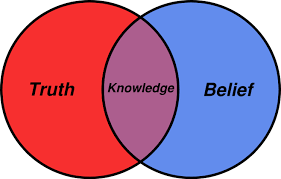 In the first part of Believing and Knowing, I stated the following:
"For how can conversation happen when belief is taken to be knowledge? In other words, how can anything intelligible be conveyed about any one of the tenets of Christianity if a Christian is convinced that what s/he believes is what s/he knows? The dissonance this creates in the mind of the observant listener shuts down any chances of mutually beneficial dialogue since this blurring of distinctions results in wrong-headed dogmatism, fanatacism, and extremism."
Wrong-headed dogmatism. First, what is 'dogmatism'? The common understanding is that it is "unfounded positive assertion in matters of opinion; arrogant assertions of opinions as truth." However, in the history of the Christian religion, 'dogmatism' has been defined quite differently. Christian dogmatism is understood, basically, as "core principles that must be upheld by all followers" of Christ. For example, one cannot be a Christian unless one believes in the bodily resurrection of Jesus Christ; one cannot be a Christian if one does not believe in the Holy Trinity; one cannot be a Christian if one believes that all religions are basically the same, and lead to the same place. And just to advance this a little further, the Catholic church denotes 'dogma' as the following:
"But according to a long-standing usage a dogma is now understood to be a truth appertaining to faith or morals, revealed by God, transmitted from the Apostles in the Scriptures or by tradition, and proposed by the Church for the acceptance of the faithful. It might be described briefly as a revealed truth defined by the Church — but private revelations do not constitute dogmas, and some theologians confine the word defined to doctrines solemnly defined by the pope or by a general council, while a revealed truth becomes a dogma even when proposed by the Church through her ordinary magisterium or teaching office. A dogma therefore implies a twofold relation: to Divine revelation and to the authoritative teaching of the Church."
Even in the Catholic definition of 'dogma', the emphasis is placed on the disposition to believe as if what is believed is what is known.
 This is a dangerous mistake to make, in my estimation, since the disposition to believe a certain set of propositions does not entail knowing those propositions to be true. It may very well be the case that my baptist friend believes dancing is evil because it inevitably leads to sex. But he may just be relieved to know that most of the dancing population of the world finds itself coitally-challenged at the end of the tango just as much as at the end of a harlequin. There is simply no correspondence between what my baptist friend believes and what is known. To therefore make a dogmatic assertion that 'dancing is evil because it inevitably leads to sex' is an empty, and useless proposition unless it can be backed with actual knowledge. And what is more, the assertion above begs the question of whether 'sex' itself is considered evil because of its association with dancing (which is believed but not known to be 'evil'). Nothing is actually known in this case except that a certain young man believes a useless and empty-headed proposition that masquerades as a known truth, but has no knowledge to substantiate its claim.
That being said, believing such a proposition is a dangerously wrong-headed thing to do. It is a wrong-headed dogma unfit for the thinking Christian. But how many other dogmatic assertions can come under the same scrutiny? For example, what is actually known about Mary's purported assumption? Quite literally, nothing. It is simply an assertion from tradition that is believed en masse because it has always been believed. But the glaringly obvious fact of the matter is that nothing is known about Mary's assumption, not even whether it happened or not. It is a dogmatic expression ardently believed by billions of Catholics that has no factual basis in reality. It is a wrong-headed dogma disguising itself as a known truth.
A little more, and we'll move on. If it is the case that Christian dogma is essentially propositional assertions that Christians believe but do not necessarily know, how much of what we take to be 'truth' is actually true? I don't mean to continuously pit belief and knowledge against each other; they are certainly not opposed in all ways. However, to figure out where belief and knowledge coalesce we must be willing to visit the possibility that they don't simply agree with each other because it would make things less difficult otherwise. There is no reason to dogmatically hold to mere propositions as if those same propositions were not only their own context but their own content, too. What is believed has a direct impact on what, and how you come to know things. And conversely, what you know will impact what you believe.
So which, if any, of the Christian dogmas are knowably true? And which, if any, of the Christian dogmas are simply believed to be true? It's a frightening question to ask, really, for it opens up the possibility that what you may believe may, in fact, be wrong. And, in fact, those beliefs may be wrong because there's no way to know if they're true. And to suggest that that's why we have to take the Christian testimony on 'faith' is to suggest the same thing as simply believing without knowing.
Sunday, November 8, 2009
The List
Please forgive my lack of posting lately. I haven't been at the computer much at all in the past month.
In any case, one reader, J., was curious about what I was reading. Before I get to that, I have to confess that my last article "Where I'm At #2" was, on reflection, a muddle of guck. I proposed that truth is non-relational all the while relating that point as if it were possibly true -- which would make it false. In short, my conclusion was a contradiction. And if any of you took anything from the article -- whether a sense of irritation at my jejune philosophizing, or an impetus to question the nature of truth further -- something was related to you from my writing. If that's the case, then I am batting a good average in the stupidity game.
Forgive me, please.
As for what I'm reading lately, I've got a few titles I'm charging through. Here they are in no particular priority.

A.N. Wilson is a tremendous biographer, to my estimation. I've read a couple of his earlier works and enjoyed them very much. This latest read fits into my continuing research into doubt, skepticism, agnosticism, and atheism. It's quite a fascinating piece, and well worth the purchase, if you don't mind a challenge.
More from the Documentary Hypothesis front. Crisp, lucid prose, but not meant for anyone looking for an introduction to the origins of Judeo-Christian scripture. Certainly not a hit with Catholics because it challenges their self-assurance that they've got it all sussed out anyway. But coming from a former nun, I'm not too concerned that Karen Armstrong really wants to kowtow to the usual theological prattle concerning the genesis of holy writ. And to that end, I am happy to be educated.
I don't think I'm going to read the whole way through this handy (un)little volume. To be honest, I'm just not that interested in what some of the essays have to say. However, there is a gold-mine of intelligent, witty, and engaging prose in this companion, and anyone interested in the thought-life of Freethinkers would sate their curiosity with this book. Which brings up the next book...
Although I'm not American, I couldn't resist Ms. Jacoby's well-written essay. I'm only a few pages in, but I know I've encountered a keen, incisive mind.
So, J., those are the things I'm reading these days. Since my mind is set to 'Whirlwind Mode' of late, I can't offer you any substantial thoughts on what I've been reading. Hopefully I will be able to soon, however.
Take care.
Saturday, October 17, 2009
Where I'm At #2
 My article, Where I'm At, met with some interesting comments and questions. Most notably, one respondant, Nick, has expressed curiosity about my religio-spiritual developments. Nick makes note that,
"I'm mostly interested in where you are at, what you believe about religio-spiritual matters that are important to you, what ideas you are newly exploring, that sort of stuff."
I think that's a fair expectation for conversation, so what follows is some of the stuff I've been trying to work through in the past while.
First, I've been trying to figure out just what criteria legitimize the scholars. It's one thing to suggest that so-and-so is the foremost scholar in a certain field. It's another thing to realize that unless you are experiencing the physical data of the empirical sciences, all scholars are simply telling a story. And they're telling that story through a certain lense. Does that invalidate, or illegitimize their narratives? Certainly not. But it does bring into question the relational capacity of truth-telling.
That is, how does one determine the truth of another's claim? We could formally parse logic for a while. That sounds like fun. Kind of. But in the end, structuring another's claims along our own limited understanding and experience, and then charging bravely along the line of linear rationality commits a grievous fallacy: it assumes an objectivity that doesn't actually exist. What we think we know, we only know on our own. Other people may agree, but none of us actually have another's experience with the information being presented. Truth claims have no co-inherence from one person to the next; that is, there is no kindred connection, no 'fellowship' of knowing, if you will.
I'd be happy to be wrong about this, but I see no way around it without actually parsing the formal logic of the problem, and thereby dedicating one's self to the same problem while trying to solve it. And that's the problem with circles: if they're not broken, they just keeping going round and round, round and round.
Second, if truth-claims are non-relational, it would seem a person has to terminate on radical skepticism, or faith. But from where I sit right now, radical skepticism seems rather juvenile: there's no way to support such a view since it calls itself into question, and is thus self-defeating. Faith seems both noble and novel: noble because it means that a person is willing to trust even though they might not 'know' with any measure of certainty; novel because it provides a convenient excuse to abdicate one's responsibility to pursue knowledge, all the while looking pious and moral in the process.
Given these two things -- that truth seems non-relational, and skepticism and faith don't offer helpful answers -- how is a person to trust that anything they are exposed to in scholarship is actual, and/or beneficial? We can go the pragmatic route and suggest that 'whatever answers the most questions with the least amount of problems left over' seems trustworthy, but that fails to recognize itself as a useful tool. In a sense, it's like utilitarianism: how does one determine what is morally good for the most amount of people? And what is 'good' in a pragmatic scheme? In the same way, how does one determine what removes the most amount of problems while answering the most amount of questions? If we're all coming at a situation or issue (say, like, theodicy) with individual minds and experiences, it would make sense to suggest that all answers are questions marked by a period.
The Principle of Parsimony seems to fail, too: it doesn't take itself into account.
So, given that truth-claims aren't relational -- that is, they don't straddle the divide between your personhood and mine -- they can't be believed by virtue of another's authority on a subject, they don't terminate on skepticism, are not made relational by 'faith', can't be experienced mutually via pragmatism, and seem to transcend Occam's razor, what is left?
Nihilism is plain stupid. Existentialism is short-sighted.
So, where am I at, Nick? I don't know.
Monday, September 7, 2009
In Pursuit of Understanding
Following up on my post of August 23rd, "What If I'm Wrong?" it would be remiss if I were to simply adhere to the proposition that I might be wrong every time I'm faced with a possible conclusion. In all honesty, it would be a bit of lugubrious position to truly consider all answers as questions marked by a period. Radical skepticism is, in the end, radically untenable.
That does not remove the necessity to research, learn, and reassess what I've held this long to be true. To that end, these are the books I am presently devouring, and enjoying quite thoroughly.

Quite honestly, Ehrman's book, far from being polemic or argumentative, is heartfelt and personal. At the same time, he is not short on insights surrounding the issue of theodicy. Ehrman examines not only the philosophical issues surrounding theodicy, but also examines the answers proffered in scripture, and the historical context those answers were couched in. I have learned quite a lot from this pleasant little volume, and will re-visit it in the not-to-distant future.

That does not remove the necessity to research, learn, and reassess what I've held this long to be true. To that end, these are the books I am presently devouring, and enjoying quite thoroughly.
Quite honestly, Ehrman's book, far from being polemic or argumentative, is heartfelt and personal. At the same time, he is not short on insights surrounding the issue of theodicy. Ehrman examines not only the philosophical issues surrounding theodicy, but also examines the answers proffered in scripture, and the historical context those answers were couched in. I have learned quite a lot from this pleasant little volume, and will re-visit it in the not-to-distant future.
Karen Armstrong is, quite literally, a phenomenal researcher and writer. Her clarity, wit, and depth of understanding, combined with her report-style narrative is refreshing in a history book. Armstrong is not without her biases (no-one really is), but her attention to detail and ability to synthesize vast domains of religious and philosophical understanding into a historical context is, as far as I'm concerned, almost without parallel (J.N.D. Kelly, Henry Chadwick, and Horace Hummel being other notable exceptions).

I'm almost finished Ehrman's book, and am part way through Armstrong's account of God. To be honest, the more I'm learning from these people, the more I'm enjoying the necessary challenges they bring to my beliefs, and the changes those challenges imply. Refusing to challenge my beliefs, to face the doubts and accusations levelled at a set of beliefs, renders me insincere. I'm not willing to believe dishonestly, or ignorantly. And if the propositional, historical, and physical evidence invalidates my beliefs, then I will have a decision to make: continue to believe despite evidence to the contrary, or, in pursuit of understanding, admit that something other than what I presently believe must be true.
Saturday, June 20, 2009
Objective Perspective
 There were sixty of us at the conference. The anticipation wasn't. No-one was visibly excited. Everyone seemed to have dragged themselves through the scree, and into the stiflingly dull meeting hall.
The muffins were nice. The coffee? Not so much. Too bitter.
I swear the thrumming murmurs of the crowd was blending into one oceanic ohm. I felt if I had to hear it much more than the 5 minutes I'd already been there, I'd fall asleep standing.
But then the classic microphone tap-cum-feedback shocked me out of my growing catatonia. I was grudgingly aware.
A speaker was introduced. I don't know who it was. I was too busy trying to recapture the ennui from a moment ago. It seemed a better course than the one I was barreling into, out of control and with an ever-increasing sense of nausea.
Why nausea? Because that's what happens when your dread anticipations of an event are confirmed in reality by the cackling laughter of a pep-talk speaker who can't seem to get her kindergaarten idioms out of her adult speech.
"Good attendence, people!" She beamed almost as loud as her metallic red and white striped blouse. "You really have shocked me today with how wonderfully happy, and aware you seem."
I think she was still sleeping, actually. She seemed to be in a private dreamworld. The crowd, with eyes at half-mast, seemed to provide an object lesson largely in opposition to the speaker's felicitous naivety.
Her topic? "The Objective Workplace". Wow. An electric excitement rippled through the crowd. Eyes went wide, and lips curved into interested smiles almost in unison.
I'm lying. Everybody stayed pretty much the way they were: disengaged, disinterested, and hoping for an out-of-body experience.

But then it happened. She made a comment that set my brain to thinking (which can sometimes be a good thing, believe it or not). She said, "We always have to keep an objective frame of mind."
But then it happened. She made a comment that set my brain to thinking (which can sometimes be a good thing, believe it or not). She said, "We always have to keep an objective frame of mind."
I wondered, at first, what subjective layerings she had to go through to parrot that popular sentiment. But then I stopped wondering because it was having a negative impact on my ability to stay bored and disinterested. If I lost that much, I'd have an unwanted lack of cynicism to aide me in my festering disdain for these kinds of empty educational venues. And that just wouldn't do.
But it did.
And my mind started churning. My hand followed suit with a black-ink rapier. And against my better judgmentalism, I penned these words:
Objectivity is an ideal -- a common one. Unfortunately, it is practically impossible.
All people are subjective, biased, and prejudiced one way or another. We cannot, by dint of existential experience, lay aside personal investment to achieve pure, ultra-cognitive, or suprarational objectivity.
'Objectivity' is necessarily outside human capacity.
Once I had written that down, I was able to recapture my angst and continue feeling unreservedly disinterested in the presentation. Thank you, Philosophy, for rescuing me.
*Please make note that the preceding was an unbiased, even objective look at a subjectively motivated perspective, and does not necessarily reflect the opinions of the writer involved. Naturally. ;)
Tuesday, June 16, 2009
A Kernel of Truth: Lend Me Your Ear or I'd Rather Be Restrictive Than Corny
 For many years, it has continued to perplex me that people who don't know me well (and some who think they do) have charged me with being a radical restrictivist, party-pooper, kill-joy, picky, a worshipper of food (lol!) and other like unfavourable judgments based in ignorance.
Since we moved out west, this has subsided substantially as we have met many more open-minded people in the ten months we've been here than I can recall in my whole life combined. Granted my desire for such people may not have been manifest then as it is now. Anyhow, in spite of the overwhelming majority of people we meet being quite open to how others live, we still have encountered some resistance and imposition of judgment here too. Why, when we've been successively unfettering ourselves, seeking and attaining to greater planes of freedom and consciousness, are we still accused of radical restrictiveness?
*Lest any one person think this is a backlash on you personally, it isn't. As I wrote above, you would just be joining the masses of people who've concluded on the same thing about me for decades, so not to worry, you're well-supported. :)
The answer came to me for the first time this evening. I'm going to use that word that has become the unnecessary recipient of the assumption of perjorative when others hear me use it... mainstream. It is invariably mainstreamers and mainstream-wannabes who make these judgments of us and the reason is now clear to me. A mainstreamer, being predicated in his/her actions on conformity, sees others in terms of what they don't do. They lack any aspiration to take full and utterly conscious responsibility for their thoughts, actions, and life, and view someone who does as a threat to the comfortable system that affords them this sloth. I am just such a person and I threaten just that.
So what about me? What is my role in inviting such criticism? Well, as far as I can tell, I am party to my own accusations in that I haven't severed my ties entirely with people lacking consciousness in their living, so I'm an easy target. Aside from that though, I am not so accomplished in the complete shedding of mainstream's influence that I have been able to ward off such attacks on my life, character, abilities and efforts. When I've matured to that point, my presence will no longer be permeable to low criticism as I've seen that trend already in other areas of my life. In a way, my whole person, being whole, won't have any holes or spaces for intrusive or demeaning commentary, much like the soil in a healthy garden doesn't allow pests to take up residence; the presence of beneficial beings is purposed and recognised, but the absence of harmful ones is only incidental to the health of the garden.
My own perspective regarding others is the precise reason why I continue to be taken aback and surprised by the accusation of being legalistically or radically restrictive in my life. Unlike mainstreamers, I view others for what they DO, not what they don't do, because I am not concerned with conformity or the perpetuity of sloth-enabling life systems.
So when I think of people I know, I am affected and influenced and impressed with what they DO. I don't give any thought whatsoever to what they don't do unless it is obviously and insidiously negligent or dangerous. I'd notice if my friend didn't ever speak to her children, for instance, or if another didn't... I can't even think of another example because that sort of thinking is so unnecessary and unhelpful to me.
When I first began to question the mainstream, I also had a long list of what-I-don'ts. This was a natural progression from recognition of what I had previously been doing and what I wouldn't do anymore. In that transformation, it became necessary for me to switch paradigms though, to examining what I do and not focussing on what I don't do, which wouldn't allow for me to authentically change my life. Lifelong alcoholism in spite of a cessation in actually imbibing alcohol should make focus on the don't-do's an obviously ineffective strategy for change.
So initially, my list was full of what I don't do anymore, but that was years ago and I no longer even have such a list because my life is full of what I do, not what I don't. When my days and weeks and months are full of things I value, there simply isn't need or desire to consider what I don't do. The fact that upon being asked, I can answer that 'yes, we don't do that' is not a confirmation of an obsession with what I don't do. It is almost exclusively within the context of answering the mainstreamer's questions about what we don't do that I can even think of such things. In my own life and from my own perspective, I wouldn't even think of formulating such a question as that.
I want to examine some of the charges though, because this is all talk and no action so far:
Will the accused please stand. You have been charged with the worship of food and health and radical restrictivism of such of life's pleasures as edible oil whipped topping and pop tarts.
In my defense, I would like to propose a comparison and contrast of my diet and approach to health to that of the mainstream.
I will begin by introducing the foods and principles upon which my family bases decisions about what we DO eat.
We eat mostly a traditional European diet. By traditional, I mean that we use home-rendered fats from chicken, duck, bison, etc... and we cook with the bones in and use those bones to later make gelatin-rich broths that we use for gravies and sauces and stews and in place of water for cooking other foods.
We eat whole vegetables and fruits and only indulge in tropical fruits and vegetables as treats occasionally. We eat fatty unpasteurised yogurt and milk (can't find raw just yet, but hope to by next summer even if that means by having our own dairy goat or cow). We eat loads of butter. We eat whole grain breads in a very small proportion to the rest of our diet. We eat olives and home lacto-fermented sauerkraut, broccoli stems, garlic and hot peppers. I make my own cheese and we also buy some that is cultured and unpasteurised. We eat raw veggies dipped in garlic/yogurt/mustard/apple cider vinegar mixture.
We drink litres of herbal and green tea every day and eat a pound of raw, microbe-rich honey every day too. We eat this fresh-from-the-field and personally delivered from down the road honey on our homemade baked home-ground whole oats, eggs, and raisins squares with butter served warm.
We eat eggs every morning on toast or in our oat squares. We use 6 dozen eggs each week.
Everything is as local as possible and almost always organic because there is no point in eating something that is so full of chemicals that it will take more nutrients to detoxify it than it will provide to the body. In this way, we could eat all day long and still starve, gaining lots of weight if we eat too much because our bodies are trying to conserve what little nutrition we are receiving ,or losing weight because we don't eat enough to fulfill our nutrient requirements.
So, we eat naturally cultivated, free-growing foods in their whole state, which also goes for our meat. It is all pastured (truly, not industrially) on naturally growing grasses and insects and given no antibiotics or vaccinations. The animals live according to their nature- chickens in flocks, ducks in pairs, bison in herds, etc...
To achieve this, we have to talk to a lot of people, go a lot of different places and try a lot of different ways of preparing our foods when items are not available or when there is a variation of what we expected (unlike boxed, processed foods, the earth doesn't produce cubic vegetables with uniform innards and outards by its own initiative, so we go with what we're given).
Diversity is an encompassing principle in our food acquisition. Not purposed in all ways, but definitely incidental, at least. We have a diverse experience in our eating, preparation, meeting and speaking to new and becoming familiar people, excursions we wouldn't otherwise experience to farms and homesteads along the highways of our territory, and abundantly healthy children whose ailments are healed with this diet and herbs, homoeopathy and home remedies as needed.
Now in contrast, the mainstream diet, which is the non-restricted one, remember?
Based upon my highly unscientific observations, I am going to generously presume that the average mainstreamer eats about 1-2% of his/her diet in whole, locally grown, industrial organic and truly organic foods, all being vegetable and none being from the meat category of the food pyramid.
I will generously then presume a 98% diet of variably 'value-added' (read: processed) foods that include various fruits and vegetables, raw and in boxed dinner-type meals; boneless and skinless meats along with some breaded, some seasoned, some fast-food, some in pies and burritos and other freezer 'meals.' They eat boxed crackers, cookies, confections and treats of all kinds, baked and fried and slathered with edible oil frosting and fried, flavoured, and candied nuts and cereals; breakfast cereals, jars of jams and nut butters and margarine and 'not-butter'; flavoured and sliced processed cheeses, low fat milk and fruit-on-the-bottom yogurt and canned soups and beans and 'whole wheat' and 'french' bread; 'vegetable/canola oil' for cooking. They eat cream puffs and potatoes baked and in bags for baking and frying, and salads made with mayonnaise and macaroni and coleslaw too. A package of pudding cups for the kids and a jar of baby dills and carrots sticks with dip for lunches. Who can live without a bag of Doritos and a pop on the way out of the self-check-out at the grocery store?
The meat came from animals living in deplorable conditions such that anyone witnessing this would quickly lose his or her appetite for them, but onto my point: eating corn. Cows, pigs, chicken, and even fish, all eating corn for their breakfast, lunch and dinner.
They are cut up into pieces and the 'value-added' ones are severed from the only hope that had in being nutritious- the bones, and variously prepared with CORN-DERIVED monosodium glutamate, malto-dextrine, glucose/fructose and high fructose corn syrup, regular old corn syrup and corm meal, modified corn starch and plain old corn starch, corn oil, di- and tri-glycerides, lecithin, leavening, etc... and is then wrapped in shiny corn-derived packaging with corn-based dyes emblazoned on reading 'healthy choice!'.

The chickens lay their corn-fed eggs and sometimes make new corn-developed chicks that make more corn-eating chickens to be cut up and covered by and marinated and fried in more corn.
The milk and milk products from the corn-eating cows are also corn-produced, bearing its trademark genetic C4, in case anyone doubted the presence of corn in milk.
Their veggies and fruits have been sprayed with corn-derived pesticides, herbicides, fungicides and waxed with corn-come-wax and boxed in corn-waxed boxes treated with more corn-derived chemical compounds for 'freshness'.
A quotation from The Omnivore's Dilemma by Michael Pollan (to whom all credit goes for the above list of corn-derived products, which is not exhaustive by any means): “There are some forty-five thousand items in the average American Supermarket and more than a quarter of them now contain corn. This goes for the non-food items as well-...” (page 19) And this does not account for the items which are produced via corn-dependence through spray fertilizers and 'cides' of all sorts. Almost everything edible in the grocery store is a product of the constituents of corn.
Now onto the experiential part. Mainstreamers are very open and diverse in their experiences of food, right? Well, once/week they jaunt to the grocery store staring mindlessly (who wouldn't? What's to ponder?) at the shelves upon shelves of flashy boxes and cans, knocking one of them every so often into the cart, cruising the produce section for bags of apples, lathed carrot sticks and some fruit and dip combination packages, the dairy section for eggs and milk and milk products, bread and bakery- grab and toss, meats in styrofoam with no bones and fat trimmed, and then the snack aisle on the way out (was going to skip that one... oh well, what's the harm?) and waiting in line for the self-check-out, putting groceries into bags (corn) and carting them to the trunk of the car, stopping for gas (more corn) on the way home, then to the pharmacy to pick up prescriptions for the kids (and corn again), and then unloading at home only to do it again the following week.
But no matter, meal preparation is usually a snap, 20-30 minutes for dinner, tops, and lunches are packaged fruits and veggies and some cheese strings and a juice box. Breakfast, easy- cereal in low fat milk. WHY would anyone want to do more work than necessary to feed themselves and their family? So glad not to be a pioneer or in a tribe. Food preparation would take over life!
Please, PLEASE, share with me how my diet and outlook is restrictive when it consists of diversity in food, relationship, preparation, source, and health-giving qualities, when the mainstream diet consists mainly of CORN and requires pharmaceutical supplementation to allow the body to function, while no or nearly no attention is paid to the source of the food and no relationships or few are forged in the process- a complete lack of diversity- the very definition of restriction in this context?
We eat whole foods, meet the farmers who produce them, meet other conscientious eaters in little shops tucked away in the corners of the city and rural areas to obtain their wares, chat, make contacts and share common understandings, engage our children in understanding how their food comes to their plate and in the end, eat very rich, flavourful foods that few other than celebrities and the very rich enjoy nowadays as the old ways of preparing tasty food have been lost and forgotten in favour of spending more time at soccer games and eating micro-waved meals trays.

HOW, when my experience surrounding this aspect of life is so rich and diverse and open to new experiences on-going-ly, am I restrictive???
If refusing to be a giant walking manifestation of corn and cold-stranger-procured formed and flavoured food-like products called edible is being restrictive, then I guess I am.
I am also restrictive in my refusal to treat my children like ninny-heads who need adults to 'teach' them how to 'act' like children, and my rejection of chemical band-aids for ill-health, and general ignorance.
I guess I am highly restrictive, but from my perspective, MY whole world is WIDE OPEN, free and full of possibilities and potential, unlimited and unhindered by fear and it's cousin: 'this is how it's done.'
In my mind, the world (cosmically) is a gigantic sea of wondrous potential and loving possibilities and fulfillments and the mainstream exists as the tiniest speck outlying the boundary of that sea.
If in refusing the limitations of that speck, I seem restrictive, having instead chosen the whole sea, then so be it, but I don't see myself that way. I never will. I cannot; I know too much and I'd have to kill myself if I did.
I am free, and conscious of that reality. If the manifestation of that reality in my life seems restrictive of options that fetter me with ideologies that would stand in my way to fulfilling who I am here to be, then I'll restrict with wild abandon!!!
Tuesday, February 10, 2009
On Moral Relativism
 Dr. van der Breggen, over at his site Apologia has done an excellent job of skewering the logic of moral relativism. And from the pen of a convicted psychopathic serial killer, Ted Bundy, takes moral relativism to its extreme conclusion.
"Then I learned that all moral judgments are ‘value judgments,’ that all value judgments are subjective, and that none can be proved to be either ‘right’ or ‘wrong.’ I even read somewhere that the Chief Justice of the United States had written that the American Constitution expressed nothing more than collective value judgments. Believe it or not, I figured out for myself–what apparently the Chief Justice couldn’t figure out for himself–that if the rationality of one value judgment was zero, multiplying it by millions would not make it one whit more rational. Nor is there any ‘reason’ to obey the law for anyone, like myself, who has the boldness and daring–the strength of character–to throw off its shackles…I discovered that to become truly free, truly unfettered, I had to become truly uninhibited. And I quickly discovered that the greatest obstacle to my freedom, the greatest block and limitation to it, consists in the insupportable ‘value judgment’ that I was bound to respect the rights of others. I asked myself, who were these ‘others?’ Other human beings, with human rights? Why is it more wrong to kill a human animal than any other animal, a pig or a sheep or a steer? Is your life more than a hog’s life to a hog? Why should I be willing to sacrifice my pleasure more for the one than for the other? Surely, you would not, in this age of scientific enlightenment, declare that God or nature has marked some pleasures as ‘moral’ or ‘good’ and others as ‘immoral’ or ‘bad’? In any case, let me assure you, my dear young lady, that there is absolutely no comparison between the pleasure that I might take in eating ham and the pleasure I anticipate in raping and murdering you. That is the honest conclusion to which my education has led me–after the most conscientious examination of my spontaneous and uninhibited."
"Ted Bundy, cited in Louis P. Pojman, Ethics: Discovering Right and Wrong, 3rd edition (Belmont, CA: Wadsworth/Thomson, 1999), 31-32."
Sunday, February 8, 2009
Quod Veritas?
 At 3 1/2 my eldest son delivered an excellent answer to the long-standing question that has bugged countless philosophers, and was foisted haughtily from the lips of Pilate onto Christ, "What is truth?"
My son's answer? "Truth is reality as it is for God." A lot of my thinking has changed since then, and I truly appreciate the unadulterated, and simple wisdom of my son's answer.
God bless him with that kind of wisdom for many years to come.
Subscribe to:
Posts (Atom)