Showing posts with label Recommendations. Show all posts

Sunday, March 6, 2011

Recommendation: A Place Called Freedom

Ken Follett, author of international best-sellers The Pillars of the Earth (also a TV mini-series) and World Without End has stormed into my mind and heart with his totally enthralling, relentlessly visceral yet beautiful story A Place Called Freedom.

It is the story of a coal-miner, Malachi McAsh--affectionately known as 'Mack'--who wants nothing more than his freedom, his definition and right as a dignified human being.  His slave-masters, the Jamisson's, however, consider him a dangerous upstart, and set themselves against Mack and his desire for freedom.  Mack is eventually sentenced to death but, by a fortuitous twist, is shipped to America.  Once there though, he continues to fight for the only thing he's ever wanted: freedom.

I cannot heap enough praise on this book.  If you have enough room in your life to fill it with 437 pages of intense and gorgeous story-telling, you will not go wrong reading this book.  It is, quite simply, one of the best fictions I have ever read.

Ken Follett gets the Saint Cynic Award of Awesomeness, and in spades!


I can't wait to read Follett's other two novels I listed!  But first, The Fountainhead.

Monday, February 21, 2011

Review: Roadtrip Nation

Roadtrip Nation, 2003
Roadtrip Nation is a book about discovering who you are, what you love, what drives you, what your passions are, and how to find the "open road" to your dreams.

The book's format is simple:

1) Introduction to the authors, and defining their aims and methods of achieving them;
2) A series of interviews with some of America's most successful industry leaders;
3) Exhortation to start talking to the people you admire, find out how they got to where they're at, and then set your own goals for getting to where you want to go.

Stylistically, the book is very casual, the way you'd estimate it would be written by a couple of surfers and newly minted university graduates.  That is, written simply but well, unreserved, inviting and open, and given to the odd surf-culture-specific flourishes.  Having occupied myself with more than a few years with academic texts and more "highbrow" literature (whatever that actually means), I found the simpler style of Roadtrip Nation refreshing and alive.  In fact, it put me in mind to do some private writing that focuses on simple but effective expression.

While I was reading through Roadtrip Nation, I was caught off-guard by the overall genuineness of the authors, and the people the authors interviewed.  Everyone involved in the contents of the book showed a high degree of realistic humility (i.e., not self-deprecation masquerading as humility, but honest self-appraisal), and an unblushing recognition of their strengths and talents.  Yes, it is possible to edit out events and statements that may have given me a different impression.  But since I only have the book as evidence of the contents, and the book itself states that the interviews were verbatim (though specific things said were re-arranged to make a more consistent flow), I am willing to believe my first-blush impressions.

There is a lot to learn about yourself in this book, if you pay close attention.  It seems to me that when you come in contact with genuine people--even if vicariously through the medium of a book--you can't help but reflect on your own self, and have an impression of your own genuineness.  And if there's one thing that I can point to that affected me the most throughout the interview section, it is that all the people interviewed were leaders in their chosen fields because what they do is who they are.

All of the people interviewed had the common thread of being involved in a way of life that built on their deepest passions; they worked their way into a place they could not do without in their life not because it sustains their life, but because it is their life.  They work at the very things that bubble and froth in the centre of  who they are.  The external results--what we would blithely call "products"--are undeniably a manifestation of their inner world.  In short, the leaders interviewed work who they are.  If anything can be admirable, that certainly is.
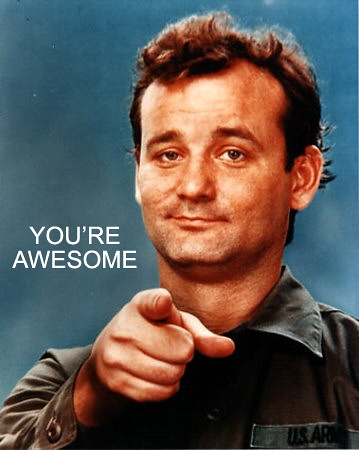
Bill Murray said it, so it must be true.

Would I recommend this book to anyone?  Absolutely.  While the book really doesn't lend itself to an in-depth examination of any sort, I think that is on purpose: it sets up the possibility for you, the reader, to do your own in-depth examination of yourself by interviewing people who did the same, and found their "open road" to success and satisfaction.

Roadtrip Nation most definitely gets the Saint Cynic award of awesomeness (pictured left).

Tuesday, March 30, 2010

Like It or Not: Reflections On Skeptical Literature P. 2

As in Part 1, there will be a picture of the book cover on the left, followed by Like It or Like It Not, a summary, and finally, a small evaluation.

Like: Religion is a pervasive poison that undermines and corrupts everything it takes part in. From the anti-intellectual fundamentalist to the highbrow theologian, the influence of religion is expressed in bankrupt notions of faith, false notions of our origins, unnecessary strictures on our human condition, hostility toward free inquiry, and by pre-disposing people toward violence and unthinking submisison to self-assumed authorities.

Christopher Hitchens has grown on me. I will admit that I found his eloquence and wit arrogant at first, but grew to understand that his concerns and expressions are genuine, sincere, and often quite valid. This is not to say that Hitchens' critical appraisal of religion is, shall we say, gospel, but he is more often right about his observations than not. I have been disapproving of Hitchens in the past on this blog, but as I stated above, I've grown fond of him. god is not Great is a poignant reflection on the intersection of religio-political realities that, I think, every thorough-going Christian would benefit from reading, and re-reading.

Like: Based off of Thomas Hardy's poem of the same name, God's Funeral is a striking exposé of the decline of faith in the Western world. By the time the 19th century had rolled around many, if not most of Europe's leading intellectuals had discarded traditional Christianity. Why? A.N. Wilson explores the causes of disbelief by investigating the lives of Europe's luminaries such as Hume, Carlyle, Mill, Hegel, Gibbon, et al.

Wils
on is rigorous in his scholarship, and gives a first-rank account of the dwindling life of faith in Western nations. I found myself drawn in by Wilson's avuncular tone and subtle humour. This book is not easily accessible to the non-academic -- in fact, it might prove rather dull for such a person -- but it is invaluable to the serious student of religious history.

Like: Michel Onfray presents an incindiary account of religious extremism, the rise of fundamentalism around the world, and the necessity of atheism as a reasonable antidote to religiosity. Humanity's health, happiness, and welfare depends on our willingness to reject religious extremism, and accept atheism.

I was a little apprehensive at first with this slim essay given that it's original title was Atheist Manifesto, a title that sounded more political than philosophical. However, after a few pages, I was enthralled. Onfray's criticisms of religious fundamentalism are at once shocking and necessary; humorous and poignant; incisive and well-rounded. His pace is fast, unforgiving, and tough-minded. In particular, I enjoyed Onfray's post-modern style; a nice contrast to the soothing eloquence of typical brit-lit (british literature) I typically gobble up.

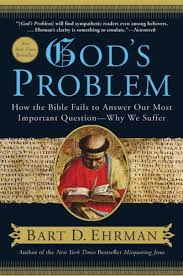
Like: Traditional answers to the problem of suffering and the existence of an omni-benevolent God fail. Judeo-Christian attempts to wrestle with theodicy are a noble, but otherwise failed enterprise. Suffering works against the notion of a good God, and the Holy Bible does nothing to ameliorate the dilemma of continued suffering and the simultaneous existence of a personal, loving God.

Bart Ehrman is not a difficult read. This is not to say that he is less penetrating in his observations; he is simply more personal, given to less arid prose in this volume. I'm sure this is due in large part to his personal encounters with his subject material: evil and suffering co-existing with a supposedly good God. At the same time, his scholarship is difficult to argue with, and his logic reasonable (though, I must admit, not air-tight). I think this volume would be perfect as an introductory level study into the seeming disparity between raw reality and Judeo-Christian claims about God's benificent nature.

Like: A compendium of some of the most controversial, most insightful essays, poems, and declarations against the existence of gods/God, and the continuance of religion.

Christopher Hitchens has accomplished an excellent work in this book of secular treatises. There isn't a page where a serious reader cannot turn and find some kind of hard-hitting logic, or poignant but witty rejoinder to the typical ideologies enshrouded in religious thought. More, writers from many different genres, scholarly fields, and artistic disciplines contribute highly intelligent accounts of their personal, and sometimes scientific reasons for disbelief. Certainly, if a person wishes to have an account of life, reality, and sundry other things, but from the perspective of the anti-religious, then this book is perfect.

Sunday, March 14, 2010

Dear Christians,

It may come as no surprise that gossip is not greeted warmly in Scripture. For those of you who may be having trouble with the concept, the words of James are ringingly clear:

"...the tongue is a fire, a world of unrighteousness. The tongue is set among our members, staining the whole body, setting on fire the entire course of life, and set on fire by hell. For every kind of beast and bird, of reptile and sea creature, can be tamed and has been tamed by mankind, but no human being can tame the tongue. It is a restless evil, full of deadly poison. With it we bless our Lord and Father, and with it we curse people who are made in the likeness of God. From the same mouth come blessing and cursing. My brothers, these things ought not to be so. Does a spring pour forth from the same opening both fresh and salt water? Can a fig tree, my brothers, bear olives, or a grapevine produce figs? Neither can a salt pond yield fresh water."

Yes, that dirty little wagger that rolls your food and picks between your teeth is a "world of unrighteousness" that sets "on fire the entire course of life" and is itself "set on fire by hell." It is, metaphorically, the instrument of hypocrisy, deceit and death.

The question now becomes, what is gossip? Simply stated, it is "idle talk or rumor (sic), [especially] about the personal or private affairs of others." Frivolous talking and rumouring about other people's personal lives is an active poison spat out by serpentine tongues. For a Christian, the allusion to being a snake should give pause for concern, yes? Afterall, who was it that hissed out his venomous words in the Garden? Just who's image and likeness are you living, anyway? Think about it.
But that only deals with direct gossip. That is, purposeful, knowing talk about other's lives that you don't have any business chattering on about. Then there's indirect gossip, or what I like to call "pastoral gossip." This is the kind of gossip that slithers its way into conversations because someone has a 'Christian concern', or 'needs advice', or 'would like an objective perspective', or a 'third-party look at the situation'. Let me save you the work of figuring out why this is not acceptable: because until you have approached the person you are 'concerned' about, you have no business involving anyone else. At all. Ever. Period. Your business, should you have a concern, is to lovingly go to the person you're concerned about, and express yourself. Meeting at restaurants, or on the telephone, or whispering through darkened windows, from car to car, or in the privacy of a confessional to keep people up-to-date, as it were, on why so-and-so needs 'prayer' is still gossip. When you disclude the person who is the focus of your thoughts, you are a gossip.

Quite simply, that makes you a betrayer, a hypocrite. When that sort of thing is done on a mass scale, say, for political purposes, we call it treason. People are executed for treason. We don't execute people for gossip, but people who gossip certainly execute friendships, trust, potential relationships, and on-going opportunities. If you measure your concerns by clauses such as "this is confidential," or "I'm not supposed to say this, but..." you are a gossip. You are more satanic than godly at that moment.

So, two pieces of advice before you start chin-wagging and jaw-flapping (directly, or pastorally):
  1. Go to the person(s) you are wanting to talk about. Then talk with that person(s). After that, unless you have permission from that person to talk with others, shut yer festerin' pie-hole.
  2. Since gossip seems to be the bar for many Christians, try raising it to something better (like honesty, just for shits and giggles. You can graduate to honesty as a principle as you are capable), instead of living under it as if it were a roof.

Gossip is something that the religious and the non-religious alike are guilty of. It just seems to be the rampant modus operandi, the on-going and preferred trend amongst Christians. Being a Christian doesn't cede the moral high-ground to a person with a concern; it doesn't award pastoral status to whoever is within earshot; it does absolutely nothing to endorse an open-mouth policy where others' personal lives are a possible subject. In fact, being a Christian should mean shutting-up, being respectful of other's privacy, and taking care to observe (according to Christian beliefs) with even more diligence than non-Christians that you are direct with the person in question. Anything less puts you more on level with Cain than Abel.

Sunday, February 14, 2010

Current and Future Reads

Every once-in-a-while I share my current reading list. This time, however, since my reading list consists largely in essays I'm printing out from webspots I enjoy, I only have one book to picture for you. Karen Armstrong's A Case For God.


Armstrong, in my opinion, is a top-rank scholar who manifestly outstrips the two-dimensional academics of some of the atheists "A Case for God" rebutts (Dawkins, Harris, and Dennett).

Note: I left Christopher Hitchens out of the roster of Armstrong's addressees because I'm curious to see how she deals with him. Hitchens is, by my estimation, by far the better scholar, better thinker, and more personable of all of the popular "New Atheists". That said, Hitchens' anti-theistic essay, god is not Great: How Religion Poisons Everything suffers from a peculiar flaw: it isn't as long, or in-depth as I was hoping it would be. Nevertheless, as contrarian literature goes, Hitchens' piece was quite enjoyable, extremely insightful, and well beyond the reach and scope of his fellow atheist authors (as listed above).

For future reading, I'm hoping to get my hands on a couple of books. First, Robert M. Price's, The Incredible Shrinking Son of Man.


Price's style is easy, his scholarship vast, and his insights penetrating. From his online essays, one can easily learn the content and scope of a bachelaureate degree in a matter of days. For the conservative Christian, however, Price will come across as oppositional and 'lost'. There is, sadly, nothing left to talk about with a person who aligns their personal religio-political views with a presupposed notion of the truth (in this case, mainline conservative theology). Still, for the sincere academic, Price is a jewel. I look forward to his book.

Second, I'm hoping to continue my research into the reasons for, and nature of unbelief and disbelief by picking up a copy of John Loftus book, "Why i Became An Atheist: A Former Preacher Rejects Christianity".


Loftus was trained by evangelicalism's all-hallowed debate hero William Lane Craig. Craig, according to Loftus' blog, Debunking Christianity, is quoted as saying, "the person I fear debating the most is a former student of mine." A very interesting recommendation, I say, and one worth checking into.

That is it: that is my reading list for now and later. Stay tuned for coming articles...

Monday, September 7, 2009

In Pursuit of Understanding

Following up on my post of August 23rd, "What If I'm Wrong?" it would be remiss if I were to simply adhere to the proposition that I might be wrong every time I'm faced with a possible conclusion. In all honesty, it would be a bit of lugubrious position to truly consider all answers as questions marked by a period. Radical skepticism is, in the end, radically untenable.

That does not remove the necessity to research, learn, and reassess what I've held this long to be true. To that end, these are the books I am presently devouring, and enjoying quite thoroughly.


Quite honestly, Ehrman's book, far from being polemic or argumentative, is heartfelt and personal. At the same time, he is not short on insights surrounding the issue of theodicy. Ehrman examines not only the philosophical issues surrounding theodicy, but also examines the answers proffered in scripture, and the historical context those answers were couched in. I have learned quite a lot from this pleasant little volume, and will re-visit it in the not-to-distant future.


Karen Armstrong is, quite literally, a phenomenal researcher and writer. Her clarity, wit, and depth of understanding, combined with her report-style narrative is refreshing in a history book. Armstrong is not without her biases (no-one really is), but her attention to detail and ability to synthesize vast domains of religious and philosophical understanding into a historical context is, as far as I'm concerned, almost without parallel (J.N.D. Kelly, Henry Chadwick, and Horace Hummel being other notable exceptions).

I'm almost finished Ehrman's book, and am part way through Armstrong's account of God. To be honest, the more I'm learning from these people, the more I'm enjoying the necessary challenges they bring to my beliefs, and the changes those challenges imply. Refusing to challenge my beliefs, to face the doubts and accusations levelled at a set of beliefs, renders me insincere. I'm not willing to believe dishonestly, or ignorantly. And if the propositional, historical, and physical evidence invalidates my beliefs, then I will have a decision to make: continue to believe despite evidence to the contrary, or, in pursuit of understanding, admit that something other than what I presently believe must be true.

Wednesday, April 29, 2009

What I'm Currently Reading

If it actually interests anyone, I don't know, but I like to post my current reading projects.  I figure it may help readers trackback through my posts and understand the formation of my queries, meanderings, and doctrinal re-alignments.  So without further ado, here is my current reading list (and yes, I have finished the books I've listed previously).

I've had to pick Dawkins's book up for the 3rd time.  I'm bound and determined to finish it, but I find Dawkins to be such a ponderously "crappy philosopher" (David Berlinski, from Expelled by Ben Stein) that reading Dawkins's manifesto for atheism is -- what I imagine -- melting lozenges in one's eyes must feel like.

I'm hoping for a bit more of a rigorous read from Stenger, and by all accounts I've read about, Stenger goes the distance Dawkins can't seem to articulate.

Fairly soon, I'll have a review of Daniel Dennett's Breaking the Spell: Religion as a Natural Phenomenon, as promised to Ed of "Pilgrim. Not. Wanderer".

Sunday, March 29, 2009

Updated Reading List

I'm currently working on two books. I thought I'd recommend them since they are both excellent reads, and well-thought-out. Here they are: