Where Maisel's book differs from the spate of recent atheist literature (e.g., Hitchens, Dennett, Dawkins, Harris, et al) is in his focus: where a thick brace of literature has been dedicated to showing the poverty of the religious life, Maisel has written to draw attention to the richness, beauty, and meaningfulness of the non-religious life. Hitchens writes to highlight the toxicity of religious thinking; Maisel writes to encourage meaning-making in the atheist's approach. Dennett writes to convince the reader that religion is a mental spell, a collective notion that gods influence nature therefore we worship them; Maisel writes to spur the religious into letting go of their assumptions of beneficient gods and face an indifferent universe open to innumerable possibilities for self-actualisation. Dawkins writes to dispell delusions and rationalisations about the supernatural; Maisel writes to reassure the disbelieving that making your meaning is better than adopting an already prescribed religious meaning. Harris writes to discourage adherence to any religious systems, and to shun the moderates for their cowardly, yet inadvertant support of extremists; Maisel writes to enliven a sense of life in the irreligious, and to move on bravely toward a whole sense of selfhood--a quality he suggests cannot be had in the religious life.
I'm sure you already see that Maisel is taking a positive approach to an often overly negative subject: disbelief. And by negative, I don't mean to say that authors like Hitchens and Dawkins are a bad influence, or inappropriately dark and cynical. They're not. Still, Maisel has gone in a direction the so-called New Atheists have not: rather than tearing down gods, God, and the religions that attest to gods and God, he has taken the opportunity to outline the positive side of disbelief.
 |
| Super-Christian |
Instead, the disbeliever chooses what he values, recognises the ultimate subjectivity of participation in life, and makes his own meaning. This bears some similarity to Ayn Rand's stance on selfishness: people always act in such a way as to keep what they value; they are therefore "selfish" or self-interested. The man who values personal freedom acts in such a way as to keep his freedom; he develops the virtue of productivity. He does not allow others to hand him the value of freedom because it was never anyone else's to give to him in the first place. And the mentality that suggests meaning needs to be earned by other's approval or permissions is the very same mentality that is on display in religion: your values, your meaning, your personal actualisation is imposed on you by an already established system, and that system gives approval or not to your worth.
The evidence for this is ample. Consider, for example, the Catholic teaching that the use of condoms is immoral. This article suggests that the Catholic laity is in disagreement with the current pope about the immorality of condoms; but does that change anything? It might in private practice, but in public religious life, a lot of these same Catholics who disagree with their pope will still buckle under his imposed ruling: condoms should not be used (spare, of course, if your are interested in the propositions of male prostitutes infected with AIDS). More, those Catholics who do sheathe their swords, as it were, will struggle uselessly (and infuriatingly, if you ask me) with guilt and shame for their choice to shag in latex. They may even go so far as to confess their wicked deed, feel better, then repeat their "sin" and be told, after multiple confessions that their values are disorderly, not in line with the teachings of the church, or that their salvation is in danger because of habitual mortal sin.
The example above illustrates rather graphically that the struggling Catholic condomite is deriving his value from the teachings and constructed meanings of his chosen church. Maisel, if I have understood him right, would suggest that that Catholic individual is allowing some of his meaning to be chosen for him, instead of making his own meaning. Sadly, billions of people allow themselves to be bullied by clergy that tells them they have to seek their meaning in the teachings of the church, rather than make their meaning by the act of choosing and self-actualising on their own terms, and with their own resources.
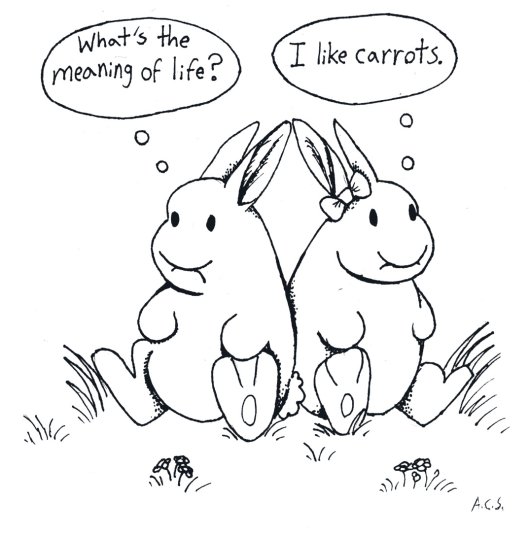
You don't have to "find" meaning. You have to make meaning. In other words, you have to invest yourself into your own passions, your own interests, your own wants, and then you have to do what only you can do--because you're the only one who is you--to achieve your passions, maintain your interests, and gain what you want. You have to choose your values, not piggy-back the values of others or use stand-in values such as those enforced by religions. Maisel, in fact, goes so far as to state that religion itself is a stand-in for meaning; that is, religion takes the rightful place of personal meaning by imposing itself as over above self-chosen meaning.
Maisel's writing is clear, gentle, and inviting. That last qualifier, however, sometimes serves to be a detractor from his efforts, as if by writing in an inviting style he is luring or tempting the reader to try on the religionless life. I don't think I'd mind that so much if it weren't for the fact that I appreciate much more the blunt approach of Harris or Hitchens when it comes to addressing the moral necessity for atheism. I'm not appreciative of saccharine, or glad-handed tones regarding major life decisions. As minor a criticism as that is, I think Maisel's book adds a much needed, and excellent view of the areligious life, and how to self-actualise even after the experience of deconversion and the confusions such a switch can make.