
Saturday, May 8, 2010

Friday, May 7, 2010
Karen Armstrong: What Is Religion?
 Here is a presentation by Karen Armstrong -- perhaps the most respected historian on religion alive today -- on the topic of What Is Religion?
Shameless Plug: If you're still interested, I wrote on this topic not too long ago. I don't have the same level of erudition as Armstrong, but I'm working at it.
Monday, May 3, 2010

Totally Me

That's exactly what I would've done if I was given that question! Glad to know I'm not alone.
In Christ(ianese)
 Self-actualization is a long process. Maslow was well-aware of the difficulty in achieving an individuated selfhood. One must climb, as it were, "up" the eschelons of self-awareness until, by degrees, one is a fully realised, fully actuated person with all personal potentials being utilised. It is an existential reality everyone must grind through, and it is often fraught with vast pains, remorseless joys, and common experiences between those extremes.
More, our interactions with others add to, or detract from our self-actualization. However, our self-realization and self-actualization happens, on a fundamental level, alone. No-one else self-actualizes for another.
With that in mind, I cannot help but call into question the teachings I was attendant to at a Pentecostal church recently. The subject was, essentially, identifying who you are and becoming fully you. The catch was that in order to be who you fully are, you have to be that person "in Christ".
Well, far from being a religious critic, I must admit that this phrase put me off straightaway. I was ripped out of my nostalgia by a sudden sense of urgency; urgency that perhaps I had just listened to an interesting preamble about self-identifying and self-actualizing, but that such a disposition could only take place "in Christ".
What do
 es the phrase "in Christ" even mean? Are we somehow enwombed in this man, Jesus, people call "the Christ"? And given that last question, how can we relate to the preposition in Christ, when what is being suggested is that we are included in his title of 'Christ', or 'Messiah'? Linguistically, the phrase simply doesn't make sense. What does it mean to be "in Christ"? No-one really knows, but we acknowledge it on a notional level, we give the connotation a favourable nod; we feel all soft inside, as if we've been rolled in a giant warm-fuzzy. But the phrase means literally nothing on a practical level. It is wanton Christianese.
Particular idioms like "in Christ" should be expected in Christian assemblies, however. In-groups have their own fashionable expressions, their own method of meaning that out-groups simply cannot partake in. And it's not as if the inability to partake of in-group lingo is forced on out-groups; I'm sure this particular Pentecostal church would like nothing more than to swell its ranks. The difficulty is that in-group lingo is fixed against the sensible notion of making what one says intelligible. Or, as Paul put it in 1 Cor. 14:10-11,
"Undoubtedly there are all sorts of languages in the world, yet none of them is without meaning. If then I do not grasp the meaning of what someone is saying, I am a foreigner to the speaker, and he is a foreigner to me."
So while it is that in-group lingo is fashionable and expected, I can't help but wonder why any church would allow it if the net result is that outsiders feel alien? The church's mandate, as far as I've been educated, is to make Jesus the Christ understandable, convincing, persuasive, graspable, intimately familiar, not vague, imperceptible, elitist, and contradictory. And it is phrases like "in Christ" that do just that: remove understanding from outsiders and render communication bleak.
Another catch-phrase was thrown at me when I asked a couple questions of the leaders. The phrase "prayed-up". I was struck by the overt insincerity of this nugget. In essence, the phrase "prayed-up" implied that one can simply go to the prayer-bar, in much the same way one would go to a gas-bar, and fill their spiritual tank. Simply drop to your knees, pump the spiritual sagacity in, and then carry on your merry little evangelistic way. Rubbish and poppycock!
Look, if the context of a lesson is going to be about how a person can self-realize and self-actualize, then importing confusing mumbo-jumbo about how that can happen in somebody else as long as they are filling up on prayer (spiritual gas, that is) is contradictory and i
 nane. There's no sense trying to convey large concepts like self-realization and self-actualization by speaking about them in connotative language that means literally nothing to outsiders, and is internally contradictory, even when examined from the perspective of an insider. Why add confusion if what you're trying to do is bring clarification? Lingo should never trump the content of the lesson. When it does, as it did in the case of my experience with this Pentecostal group, all that's left is to state firmly, "do not speak unless you can improve upon the silence." In other words, shut-up.
Tuesday, April 27, 2010
Responses to the New Atheism: Like It or Not
While reading literature on Atheism, I also fed myself a steady diet of books responding to the New Atheists. As in the last listing of books I posted, I will drop a picture of the dust-jacket on the left, state my 'Like' or 'Like It Not' in bold, sum the book up, and then give a small evaluation.
 Like: It is reasonable to have faith. The Bible is a reasonable book that conveys reasonable truths that we can reasonably believe. Science has not disproven the Bible or discredited its moral teachings. There is no reason to accept the half-truths of the 'New Atheists', and every reason to re-visit the truths of biblical revelation.
Dinesh D'Sousa is clear, straightforward, and enjoyable to read. He meets the New Atheists on their own grounds, and uses their own sources to foil their attacks on religion, and on Christianity in particular. For the most part, his arguments are reasonable. However, just like the New Atheists, D'Souza often earmarks one side of the argument instead of presenting a wholistic look at the issue he is contending. To his credit, D'Souza is a wonderful rhetoritician and a persuasive writer. A certain lack of savvy follows from his inability to grasp the irony of arguing for a logical basis for faith, however. All-in-all though, D'Souza has produced a fine volume to add to the cultural conversation between religionists and anti-religionists.
 Like It Not: A full-on counter-attack to Sam Harris' two landbreaking volumes 'The End of Faith' and 'Letter to a Christian Nation'. The worldview Harris presents in his infamous essays is utterly bankrupt, underscored by a vast ignorance, and nothing more than a charlatan's attempt at pedaling snake-oil metaphysics on a largely ignorant, unobservant culture.
Ravi Zacharias is a prolific writer, and a compelling speaker. A former atheist himself, Zacharias has built up a large ministry to people of differing faiths, and non-faiths alike. His principle aim in this book, it seems, is to dispell the accusations Sam Harris has set out against religious people in general, and Christians specifically. Unfortunately for Zacharias, his book never gets off the ground. It stinks of reactionary emoting, not reasoned, and considerate truth-seeking. Oftentimes, Zacharias moves toward a point but suddenly drops off, leaving the reader attempting to estimate his conclusion, and never returns to finish his idea. He accuses Harris of being fundamentalist in his outlook, but does nothing to soften or diminish Harris' equal accusation that American evangelicalism, and radical Islam are dangerously fundamentalist themselves. More to the point, Zacharias' book, being from a former atheist, falls ironically short of showing why atheism is an illegitimate worldview. One wonders why a scholar of Zacharias' renown and intimate understanding of atheism could not offer a coherent rebuttal of atheism in a book that expressly sets out to do so. Sadly, Zacharias' book is a poor, poor read, and will most likely find its way to a used book store in the near future with a small inscription detailing the impoverished material inside. Caveat emptor, indeed!
 Like: The so-called New Atheists have saddled themselves with the same burden as literalist Christians: they're both fundamentalists. Calling for the end of faith and religion while trumpetting utopian overtures about human moral progress is bipolar thinking at best, and does nothing to promote civil dialogue between atheists and theists. What is needed is not an end to faith, not an end to religion, not a new injection of Enlightenment utopian ideologies but the courage to engage reason where it leads, and embrace religion where it benefits humankind.
Chris Hedges is a poignant writer. In fact, I found myself elated, disturbed, frightened, and relieved by Hedges's critical appraisal of the New Atheists. And as much as the New Atheists want to balk at the notion of their position being fundamentalist, when their writings are distilled to their lowest elements, they come out just as fundamentalist as any typical literalist Christian group. Be that as it may, however, Hedges does not give quarter to religiosity, but attacks it just as fiercely as neo-atheism. So, all-in-all, Hedges's book is a hard-hitting attack on unthinking faith-heads, just as much as it is an attack on unthinking unfaith-heads. In that respect, it is a fair and balanced read.
 Like It Not: Faith and belief in God have come under attack. Skepticism is undermining believer's confidence in the Word of God. People would do well to understand exactly what is being said about their faith, and exactly how to respond to it so that Christian faith can continue to flourish and nurture not just the believers, but the skeptics, too.
Timothy Keller, while he has a wide-open and compassionate heart, comes across far too pedagogical, even cheaply condescending in this epistle. While some of the resources he has mined from are quite creative, they are dulled by the beige use of information he rambles out. More, while Keller seems to have a wide-ranging grasp of literature, philosophy, history, theology, and contemporary music, there is nothing in Keller's presentation of the Christian agenda that would give pause to even the most simple-minded literary atheist. His greatest strength in this book is that he can reduce large concepts into easily accessible and graspable ideas. Unfortunately, that same strength is also his weakness and his undoing: such simple presentations of Christian ideas leaves far too much opportunity to cut against the grain of his logic and undo his conclusions in ways that work against his evangelistic efforts.
 Like: All religions have at their core one essential message: compassion. The expressions we use to convey that compassion are what are known as 'religion'. We can class religion into two distinct spheres: mythos (what is believed and practiced) and logos (what is reasoned and taught). To write-off religion on the basis that it doesn't conform to modern concepts of science and reason is to give-up a great swath of rich cultural heritage, learning, and useful metaphysics that not only inform our deepest human yearnings, but provide the substance that recent skeptics have been parasitically feeding from.
Karen Armstrong has done the world a favour with this her latest book. Her writing is clear, sagely, incisive, profound, and beautifully informed. The occasional bursts of dry humour to break the weight of vast historical data are well-placed and drive the reader forward on to new insights and discoveries. After wading through thousands of years of philosophical and religious concepts, Armstrong finally cracks the whip on the New Atheists in her epilogue, giving them a solid scourging for their purposeful ignorance, but at the same time applying salves to their wounds by informing the reader that their perspectives help the religious ask necessary and important questions. There is no shortage of delight to be found in Armstrong's latest book, and I hope every serious student of religion and the philosophy of religion makes use of it to deepen their understandings of the strange creature homo religiosus.
 Like: It is reasonable to have faith. The Bible is a reasonable book that conveys reasonable truths that we can reasonably believe. Science has not disproven the Bible or discredited its moral teachings. There is no reason to accept the half-truths of the 'New Atheists', and every reason to re-visit the truths of biblical revelation.
Dinesh D'Sousa is clear, straightforward, and enjoyable to read. He meets the New Atheists on their own grounds, and uses their own sources to foil their attacks on religion, and on Christianity in particular. For the most part, his arguments are reasonable. However, just like the New Atheists, D'Souza often earmarks one side of the argument instead of presenting a wholistic look at the issue he is contending. To his credit, D'Souza is a wonderful rhetoritician and a persuasive writer. A certain lack of savvy follows from his inability to grasp the irony of arguing for a logical basis for faith, however. All-in-all though, D'Souza has produced a fine volume to add to the cultural conversation between religionists and anti-religionists.
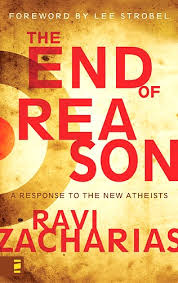 Like It Not: A full-on counter-attack to Sam Harris' two landbreaking volumes 'The End of Faith' and 'Letter to a Christian Nation'. The worldview Harris presents in his infamous essays is utterly bankrupt, underscored by a vast ignorance, and nothing more than a charlatan's attempt at pedaling snake-oil metaphysics on a largely ignorant, unobservant culture.
Ravi Zacharias is a prolific writer, and a compelling speaker. A former atheist himself, Zacharias has built up a large ministry to people of differing faiths, and non-faiths alike. His principle aim in this book, it seems, is to dispell the accusations Sam Harris has set out against religious people in general, and Christians specifically. Unfortunately for Zacharias, his book never gets off the ground. It stinks of reactionary emoting, not reasoned, and considerate truth-seeking. Oftentimes, Zacharias moves toward a point but suddenly drops off, leaving the reader attempting to estimate his conclusion, and never returns to finish his idea. He accuses Harris of being fundamentalist in his outlook, but does nothing to soften or diminish Harris' equal accusation that American evangelicalism, and radical Islam are dangerously fundamentalist themselves. More to the point, Zacharias' book, being from a former atheist, falls ironically short of showing why atheism is an illegitimate worldview. One wonders why a scholar of Zacharias' renown and intimate understanding of atheism could not offer a coherent rebuttal of atheism in a book that expressly sets out to do so. Sadly, Zacharias' book is a poor, poor read, and will most likely find its way to a used book store in the near future with a small inscription detailing the impoverished material inside. Caveat emptor, indeed!
 Like: The so-called New Atheists have saddled themselves with the same burden as literalist Christians: they're both fundamentalists. Calling for the end of faith and religion while trumpetting utopian overtures about human moral progress is bipolar thinking at best, and does nothing to promote civil dialogue between atheists and theists. What is needed is not an end to faith, not an end to religion, not a new injection of Enlightenment utopian ideologies but the courage to engage reason where it leads, and embrace religion where it benefits humankind.
Chris Hedges is a poignant writer. In fact, I found myself elated, disturbed, frightened, and relieved by Hedges's critical appraisal of the New Atheists. And as much as the New Atheists want to balk at the notion of their position being fundamentalist, when their writings are distilled to their lowest elements, they come out just as fundamentalist as any typical literalist Christian group. Be that as it may, however, Hedges does not give quarter to religiosity, but attacks it just as fiercely as neo-atheism. So, all-in-all, Hedges's book is a hard-hitting attack on unthinking faith-heads, just as much as it is an attack on unthinking unfaith-heads. In that respect, it is a fair and balanced read.
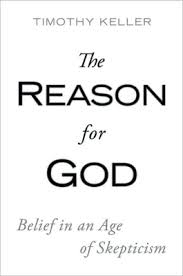 Like It Not: Faith and belief in God have come under attack. Skepticism is undermining believer's confidence in the Word of God. People would do well to understand exactly what is being said about their faith, and exactly how to respond to it so that Christian faith can continue to flourish and nurture not just the believers, but the skeptics, too.
Timothy Keller, while he has a wide-open and compassionate heart, comes across far too pedagogical, even cheaply condescending in this epistle. While some of the resources he has mined from are quite creative, they are dulled by the beige use of information he rambles out. More, while Keller seems to have a wide-ranging grasp of literature, philosophy, history, theology, and contemporary music, there is nothing in Keller's presentation of the Christian agenda that would give pause to even the most simple-minded literary atheist. His greatest strength in this book is that he can reduce large concepts into easily accessible and graspable ideas. Unfortunately, that same strength is also his weakness and his undoing: such simple presentations of Christian ideas leaves far too much opportunity to cut against the grain of his logic and undo his conclusions in ways that work against his evangelistic efforts.
 Like: All religions have at their core one essential message: compassion. The expressions we use to convey that compassion are what are known as 'religion'. We can class religion into two distinct spheres: mythos (what is believed and practiced) and logos (what is reasoned and taught). To write-off religion on the basis that it doesn't conform to modern concepts of science and reason is to give-up a great swath of rich cultural heritage, learning, and useful metaphysics that not only inform our deepest human yearnings, but provide the substance that recent skeptics have been parasitically feeding from.
Karen Armstrong has done the world a favour with this her latest book. Her writing is clear, sagely, incisive, profound, and beautifully informed. The occasional bursts of dry humour to break the weight of vast historical data are well-placed and drive the reader forward on to new insights and discoveries. After wading through thousands of years of philosophical and religious concepts, Armstrong finally cracks the whip on the New Atheists in her epilogue, giving them a solid scourging for their purposeful ignorance, but at the same time applying salves to their wounds by informing the reader that their perspectives help the religious ask necessary and important questions. There is no shortage of delight to be found in Armstrong's latest book, and I hope every serious student of religion and the philosophy of religion makes use of it to deepen their understandings of the strange creature homo religiosus.
Friday, April 23, 2010
New Book!
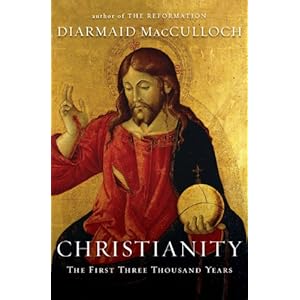
Bought a new book today. Very excited about it! Here's a picture of the cover.
 The book is by Diarmaid MacCulloch, an Oxford historian renowned for his relentlessly balanced perspective. The book, Christianity: The First 3000 Years, traces the development of the Christian church beginning at 1000 years BCE (before the common era) to present day.
Here are a couple of reviews.
 The book is by Diarmaid MacCulloch, an Oxford historian renowned for his relentlessly balanced perspective. The book, Christianity: The First 3000 Years, traces the development of the Christian church beginning at 1000 years BCE (before the common era) to present day.
Here are a couple of reviews.
Subscribe to:
Posts (Atom)