Sunday, February 13, 2011

Original Sin

Ayn Rand
I cannot get away from the forcefulness of Ayn Rand's argument against the concept of original sin.  Read it and, if you're willing, tell me what you think.
"Your code begins by damning man as evil, then demands that he practice a good which it defines as impossible for him to practice. It demands, as his first proof of virtue, that he accept his own depravity without proof. It demands that he start, not with a standard of value, but with a standard of evil, which is himself, by means of which he is then to define the good: the good is that which he is not.

"It does not matter who then becomes the profiteer on his renounced glory and tormented soul, a mystic God with some incomprehensible design or any passer-by whose rotting sores are held as some inexplicable claim upon him—it does not matter, the good is not for him to understand, his duty is to crawl through years of penance, atoning for the guilt of his existence to any stray collector of unintelligible debts, his only concept of a value is a zero: the good is that which is non-man.

"The name of this monstrous absurdity is Original Sin.

"A sin without volition is a slap at morality and an insolent contradiction in terms: that which is outside the possibility of choice is outside the province of morality. If man is evil by birth, he has no will, no power to change it; if he has no will, he can be neither good nor evil; a robot is amoral. To hold, as man’s sin, a fact not open to his choice is a mockery of morality. To hold man’s nature as his sin is a mockery of nature. To punish him for a crime he committed before he was born is a mockery of justice. To hold him guilty in a matter where no innocence exists is a mockery of reason. To destroy morality, nature, justice and reason by means of a single concept is a feat of evil hardly to be matched. Yet that is the root of your code.

"Do not hide behind the cowardly evasion that man is born with free will, but with a “tendency” to evil. A free will saddled with a tendency is like a game with loaded dice. It forces man to struggle through the effort of playing, to bear responsibility and pay for the game, but the decision is weighted in favor of a tendency that he had no power to escape. If the tendency is of his choice, he cannot possess it at birth; if it is not of his choice, his will is not free.

"What is the nature of the guilt that your teachers call his Original Sin? What are the evils man acquired when he fell from a state they consider perfection? Their myth declares that he ate the fruit of the tree of knowledge—he acquired a mind and became a rational being. It was the knowledge of good and evil—he became a moral being. He was sentenced to earn his bread by his labor—he became a productive being. He was sentenced to experience desire—he acquired the capacity of sexual enjoyment. The evils for which they damn him are reason, morality, creativeness, joy—all the cardinal values of his existence. It is not his vices that their myth of man’s fall is designed to explain and condemn, it is not his errors that they hold as his guilt, but the essence of his nature as man. Whatever he was—that robot in the Garden of Eden, who existed without mind, without values, without labor, without love—he was not man.

"Man’s fall, according to your teachers, was that he gained the virtues required to live. These virtues, by their standard, are his Sin. His evil, they charge, is that he’s man. His guilt, they charge, is that he lives.

"They call it a morality of mercy and a doctrine of love for man."
The quote above was extracted from For the New Intellectual, "Galt's Speech", Signet Edition.

On Immorality & Atheism

Click for larger picture.
The notion that atheists are immoral because they claim godlessness is tripe. There is no reason to suggest that a person is immoral because they don't believe a certain god, or any gods exist. Such a conclusion is hopelessly illogical: where's the connective tissue between the propositions "I don't believe in God/gods" and "disbelievers are immoral"? Something has to fit between those two propositions, otherwise concluding disbelief equals immorality is a categorical confusion and a lackluster syllogism, at best.

At worst, the implication that people can only be moral if they believe in a God/gods makes believers terribly dangerous people to associate with: are they suggesting that it's only their belief that restrains them from psychopathic rampages, and all manner of hideous crimes?

And what are we to make of pre-Judaic times, before the alleged giving of the 10 Commandments? Were people just given to their impulses with no thought to consequences? Were human beings wantonly viscious with no capacity for restraint until God burned a few words in stone? The fact is: people are moral despite their beliefs, and even without beliefs, because morality is part of our organising instincts and our efforts to promote the survival of ourselves and others.

Your morality is not a cape you are given by some God; it is part of your human composition and does not depend a whit on what brand of religion you choose to adopt.

Sunday, February 6, 2011

A History of God: Reflections & Review P. II

In Part 1 of this series, I provided a brief overview of the purpose behind Armstrong's book: to examine the evolution of the idea of God within the three major monotheistic religions of the world: Judaism, Christianity, and Islam.  I also noted that Armstrong's historical scrutiny of the monotheistic conceptions of God comes by way of the documentary hypothesis, a source theory of biblical interpretation that seeks to arrange chronologically the inconsistent and independently authored texts of the earliest books of the bible.  Given the seemingly independent perspectives within the books of the Torah--and subsequent Old Testament books--the documentary hypothesis suggests that a series of redactors (editors) prepared the disparate documents into the forms we've come to know as the Pentateuch.

Citing Armstrong's interpretive tools goes a long way in helping to understand why she comes to some of the conclusions she does.  If it is true that the Pentateuch is a patchwork of originally independent narratives that have endured (who knows how many) redactions, then the traditional Christian perspective that the bible is wholly reliable can reasonably be questioned: reliable in its original, unedited form?  Reliable because of its redactions?  And how do we know that those who undertook to edit the original manuscripts were reliable people?  What constitutes 'reliability' in a religious context when dealing with scripture? At what point does having 'faith' that the scriptures are reliable cease to be an acceptable premise?  And further to those questions, if the writings of the major world religions can be questioned as to their reliability, can those religions themselves be questioned as to their reliability on the whole?  That is, if the religions of the book are questionable on a literary level, what aspects of that religion are reliable at all?

I won't be pursuing answers to those questions in this series, but suffice it to say that they are reasonably important questions, and the content of Armstrong's book certainly gives me pause to consider searching out reasonable answers.

But enough of my preamble!  On to the reflections and review.

Introduction (pp. xvii - xxiii)
I have read Armstrong's introduction to A History of God a few times before reading the actual book.  There are several instances within those (roughly) 7 pages that resonated very deeply with me.  For example, Armstrong, right out of the gates, admits to her childhood belief in God as an implicit or "unquestioned" assumption, but because of the arid pomposity of the religious definitions that surround the notion of 'God' she cannot meaningfully state she had faith in God:
"There is a distinction between belief in a set of propositions and a faith which enables us to put our trust in them.  I believed implicitly in the existence of God; I also believed in the Real Presence of Christ in the Eucharist, the efficacy of the sacraments, the prospect of eternal damnation and the objective reality of Purgatory... God, on the other hand, was a somewhat shadowy figure, defined in intellectual abstractions rather than images."
 Like Armstrong, I had my own implicit belief in God when I was a child.  I recall demanding I be brought to church when I was eight.  At the same age, I was baptised, though I know I had no real understanding of the religious significance of that event.  A few years later, I sat in the back of my dad's car reading my bible while he and his girlfriend ran errands at a local plaza.  When they returned to the car, I plucked up my courage and asked my dad what he would think if I became a priest and taught people about God.  His response was disheartening to a child of 12: "Do what you want.  Just don't talk to me about it."  This was the same response I received from him when I was 16 and told him that I had become a "born again" Christian.

All this is to say that, like Armstrong,
"As I grew up... I began to be moved by the beauty of the liturgy and, though God remained distant, I felt that it was possible to break through to him and that the vision would transfigure the whole of created reality."
Disappointment is germane to most people's lives, however, and Armstrong did not experience that transfigured reality.  "Eventually, with regret," Armstrong writes, "I left the religious life..."  As did I, and with many, bitter, emotional struggles.  But having pursued her religious studies as much as she did, Armstrong was unwilling to put away her passion to understand religious reality:
"My interest in religion continued... and I made a number of television programs about the early history of Christianity and the nature of the religious experience."
And having scoured the depths of religious history, Armstrong came to an unoriginal, yet beautifully expressed conclusion about the nature of religious experience and activity:
"Like art, religion has been an attempt to find meaning and value in life, despite the suffering that flesh is heir to.  Like any other human activity, religion can be abused, but it seems to have been something that we have always done.  It was not tacked on to a primordially secular nature by manipulative kings and priests but was natural to humanity... Throughout history, men and women have experienced a dimension of the spirit that seems to transcend the mundane world.  Indeed it is an arresting characteristic of the human mind to be able to conceive concepts that go beyond it in this way."
It must be said, however, that although religion has been, and probably will continue to be an activity integral to human participation in the world, the rise of scientific savvy is a formidable challenge to the religious-minded.  For if "meaning and value in life" can come from ancestral liturgies and ancient doctrines, then the continual increase in understanding and factual comprehension science continuously provides may overtake religious devotion.  Certainly knowing the factual details of reality does not detract from life's meaning and value, but should reinforce it if those meanings and values are true.  Certainly deriving one's meaning and value from what is actual and demonstrable will grip people's minds with at least as much fervour as the meaning and value in life that non-demonstrable, non-natural claims have traditionally held.

Whatever the case may end up being, there is no historical precedent that even remotely recommends a religionless future.
"...religion is highly pragmatic... it is far more important for a particular idea of God to work than for it to be logically or scientifically sound. As soon as it ceases to be effective it will be changed--sometimes for something radically different."
Thus notions of God are entirely provisional: they evolve just as much as people and their cultures do.  The success of monotheisms such as Judaism, Christianity, and Islam has not been in having precise knowledge of the divine so much as it has been that the monotheistic religions have been able to adapt culture to their creeds.  Previous to monotheism religious motifs were subject to the suasions of culture.  And indeed, so-called "pagan" religions continue to develop along the lines of the cultures and people-groups practicing them.  Monotheism, however, dictates culture by enforcement of creeds: you cannot be a 21st century Christian without holding dear certain creeds.  You can, however, be a raging pagan, polytheist, or religious pluralist in the 21st century even while brushing-off ancient dictates.

This, of course, makes me wonder why people prefer to be directed in their beliefs, rather than choosing what to believe.  The cafeteria Catholic (pejorative, but apt term that that is) is still beholden to certain essentials, or he isn't a Catholic.  Period.  The smorgasbord pagan is really only expected to choose what he will.  And both the Catholic monotheist and the pagan pluralist enjoy an absolutist sense of reality: they both believe that they are wonderfully right, and that others are woefully wrong.

Be that as it may, such concerns are somewhat allayed by Armstrong's right observation that

"Whatever conclusions we reach about the reality of God, the history of this idea must tell us something important about the human mind and the nature of our aspiration."
The import derived from conversations about God seems to be purely personal.  Given that, it really doesn't surprise me that somewhere along the historical line, the concomitant notion of a "personal God" was recognised in the fact that people conclude their notions of God wholly subjectively: no two people have the same experience of the same idea.  'God', the abstract, is concretized differently in each person.  Thus God-talk is strained at best, and tests credulity not only at worst, but inevitably.

As is proper, Armstrong should have the last word here:

"All talk about God staggers under impossible difficulties.  Yet monotheists have all been very positive about language at the same time as they have denied its capacity to express the transcendent reality.  The God of Jews, Christians and Muslims is a God who--in some sense--speaks.  His Word is crucial in all three faiths.  The Word of God has shaped the history of our culture.  We have to decide whether the word "God" has any meaning for us today."

Thursday, February 3, 2011

Senecca and Religion

Senecca the Younger
Seneca the Younger penned these famous and portentous words:

"Religion is regarded by the common people as true, by the wise as false, and by the rulers as useful."

Being a contemporary of Christ, it seems significant to me that he would have such a perspective.  

What are your thoughts?

Wednesday, February 2, 2011

Campingatology

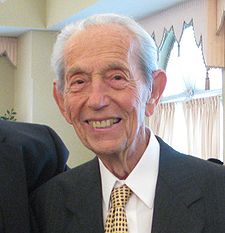
Harold Camping.  False toothy prophet.
Remember Harold Camping?  Apparently he's littered the earth, and wasted donations on a campaign sounding a clarion-call for the end of the world.

May 21, 2011.  Mark it on your calendars, folks.  Make sure to love much, and have all sorts of ludicrous fun because when you wake up on May 22, 2011 and you're still alive, and the rapture hasn't happened, you will at least not have wasted your time.

Oh, and keep up the hard work at living life to the fullest, even beyond May 22, 2011 because we have another end-of-the-world to get through on December 21, 2012.

Here's another look at the same silliness, but with a tad more detail.  Enjoy!


Sometime in the future, you're going to die.  Get over it.  But if Harold Camping is right, you're going to die a whole lot sooner than you think.  Isn't Camping such a comforting messenger?  Don't you just want to invite him into your home and let him tell you all about how godless your existence is, and how you're going to burn in hell forever?  Such a nice old man.

I wonder if he'll shut-up about this nonsense when he's wrong for the second time...


Thank you to The Thinking Atheist for this video.

Monday, January 31, 2011

Omnipotence and Omniscience

Stefan Molyneux
From an essay entitled, "Against the Gods", by Stefen Molyneux we have the following quote:
...omniscience cannot coexist with omnipotence, since if a god knows what will happen tomorrow, said god will be unable to change it without invalidating its knowledge. If this god retains the power to change what will happen tomorrow, then it cannot know with exact certainty what will happen tomorrow.
What are your thoughts?

Friday, January 28, 2011

Big Words

I have been accused of using too many "big" words more than the total word-count of Marcel Proust's collected works.  That is, of course, an exaggeration.  Still, the number of times I have endured the crassness of being told "you use too many big words," or "why don't you just speak in English," or "would it hurt you to speak a little more simply" has become a source of silent irritation for me.

So now I'm going to write about it.  And I may just use sesquipedalian verbiage to spurn any familiar detractors.

To start, Ayn Rand wrote "words are a lens to focus one's mind."  If that is true, then the larger the lens the greater the focus.  Which really stands to reason since the proper use of a bigger word is not an easily accomplishable feat for the neophytic philologist.  Can I say that my use of larger words has always been clear, and well executed?  Heavens no!  I amassed an admirable storehouse of "big" words at a very young age simply by listening to the adults around me.  I didn't really know how to use those words properly, however, until I was more mature.

That's when I entered highschool.  In highschool, I was practically battered with small-worded accusations by friends and classmates alike for using words outside of their ken.  The same unthinking trend followed me through college and seminary, too. It was really quite demoralizing.

Who of us would arrange the courage in ourselves to accuse an excellent musician of being too quick at trills?  What right-minded individuals would upset themsevles for a gymnast's greater agility and balance?  It would seem to me that having a decent capacity for expression is no greater a crime than being able to run faster than others, or tickle out a frenzy of notes on the ivories with more finesse than the typical church pianist.

Now, I could go ahead and estimate the kind of distorted psychology that prompts such ill-reasoned attempts at censoring another's self-expression, but that would be too much of a meandering speculation for me to feel comfortable with.  Instead, what I've boiled things down to, in my own mind, is a more generous perspective. 

I think it's simply a matter of "jargon."  That is, people have environmentally prescribed jargon-sets that help them navigate their way through assumed common experiences.  And depending on the variety and intensity of those experiences, the amount and use of jargon changes.  But when faced with someone who can work with jargon across varied and diverse fields, communication can become a little intimidating.

So, what about jargon?

Well, everybody speaks it. Some more than others. It's especially rampant amongst chattering intellectuals, the back offices of medical centres, and the austere corridors of academia. But it happens on the street, too, where the “huddled masses” spin their cant in an ever-evolving dance of gritty descriptions and colourful metaphors.

When people speak their jargon on the streets we call it “slang.” When people pour out the lingo in cloistered meeting halls, sipping coffee and polishing their chins, we dignify it by labelling it “terminology.” And it may very well be that. But the only difference between the terminology of the person on the street, and the slang built in to certain fields of study is the environment in which they're used.

Who hasn't had the common experience of meeting-up with a co-worker at the coffee maker and spending the next several minutes listening intently to a subject that seems distant, foreign, even arcane? Who hasn't had the experience of being that person at the coffee maker percolating stories in strange terms while your co-worker squints on, earnestly attempting to relate to what you're saying?

It's something that the philosopher Ludwig Wittgenstein described very well when he wrote, “the limits of my language mean the limits of my world” (Tractatus Logico-Philosophicus, 1922). The words people use give an indication of the personal world of their experiences. A person used to living in the harsh backwoods of the Yukon wilderness may very well seem like a different creature to the savvy urbanite used to a steady diet of posh trends, and fashionable mannerisms. The point remains though: however they choose to talk about their experiences, they bring their worlds to each other by the very words they use.

So to argue by accusation that another uses too many "big" words can (as it did in my case) have the effect not only of diminishing one's own world by sneering at expansion, but demeaning another's world by snidely implying it is 'wrong' or 'difficult' because it is too big.  Having given some thought to this subject, it seems obvious to me that the best course of action when dealing with someone who has a demonstrably wide grasp of the English language (or any language, for that matter), would be to ask for definitions and explanations when fronted with a word one doesn't know.  The residuals may just be that your own world is given greater scope and colour, and that the other's world is appreciated and made more enjoyable.

Not a bad trade-off, really.  Wouldn't you agree?